
Sustainable Coding: How Inkjet Marking Guns Reduce Label Waste
2025-12-23(189)Views
As sustainability becomes a driving force in global manufacturing, businesses are actively searching for ways to minimize waste, cut operational costs, and reduce their environmental footprint. One increasingly popular solution is the inkjet marking gun—a portable, efficient, and eco-friendly alternative to traditional labeling methods. In 2025, companies across packaging, logistics, retail, and manufacturing are adopting sustainable coding tools to support greener production lines. This article explores how inkjet marking guns help businesses reduce label waste and achieve more sustainable operations without sacrificing productivity.
1. Why Sustainability Matters in Modern Coding and Marking
Environmental responsibility is no longer optional. Growing consumer expectations, tightening regulations, and rising material costs make sustainability a priority for all industries.
Key sustainability challenges in traditional labeling:
(1)Excessive label roll waste from misprints and unused labels
(2)Plastic-based backing materials that are difficult to recycle
(3)Ink ribbon disposal, particularly for thermal transfer printers
(4)Energy-intensive equipment requiring continuous operation
Inkjet marking guns eliminate many of these inefficiencies, offering a direct-printing method that uses fewer materials and produces significantly less waste.
2. How Inkjet Marking Guns Reduce Label Waste
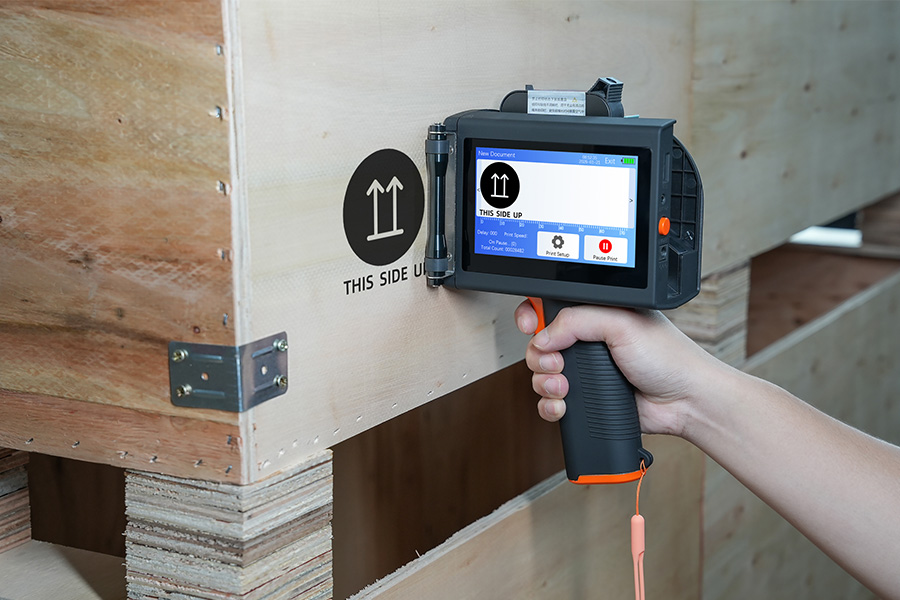
Inkjet marking guns create codes directly on surfaces using fast-drying inks. This simple shift dramatically impacts waste levels across the supply chain.
2.1 Zero Label Roll Consumption
Traditional labeling systems rely on adhesive labels, backing paper, and liners—none of which are necessary with inkjet marking guns.
Direct benefits:
(1)No more discarded backing paper
(2)Zero unused or damaged labels
(3)No label inventory required
By removing label consumables entirely, companies reduce both material waste and procurement expenses.
2.2 Less Rework, Fewer Print Errors
Label printers often misfeed or misalign, causing batches of labels to be thrown away. Inkjet marking guns allow operators to print precisely where needed, reducing misprints and rework.
Advantages include:
(1)On-demand, point-of-application printing
(2)Clear visibility of print placement before coding
(3)Reduced human error
This hands-on control results in less waste and more consistent quality.
2.3 Lower Environmental Impact from Consumables
Inkjet marking guns use compact, replaceable ink cartridges—often solvent or water-based—with minimal packaging compared to label rolls or ribbons.
Eco-friendly benefits:
(1)Smaller packaging footprint
(2)Lower transportation emissions
(3)Fewer consumable components to dispose of
Many modern TIJ cartridges are also recyclable, further contributing to sustainability goals.

3. A More Energy-Efficient Coding Solution
Unlike large industrial labeling machines, inkjet marking guns require no warm-up time, no motors to drive label rolls, and no continuous operation.
Energy-saving advantages:
(1)Operates only when used
(2)Lower power consumption
(3)Reduces carbon footprint across production shifts
This makes portable inkjet systems ideal for both small businesses and large facilities focused on energy-efficient processes.
4. Enhancing Supply Chain Sustainability
Inkjet marking guns are especially valuable in industries where traceability and compliance are essential. By reducing waste and enabling direct coding, they support more sustainable supply chains.
Industries benefiting most:
(1)Food & beverage packaging
(2)Warehouse logistics
(3)E-commerce fulfillment
(4)Automotive components
(5)Medical and pharmaceutical products
Direct coding improves traceability while simultaneously reducing label-related material waste across distribution centers.
5. Cost Savings That Support Long-Term Sustainability
Sustainability and cost efficiency go hand in hand. Removing label waste brings measurable savings for both small and large operations.
You save on:
(1)Label roll purchases
(2)Storage and logistics for large label inventories
(3)Waste disposal fees
(4)Downtime caused by label roll jams
Sustainable printing is not only greener—it’s more profitable.
6. Is an Inkjet Marking Gun Right for Your Operation?
If your business wants to reduce environmental impact while increasing coding flexibility, an inkjet marking gun is a strong solution.
Best use cases:
(1)On-demand packaging
(2)Small-batch production
(3)Changing product SKUs
(4)Warehouse item identification
(5)Temporary or mobile workstations
The combination of mobility, efficiency, and sustainability makes inkjet marking guns an ideal coding tool for modern operations.
If you're ready to cut label waste, reduce operational costs, and improve your environmental footprint, now is the perfect time to transition to an inkjet marking gun.
Contact us today to learn which model fits your production needs and start building a more sustainable coding workflow.
+MoreRelated recommendations
-
Handheld Inkjet Printer Warranty Questions Buyers Should Ask Before Ordering
Ask these handheld inkjet printer warranty questions to clar...
-
Handheld Inkjet Printer Order Checklist: Printer, Ink, Accessories, and Spare Parts
Use this purchase checklist to confirm the printer, ink, acc...
-
What Information Should You Send for an Accurate Handheld Inkjet Printer Quote?
Use this RFQ worksheet to send the material, message, print ...
-
How to Print Scannable Barcodes and QR Codes on Plastic Packaging
Learn how to print scannable barcodes and QR codes on plasti...
Contact Us

Service phone number+8618759952301
—— Add WeChat communication


