
TIJ Printer Checklist: 15 Questions to Ask Before Installation
2026-03-04(234)Views
Installing a TIJ printer (Thermal Inkjet printer) is not just a hardware decision—it is an operational commitment. While TIJ technology offers high resolution, low maintenance, and digital flexibility, many installation failures occur because critical questions were never asked.
This TIJ printer checklist outlines 15 essential questions to evaluate before installation, helping you reduce risk, protect ROI, and ensure smooth deployment.
Why a TIJ Installation Checklist Matters
TIJ printers are sensitive to:
1.Environmental conditions
2.Ink and substrate compatibility
3.Mounting stability
4.Data integration accuracy
Skipping pre-installation evaluation often leads to:
1.Print quality issues
2.Smudging and adhesion failures
3.Downtime
4.Compliance exposure
A structured checklist prevents avoidable mistakes.
The 15-Point TIJ Printer Installation Checklist
1.What Substrates Will You Print On?
Are you printing on:
1)Corrugated cartons
2)Coated cardboard
3)Plastic films
4)Foil or laminated materials
TIJ printer performance depends heavily on substrate compatibility.
2.Is the Ink Matched to the Surface?
Not all TIJ inks behave the same.
Have you tested:
1)Adhesion
2)Drying time
3)Durability under handling
Ink selection is often more critical than printer selection.
3.What Is Your Actual Line Speed?
Have you validated performance at full production speed—not just during trials?
High-speed lines reduce print windows and drying time.
4.What Is the Print Distance?
TIJ printers require controlled throw distance.
Is your mounting design ensuring:
1)Consistent spacing
2)Minimal vibration
3)Stable alignment
Mechanical stability directly affects print clarity.
5.What Are the Environmental Conditions?
Measure:
1)Temperature range
2)Humidity levels
3)Airflow near the printhead
Environmental fluctuations can cause nozzle issues and inconsistent droplet formation.
6.Is There Dust or Debris Exposure?
Open production floors increase contamination risk.
Have you planned:
1)Protective housing
2)Cleaning routines
3)Maintenance intervals
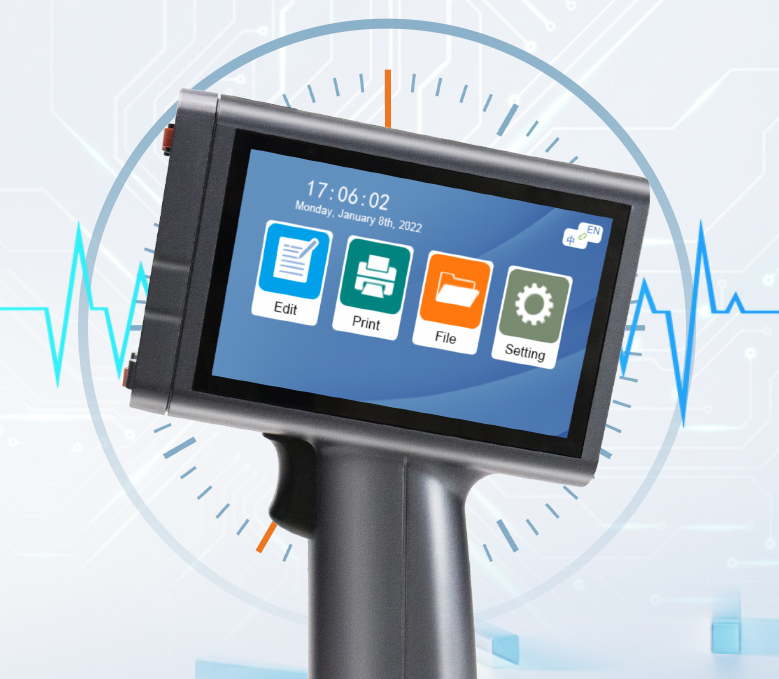
7.How Will Data Be Delivered to the Printer?
Will the TIJ printer connect to:
1)ERP systems
2)Serialization software
3)Local databases
Data integrity is critical for traceability compliance.
8.Who Controls Print Content Changes?
Is there a clear approval workflow for:
1)Date changes
2)Batch number edits
3)Customer-specific coding
Uncontrolled edits increase compliance risk.
9.Have You Defined Acceptable Print Quality Standards?
Before installation, define:
1)Legibility requirements
2)Barcode scan grade
3)Tolerance thresholds
Ambiguous standards lead to disputes.
10.What Is the Backup Plan?
If the TIJ printer fails, do you have:
1)A secondary unit
2)Manual fallback process
3)Rapid cartridge replacement plan
Redundancy protects production.
11.What Is the True Cost of Operation?
Consider:
1)Ink consumption rate
2)Cartridge lifespan
3)Expected replacement frequency
Total cost of ownership (TCO) often surprises new adopters.
12.Has a Pilot Validation Been Conducted?
Did you test under:
1)Full production load
2)Real environmental conditions
3)All target substrates
Skipping validation increases risk exponentially.
13.Are Operators Properly Trained?
Even low-maintenance TIJ printers require:
1)Cartridge handling knowledge
2)Cleaning procedures
3)Error troubleshooting basics
Human factors matter more than many expect.
14.Is Mounting Design Finalized Before Installation?
Late mounting changes can:
1)Disrupt workflow
2)Affect print alignment
3)Increase vibration
Mechanical planning should precede deployment.
15.Have You Evaluated Scalability?
If production expands:
1)Can the TIJ system handle increased speed?
2)Will additional printheads be needed?
3)Is the data architecture scalable?
Planning for growth prevents future redesign.
Common Installation Pitfalls This Checklist Prevents
Companies that skip these questions often experience:
1.Smearing on non-porous materials
1.Poor barcode readability
2.Frequent cartridge replacement
3.Integration failures
4.Unexpected downtime
TIJ printer installation is successful when preparation matches application reality.
Strategic Insight: Installation Determines Long-Term ROI
Most TIJ printer problems are not technology failures—they are deployment failures.
A structured checklist:
1.Reduces operational surprises
2.Protects compliance
3.Stabilizes performance
4.Improves long-term ROI
Installation discipline is the difference between frustration and reliability.
Talk to Our Company Before Installing Your TIJ Printer
Our company helps manufacturers evaluate TIJ printer applications before installation. We conduct substrate testing, environmental assessment, ink validation, and workflow review to ensure stable, scalable deployment.Contact our company today for a TIJ pre-installation assessment and avoid costly mistakes before they happen.
+MoreRelated recommendations
-
Handheld Inkjet Printer Warranty Questions Buyers Should Ask Before Ordering
Ask these handheld inkjet printer warranty questions to clar...
-

Handheld Inkjet Printer Order Checklist: Printer, Ink, Accessories, and Spare Parts
Use this purchase checklist to confirm the printer, ink, acc...
-
What Information Should You Send for an Accurate Handheld Inkjet Printer Quote?
Use this RFQ worksheet to send the material, message, print ...
-
How to Print Scannable Barcodes and QR Codes on Plastic Packaging
Learn how to print scannable barcodes and QR codes on plasti...
Contact Us

Service phone number+8618759952301
—— Add WeChat communication


