
Handheld Inkjet Printers as a Bridge Between Manual and Automated Coding
2026-02-19(139)Views
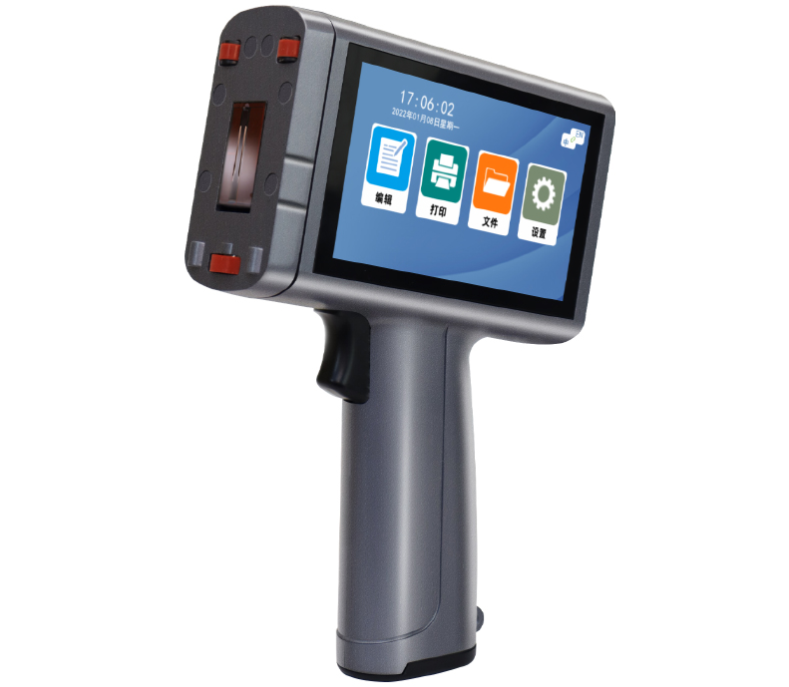
Manufacturers rarely move directly from manual labeling to fully automated coding systems in a single step. In many operations, handheld inkjet printers serve as a critical bridge between manual processes and automated coding—providing flexibility, validation, and operational learning along the way.
Understanding this transitional role helps companies adopt coding technology with less risk and greater long-term success.
Why Coding Transitions Are Rarely Linear
Coding technology upgrades are often constrained by:
1.Budget cycles
2.Production variability
3.Workforce readiness
4.Regulatory requirements
As a result, many plants operate in hybrid environments where multiple coding methods coexist. Handheld inkjet printers thrive in these transitional phases.
The Limitations of Purely Manual Coding
Manual coding methods—such as labels, stamps, or pre-printed packaging—create challenges including:
1.High labor dependency
2.Slow response to data changes
3.Increased risk of human error
4.Limited traceability
These limitations drive the need for digital printing—but full automation is not always immediately feasible.
Why Jumping Straight to Automation Can Be Risky
Automated coding systems offer consistency and speed, but they also require:
1.Stable line configurations
2.Predictable volumes
3.Clean data integration
4.Trained technical support
Without preparation, automation projects may stall or underperform.
Handheld Inkjet Printers as a Transitional Solution
Handheld inkjet printers introduce digital coding without forcing full automation.
They allow organizations to:
1.Print variable data in real time
2.Test ink and substrate compatibility
3.Identify workflow bottlenecks
4.Train teams on digital printing concepts
This makes them ideal stepping stones.
Supporting Mixed-Technology Environments
During transition periods, handheld inkjet printers often complement:
1.Automated coding lines
2.Labeling systems
3.Pre-printed packaging
They handle exceptions, rework, and short runs that automation struggles to accommodate efficiently.
Learning Before Scaling
One of the most valuable benefits of handheld inkjet printers is operational learning.
Teams gain insight into:
1.Print quality expectations
2.Data accuracy requirements
3.Operator behavior
4.Maintenance realities
These lessons inform smarter automation decisions later.
Reducing Capital Risk Through Incremental Adoption
Instead of large upfront investments, handheld printers:
1.Spread costs over time
2.Allow performance-based expansion
3.Reduce financial exposure
This phased approach aligns with risk-conscious procurement strategies.
Improving Change Management and User Adoption
Technology transitions fail as often due to people as to machines.
Handheld inkjet printers:
1.Build operator confidence
2.Reduce resistance to digital tools
3.Encourage process ownership
This cultural shift supports long-term success.
Knowing When the Bridge Has Been Crossed
A transitional tool should not become a permanent compromise.
Signs it’s time to move beyond handheld printing include:
1.Increasing volume consistency
2.Rising labor strain
3.Growing traceability demands
4.Repeated quality challenges
Recognizing this moment prevents stagnation.
The Strategic Role of Handheld Inkjet Printers
When used intentionally, handheld inkjet printers are not temporary fixes—they are strategic enablers of smarter automation planning.
Their value lies not just in what they print, but in what they teach.
Talk to Our Company About Building the Right Coding Path
Our company helps manufacturers design coding strategies that evolve with their operations. From manual methods to handheld solutions and full automation, we support each step with real-world insight.
Contact our company today to build a coding roadmap that fits your production reality.
+MoreRelated recommendations
-

10 Questions to Ask Before Buying a Handheld Inkjet Printer
Before buying a handheld inkjet printer, manufacturers shoul...
-

Signs It's Time to Replace Labels with Direct Inkjet Coding
Labels have been an important identification method in manuf...
-

Which Manufacturing Processes Benefit Most from Handheld Inkjet Printing?
Manufacturing has become more flexible than ever before.Many...
-

How to Know If Your Factory Needs a Handheld Inkjet Printer
In modern manufacturing, choosing the right marking method i...
Contact Us

Service phone number+8618759952301
—— Add WeChat communication


