
Why Print Quality Varies More with Handheld Inkjet Printers
2026-02-18(207)Views
Handheld inkjet printers are widely used for their flexibility, portability, and low upfront cost. They are effective tools for variable data printing, rework, and on-demand coding. However, many users notice that print quality tends to vary more with handheld inkjet printers than with automated coding systems.
Understanding the reasons behind this variation is critical for improving results and selecting the right printing strategy.
Print Quality Is Influenced by More Than the Printer Itself
A common misconception is that inconsistent print quality indicates a hardware problem. In reality, print quality is the result of multiple interacting factors.
With handheld inkjet printers, these factors are more exposed because:
1.Printing is manually controlled
2.Conditions change frequently
3.Process variability is higher
This does not mean handheld printers are unreliable—it means they are more sensitive to context.
Operator Technique Plays a Major Role
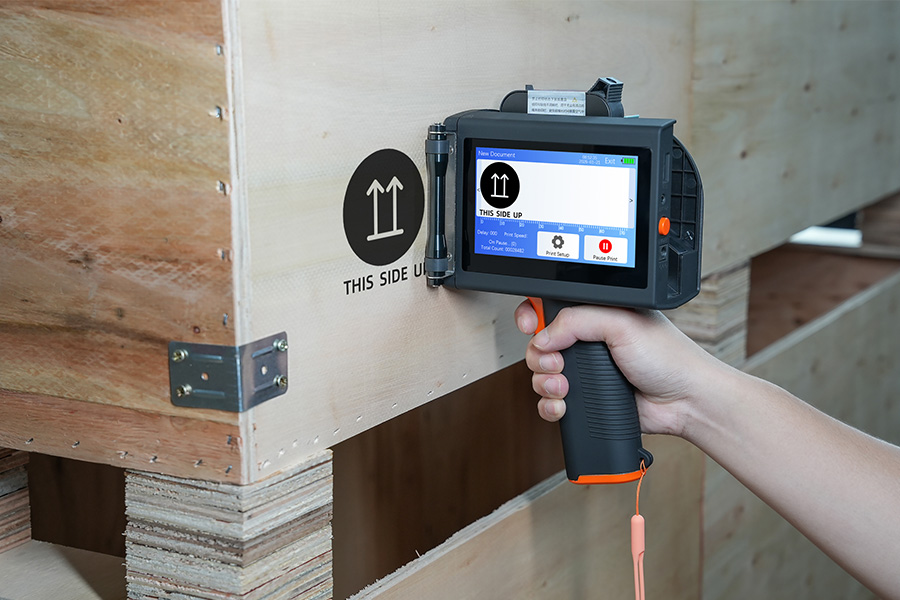
Unlike automated systems, handheld inkjet printers rely heavily on the operator.
Small variations in:
1.Print distance
2.Movement speed
3.Angle of application
can significantly affect dot formation and character clarity. Even experienced operators may produce different results across shifts.
Inconsistent Motion and Speed
Handheld printing lacks mechanical stabilization.
When movement speed fluctuates:
1.Characters may stretch or compress
2.Ink distribution becomes uneven
3.Edge sharpness is reduced
This explains why identical settings can produce different outcomes in practice.
Surface Variation and Real-World Substrates
Handheld inkjet printers are often used on:
1.Corrugated cartons
2.Plastics and films
3.Irregular or textured surfaces
Minor changes in surface absorption, coating, or cleanliness affect how ink spreads and dries—introducing quality variation.
Environmental Conditions Are Less Controlled
Manual printing typically occurs in open environments.
Factors such as:
1.Temperature
2.Humidity
3.Airflow
directly influence ink behavior. Handheld systems react more visibly to these conditions than enclosed automated printers.
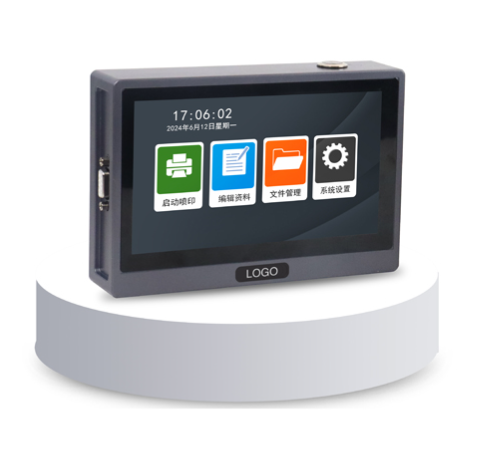
Ink Selection and Compatibility Challenges
Not all inks behave the same across substrates.
Using an ink that is:
1.Too slow-drying
2.Not optimized for the surface
3.Sensitive to environmental changes
can amplify quality inconsistencies, especially in handheld applications.
Cartridge Handling and Maintenance Differences
Handheld inkjet printers often rely on frequent cartridge changes.
Improper handling can lead to:
1.Air exposure at the nozzle
2.Partial clogging
3.Uneven droplet formation
Over time, this affects print uniformity.
Lack of Integrated Quality Control
Automated systems often include:
1.Fixed print positions
2.Vision inspection
3.Closed-loop feedback
Handheld inkjet printers lack these controls, making variation more noticeable and harder to detect early.
Why Variation Is Not Always a Problem
It’s important to distinguish between acceptable variation and critical defects.
Handheld inkjet printers perform well when:
1.Print tolerance is flexible
2.Visual clarity is sufficient
3.Speed and adaptability matter more than perfection
The issue arises when expectations exceed the tool’s natural limits.
Reducing Print Quality Variation in Practice
Organizations can minimize variation by:
1.Standardizing operator technique
2.Selecting inks matched to substrates
3.Controlling environmental exposure
4.Defining clear quality acceptance criteria
Process alignment matters more than equipment upgrades.
Choosing the Right Tool for the Right Task
Print quality variation increases when handheld printers are used beyond their ideal role.
They are best suited for:
1.Variable data
2.Low-to-medium volumes
3.Exceptions and rework
They are less suitable for high-speed, high-precision lines.
Talk to Our Company About Improving Print Consistency
Our company helps manufacturers understand why print quality varies—and how to control it. We evaluate operator workflow, ink selection, substrates, and environmental factors to recommend practical improvements.
Contact our company today to improve handheld inkjet print quality and reduce unnecessary variation.
+MoreRelated recommendations
-
Handheld Inkjet Printer Warranty Questions Buyers Should Ask Before Ordering
Ask these handheld inkjet printer warranty questions to clar...
-
Handheld Inkjet Printer Order Checklist: Printer, Ink, Accessories, and Spare Parts
Use this purchase checklist to confirm the printer, ink, acc...
-
What Information Should You Send for an Accurate Handheld Inkjet Printer Quote?
Use this RFQ worksheet to send the material, message, print ...
-
How to Print Scannable Barcodes and QR Codes on Plastic Packaging
Learn how to print scannable barcodes and QR codes on plasti...
Contact Us

Service phone number+8618759952301
—— Add WeChat communication


