
How a Handheld Inkjet Printer Can Improve Product Labeling Efficiency
2025-11-07(345)Views
Product labeling has become a core requirement for modern manufacturing, logistics, retail, and compliance management. As companies face increasing labeling demands — including date codes, batch numbers, barcodes, QR codes, and variable data — traditional labeling solutions can no longer keep up with the need for flexibility and speed. This challenge has driven the rapid adoption of handheld inkjet printers, a portable, cost-effective, and highly adaptable solution designed to improve labeling efficiency across multiple industries.
1. What Is a Handheld Inkjet Printer?
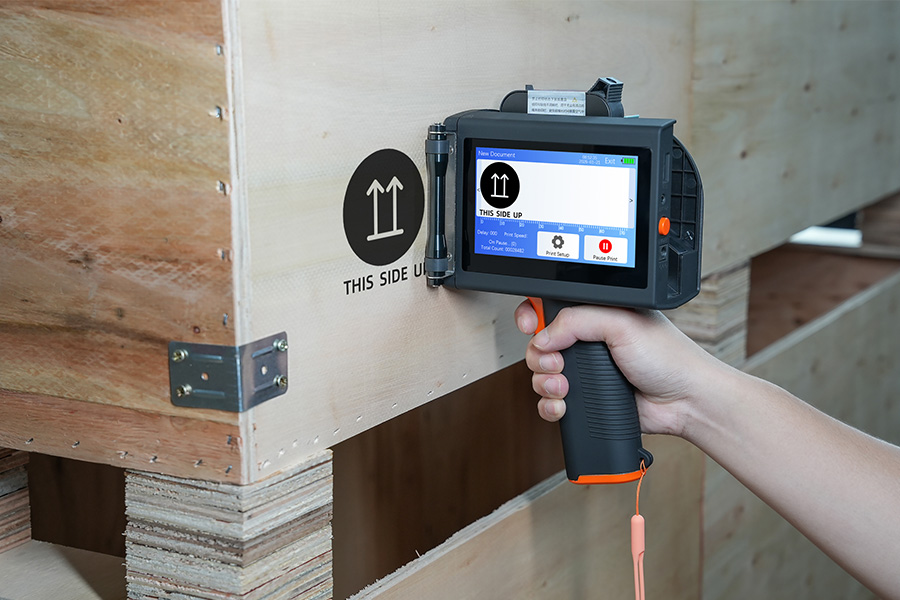
A handheld inkjet printer is a compact, portable marking device that uses inkjet technology to print directly onto surfaces such as:
(1)Cartons and packaging boxes
(2)Plastic, metal, or glass containers
(3)Pipes, cables, wood, or pallets
(4)Food packaging film or labels
Unlike traditional labeling machines, handheld inkjet printers do not require a fixed installation. Operators can carry the printer to different workstations, enabling flexible, on-demand printing.
This mobility makes handheld inkjet printers particularly useful for medium-scale production lines, warehousing operations, and businesses that require frequent label changes.

2. How Handheld Inkjet Printers Improve Labeling Efficiency
2.1 Greater Flexibility in Production Workflows
Handheld inkjet printers remove the constraints of fixed labeling machines. Operators can print:
(1)On various materials
(2)At different angles
(2)In multiple locations
(4)On irregular or curved surfaces
This level of flexibility significantly reduces the time spent transporting products to labeling stations, streamlining workflow and allowing labeling to be completed at the point of packaging or storage.
2.2 Faster Labeling for Variable Data
Modern production environments demand variable information, such as:
(1)Manufacturing date
(2) date
(3)Lot number
(4) codes
(5)Customized branding
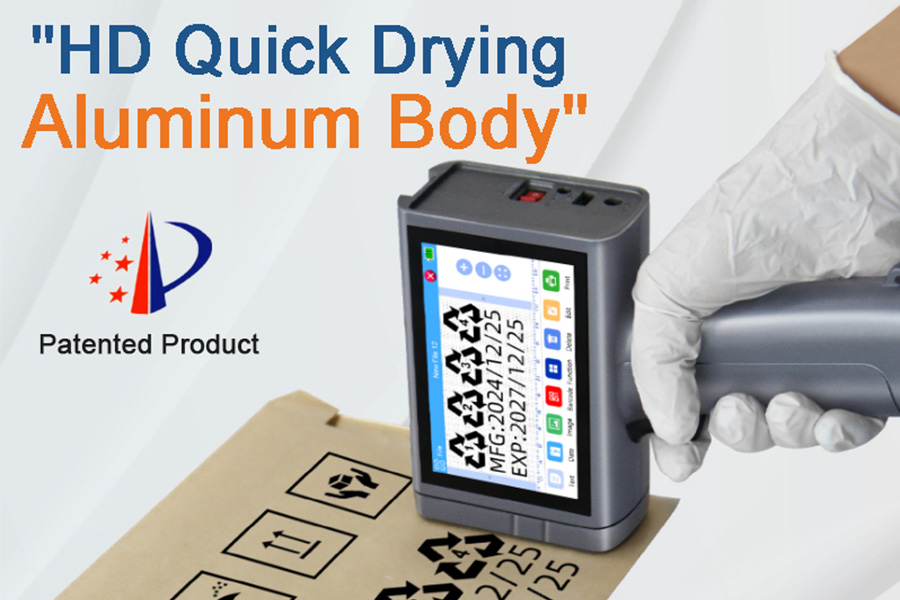
A handheld inkjet printer can update this data instantly through its digital interface. This eliminates the delays caused by reconfiguring traditional labelers or outsourcing label printing.
2.3 Reduced Labor Costs and Training Requirements
Compared with industrial labeling systems:
(1)Setup time is shorter
()Learning curve is minimal
Maintenance requirements are lower
This directly translates into reduced labor costs and faster employee onboarding. Operators can begin labeling tasks almost immediately with minimal technical training.
2.4 Enhanced Print Quality and Durability
Today’s handheld inkjet printers support high-resolution printing and use fast-drying inks that adhere firmly on porous and non-porous surfaces. Whether printing barcodes or crisp alphanumeric codes, these devices ensure:
(1)High readability
(2)Strong resistance to smudging
(3)Long-lasting clarity during transport and storage
This reliability is essential for traceability, supply chain compliance, and accurate inventory scanning.
2.5 Improved Mobility for Warehousing and Logistics
In logistics centers, products are often scattered across different storage zones. Fixed labeling systems can slow down operations. Handheld inkjet printers solve this by enabling workers to:
(1)Label items directly at the storage rack
(2)Update pallet labels on the spot
(3)Correct labeling errors immediately
This mobility greatly accelerates order fulfillment and reduces warehouse labeling delays.
3. Key Industry Applications of Handheld Inkjet Printers
3.1 Food and Beverage Industry
Handheld inkjet printers are widely used to print:
(1)Expiration dates
(2)Batch numbers
(3)Traceability codes
Their fast-drying, FDA-friendly inks make them well-suited for food packaging materials such as plastic film, bottles, and cartons.
3.2 Manufacturing and Industrial Production
Manufacturers print directly onto:
(1)Metal components
(2)Plastic parts
(3)Electrical enclosures
(4)Building materials
The ability to mark small batches or large, irregular parts increases operational adaptability.
3.3 Logistics and Warehousing
Handheld inkjet printers simplify:
(1)Pallet labeling
(2)Shipping box marking
(3)Real-time inventory tagging
This reduces bottlenecks and enhances overall supply chain efficiency.
3.4 Retail and E-Commerce
For retail operations, handheld inkjet printers help store staff quickly update:
(1)Price tags
(2)SKU labels
(3)Promotional marks
This supports faster turnover and more dynamic pricing strategies.
4. Choosing the Right Handheld Inkjet Printer
When selecting a handheld inkjet printer, businesses should consider:
4.1 Ink Compatibility
Choose printers compatible with:
(1)Water-based inks
(2)Solvent-based inks
(3)UV-curable inks
Different materials require different ink types to ensure durability and clarity.
4.2 Battery Life and Portability
Long battery life and lightweight design improve daily workflow efficiency.
4.3 Print Resolution and Speed
Higher DPI ensures barcode readability and professional-grade print quality.
4.4 Connectivity Options
Useful functions include:
(1)USB file import
(2)Wi-Fi or Bluetooth connectivity
(3)Integration with ERP systems
These features simplify data updates and automation.
4.5 Durability and Build Quality
Industrial environments require sturdy housings and ergonomic design for extended use.
5. Best Practices for Maximizing Labeling Efficiency
To fully leverage handheld inkjet printers, businesses can apply the following strategies:
(1)Standardize label templates to improve consistency
(2)Use high-contrast inks for better barcode scanning
(3)Train operators on best print angles for smooth marking
(4)Establish a daily maintenance routine to keep print heads clean
(5)Integrate printers with digital management systems to reduce manual data entry
When properly integrated into workflow, handheld inkjet printers offer a powerful boost to accuracy and productivity.
Handheld inkjet printers provide a flexible, efficient, and cost-effective solution for modern product labeling needs. Their portability, adaptability, and ability to handle variable data make them a strong replacement or supplement to traditional labeling systems. Whether used in manufacturing, logistics, food packaging, or retail, these devices significantly improve workflow efficiency while maintaining high-quality marking standards.
By adopting a handheld inkjet printer, businesses can streamline labeling processes, reduce labor costs, enhance traceability, and stay competitive in increasingly fast-paced environments.
+MoreRelated recommendations
-
Handheld Inkjet Printer Warranty Questions Buyers Should Ask Before Ordering
Ask these handheld inkjet printer warranty questions to clar...
-
Handheld Inkjet Printer Order Checklist: Printer, Ink, Accessories, and Spare Parts
Use this purchase checklist to confirm the printer, ink, acc...
-
What Information Should You Send for an Accurate Handheld Inkjet Printer Quote?
Use this RFQ worksheet to send the material, message, print ...
-
How to Print Scannable Barcodes and QR Codes on Plastic Packaging
Learn how to print scannable barcodes and QR codes on plasti...
Contact Us

Service phone number+8618759952301
—— Add WeChat communication


