
Inkjet Marking Gun vs. Label Printer: Which Coding Method Is Better?
2025-12-05(284)Views
As production environments become more automated and fast-paced, companies—especially manufacturers, warehouses, and e-commerce sellers—are reevaluating how they apply product codes, batch numbers, expiration dates, and traceability information. Two of the most common tools used in these workflows are inkjet marking guns and label printers.
What Is an Inkjet Marking Gun?
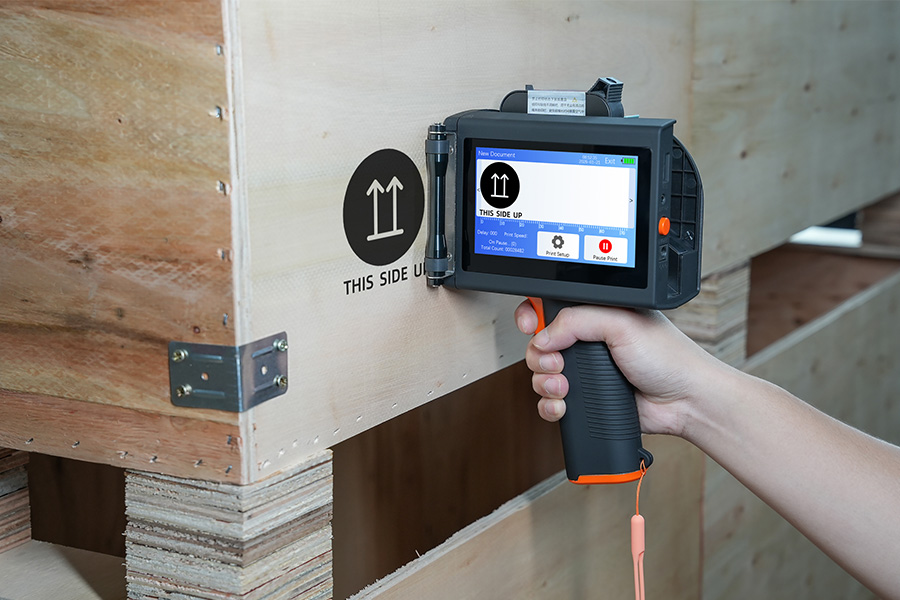
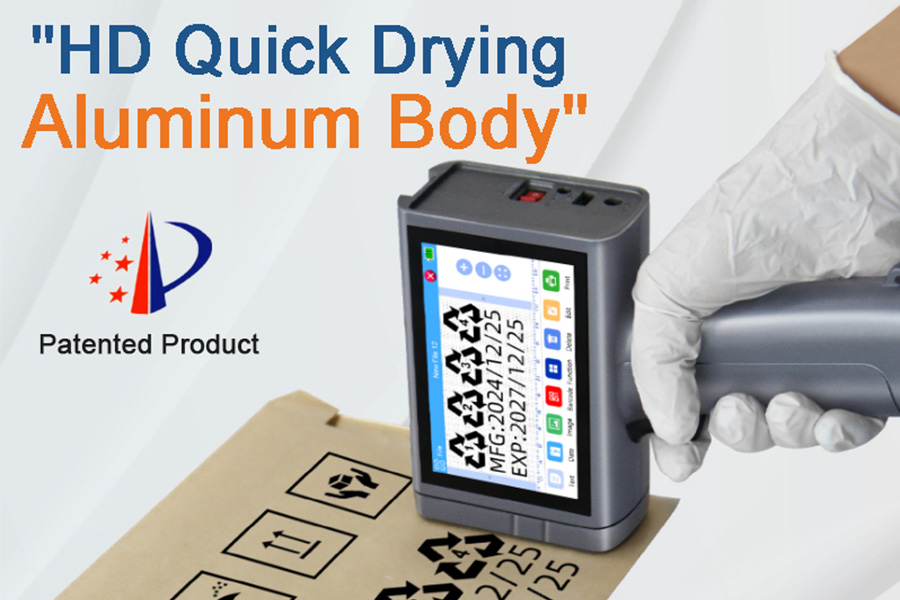
An inkjet marking gun is a handheld or portable thermal inkjet (TIJ) device that prints codes directly onto surfaces such as cardboard, plastic, metal, wood, glass, pipes, pallets, and more. Instead of producing labels, it ejects ink droplets directly onto the product surface.
Key advantages include:
(1)True on-demand printing
(2)High-resolution alphanumeric, QR, and barcode output
(3)No ribbon or label material required
(4)Excellent for large or irregular-shaped items
(5)Mobility for warehouse or field operations
Inkjet marking guns are increasingly used in logistics, construction materials, assembly lines, and Amazon FBA prep stations.
What Is a Label Printer?
A label printer—thermal transfer or direct thermal—produces adhesive stickers printed with barcodes, SKUs, and product information. Users apply the printed labels onto products or packaging manually or with an applicator.
Common advantages include:
(1)Consistent, standardized label formats
(2)Good for small items requiring uniform identification
(3)Strong adhesion on compatible surfaces
(4)Well-established technology in retail and warehousing
Despite its strengths, label printing introduces consumable cost and additional labor, especially at scale.

Inkjet Marking Gun vs. Label Printer: A Detailed Comparison
1. Cost & Consumables
Inkjet Marking Gun
(1)Uses TIJ ink cartridges
(2)No label material required
(3)Lower long-term operating cost
Label Printer
(1)Requires labels + ribbon (for thermal transfer)
(2)Higher recurring consumable cost
(3)More waste generated
Verdict: Inkjet marking guns typically offer better long-term savings.
2. Printing Speed & Workflow Efficiency
Inkjet Marking Gun
(1)Fast direct-to-surface printing
(2)Instant switching between jobs
(3)Excellent for on-demand or mobile workflows
Label Printer
(1)Multiple steps: print → peel → apply
(2)Slower for high-mix, low-volume products
(3)Manual labeling reduces throughput
Verdict: Marking guns dramatically improve real-time processing speed.
3. Surface Compatibility
Inkjet Marking Gun
(1)Works on porous and non-porous materials
(2)Ideal for large, curved, or uneven items
(3)Handles industrial materials like pipes, boards, metal parts
Label Printer
(1)Limited to surfaces that accept adhesives
(2)Struggles with oily, dusty, or textured items
Verdict: Inkjet guns are more versatile across industries.
4. Durability & Code Longevity
Inkjet Marking Gun
(1)Solvent inks provide strong adhesion
(2)Resistant to smudging and abrasion
Label Printer
(1)Labels may peel, fade, or be damaged during handling
(2)Requires the right label stock for harsh conditions
Verdict: Inkjet printing provides longer-lasting, more secure markings.
5. Sustainability & Waste Reduction
Inkjet Marking Gun
(1)No backing paper, no label waste
(2)Lower environmental footprint
Label Printer
(1)Generates continuous label liner waste
(2)Requires more consumable transport and storage
Verdict: Inkjet is significantly more eco-friendly.
6. Total Cost of Ownership (TCO)
When evaluating equipment cost + consumables + labor + maintenance:
(1)Inkjet guns win in operations where mobility, flexibility, and consumable reduction matter.
(2)Label printers remain useful for businesses needing consistent sticker formats for very small packaging.
Which One Is Better?
Choose an Inkjet Marking Gun if you need:
(1)Direct printing on large or irregular items
(2)Fast on-demand marking
(3)Reduced labor and consumable cost
(4)High mobility
(5)Durable and smudge-resistant codes
Choose a Label Printer if you need:
(1)Uniform retail-ready labels
(2)Permanent adhesive labels
(3)High-volume sticker production
For most industrial, warehouse, logistics, and Amazon FBA applications, inkjet marking guns provide the highest efficiency and lowest operational cost.
Final Recommendation for 2025
With the growing demand for flexible and cost-efficient coding systems, inkjet marking guns are becoming the preferred solution for both small businesses and large production lines. They deliver speed, versatility, and sustainability that traditional label printers cannot match—especially in environments where mobility and surface variety matter.
If you're considering switching to a portable inkjet marking gun or want expert guidance on choosing the right model:
Contact us today for recommendations, demos, or wholesale pricing.
Optimize your coding process and start saving on labeling costs instantly.
+MoreRelated recommendations
-
Handheld Inkjet Printer Warranty Questions Buyers Should Ask Before Ordering
Ask these handheld inkjet printer warranty questions to clar...
-
Handheld Inkjet Printer Order Checklist: Printer, Ink, Accessories, and Spare Parts
Use this purchase checklist to confirm the printer, ink, acc...
-
What Information Should You Send for an Accurate Handheld Inkjet Printer Quote?
Use this RFQ worksheet to send the material, message, print ...
-
How to Print Scannable Barcodes and QR Codes on Plastic Packaging
Learn how to print scannable barcodes and QR codes on plasti...
Contact Us

Service phone number+8618759952301
—— Add WeChat communication


