
Best Surfaces for Inkjet Marking Gun Printing: Wood, Metal, Plastic & More
2025-12-17(243)Views
Portable inkjet marking guns have become essential tools for manufacturers, warehouses, and small businesses that need fast, flexible, and on-demand product coding. Whether you're printing batch numbers, barcodes, QR codes, expiration dates, or custom labels, choosing the right surface for inkjet marking directly impacts print quality, durability, and readability.
1. Why Surface Selection Matters for Inkjet Marking Guns
Inkjet marking guns use thermal inkjet (TIJ) or similar high-resolution printing technology to deliver crisp, non-contact marks. But the surface itself determines:
(1)Ink adhesion strength
(2)Drying speed
(3)Smudge resistance
(4)Barcode/QR-code scan accuracy
(5)Longevity in harsh environments
Even the best inkjet marking gun cannot perform well if the surface is incompatible.
Choosing the right surface—and the right ink type—is essential for industrial coding, packaging, and warehouse labeling.
2. Best Surfaces for Inkjet Marking Gun Printing
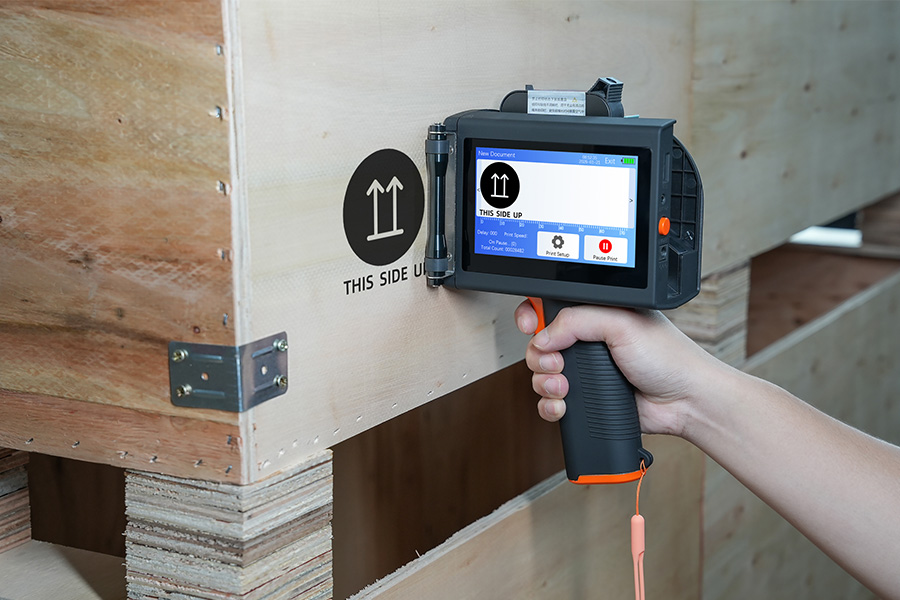
2.1 Wood – Ideal for Construction, Lumber, and Pallet Marking
Wood is one of the most ink-friendly surfaces because it is porous and absorbs ink quickly.
Why wood works well:
(1)Fast drying time
(2)Minimal smudging
(3)Permanent, high-contrast results
(4)Great for rough or uneven surfaces
Best applications:
(1)Pallets
(2)Lumber
(3)Furniture components
(4)Crates and export packaging
Recommended ink type: Water-based or fast-dry solvent ink for rough industrial environments.
2.2 Metal – Excellent for Industrial and Automotive Coding
Metal surfaces are common in manufacturing, but they vary significantly:
(1)Coated metal → easier printing
(2)Bare metal / polished metal → harder for ink to adhere
Where metal marking is used:
(1)Automotive parts
(2)Tools and machinery
(3)Metal barrels and drums
(3)Electrical components
Best practices for printing on metal:
(1)Clean oil or dust before marking
(2)Choose high-adhesion solvent ink
(3)Allow adequate curing time for durability
2.3 Plastic – One of the Most Common Surfaces for Product Coding
Plastics vary widely: PE, PP, PVC, ABS, PET, and more. Each reacts differently with ink.
Which plastics work best with inkjet marking guns?
(1)ABS, PVC, PET → excellent adhesion
(2)PE, PP → require specialty solvent ink
Where plastic marking is used:
(1)Food packaging
(2)Bottles and caps
(3)Electronic casings
(4)Industrial components
Pro tip: For flexible plastics, use inks designed for non-porous materials to prevent smearing.
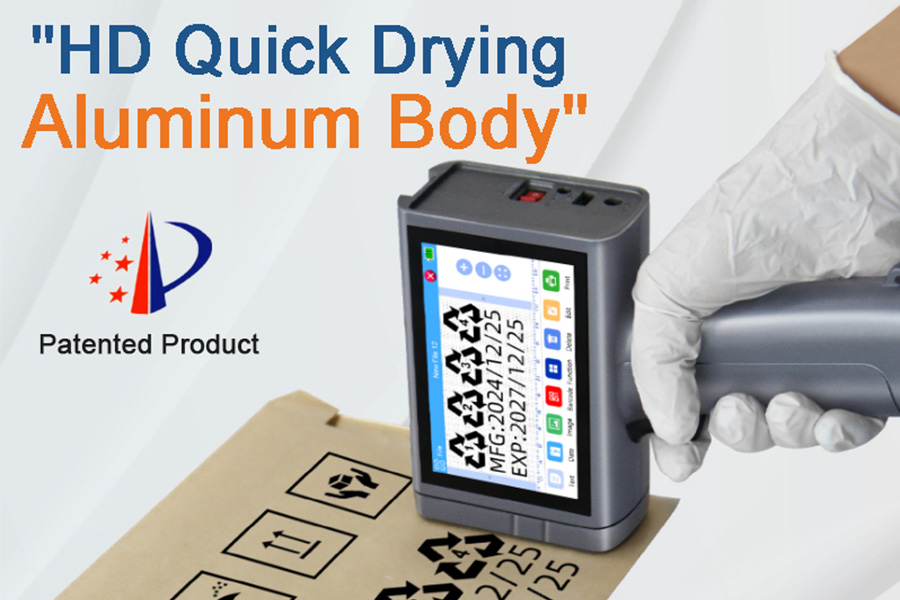
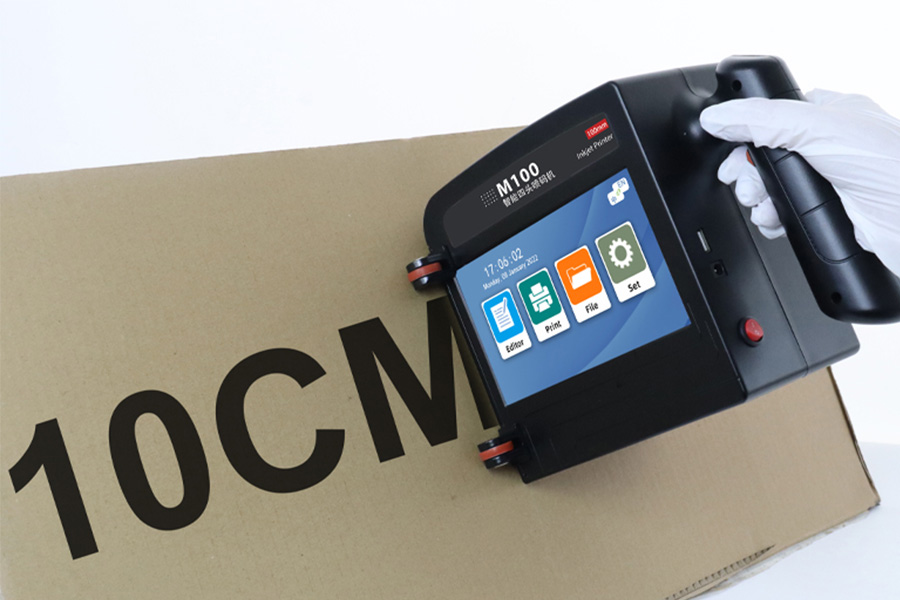
2.4 Cardboard & Paper – Best for Fast, High-Resolution Warehouse Coding
Cardboard is the most universally friendly surface for inkjet marking guns.
Benefits:
(1)Highly absorbent
(2)Sharp, readable prints
(3)Fast-drying without smudging
(4)Ideal for barcodes & QR codes
Applications:
(1)Amazon FBA cartons
(2)Shipping labels
(3)Product packaging
(4)Shelf-ready packaging
Ink recommendation: Water-based TIJ ink for crisp resolution.
2.5 Glass – Requires Specialty Ink for Long-Lasting Marks
Glass is smooth and fully non-porous, meaning standard inks often bead or wipe off.
When to use glass marking:
(1)Beverage bottles
(2)Cosmetic containers
(3)Lab equipment
(4)Chemical packaging
To improve results:
(1)Use high-adhesion MEK or acetone-based solvent ink
(2)Allow longer drying/curing time
(3)Ensure the glass is clean and free of moisture
2.6 Fabric & Textiles – A Less Common but Growing Use Case
Inkjet marking guns can print on fabric for:
(1)Temporary textile codes
(2)Logistics tags
(3)Apparel manufacturing
(4)Event or promotional materials
Best results require:
(1)High-absorption inks
(2)Slower print movement
(3)Tests to confirm wash-resistance
2.7 Concrete & Brick – Rugged Marking for Construction Sites
For rough, porous materials, an inkjet marking gun with strong solvent ink can create bold, durable marks.
Applications:
(1)Construction materials
(2)Pipes
(3)Cement bags
(4)Brick pallets
Even on uneven surfaces, handheld inkjet guns can maintain legible codes.

3. How Surface Properties Affect Print Quality
To achieve optimal results, consider these surface factors:
|
Surface Property |
Effect on Printing |
Recommendation |
|
Porosity |
Faster ink absorption |
Ideal for wood, cardboard |
|
Smoothness |
Better for high-resolution printing |
Metal, plastic, glass |
|
Moisture |
Causes smearing or fading |
Keep surfaces dry |
|
Curvature |
Affects print alignment |
Use a stabilizing guide |
|
Temperature |
Ink drying speed changes |
Consider environment |
Understanding these factors helps you optimize both print quality and ink consumption.
4. Matching the Right Ink Type to the Surface
Choosing the correct ink is just as important as choosing the surface.
Ink Types Overview
|
Ink Type |
Best For |
Notes |
|
Water-based ink |
Porous surfaces (cardboard, wood) |
text, fast drying |
|
Solvent ink |
Plastic, metal, glass |
High adhesion, smudge-resistant |
|
Fast-dry solvent ink |
High-speed industrial lines |
Ideal for cold or oily surfaces |
|
High-contrast ink |
Dark surfaces |
Maintains readability |
5. Tips for Improving Inkjet Marking Gun Print Quality
To maximize print clarity and durability:
✔ Clean the surface before printing
✔ Choose ink formulated for porous or non-porous materials
✔ Hold the marking gun steady and parallel
✔ Adjust DPI settings for barcodes and QR codes
✔ Test on a sample surface before mass production
These steps enhance both accuracy and efficiency.
Inkjet marking guns are highly versatile, but choosing the right surface and the right ink is essential for industrial-grade results. Whether you’re printing on wood, metal, plastic, cardboard, or glass, understanding surface behavior helps you achieve sharp, durable, and cost-efficient markings.
Looking for a reliable inkjet marking gun or need help selecting the right ink for your application?
Contact our specialists today for free recommendations and personalized workflow guidance.
Boost your productivity with the right marking solution—start optimizing your coding process now!
+MoreRelated recommendations
-
Handheld Inkjet Printer Warranty Questions Buyers Should Ask Before Ordering
Ask these handheld inkjet printer warranty questions to clar...
-
Handheld Inkjet Printer Order Checklist: Printer, Ink, Accessories, and Spare Parts
Use this purchase checklist to confirm the printer, ink, acc...
-
What Information Should You Send for an Accurate Handheld Inkjet Printer Quote?
Use this RFQ worksheet to send the material, message, print ...
-
How to Print Scannable Barcodes and QR Codes on Plastic Packaging
Learn how to print scannable barcodes and QR codes on plasti...
Contact Us

Service phone number+8618759952301
—— Add WeChat communication


