
Quick Drying Ink Cartridge vs Standard Ink
2026-02-04(268)Views
Choosing between a quick drying ink cartridge and standard ink is not a simple consumables decision. For manufacturers running modern production lines, this choice directly affects print quality, line efficiency, compliance risk, and total operating cost.
Understanding the Core Difference Between Quick Drying Ink and Standard Ink
At a high level, the distinction lies in drying behavior and application tolerance, but the real difference is how each ink performs under production pressure.
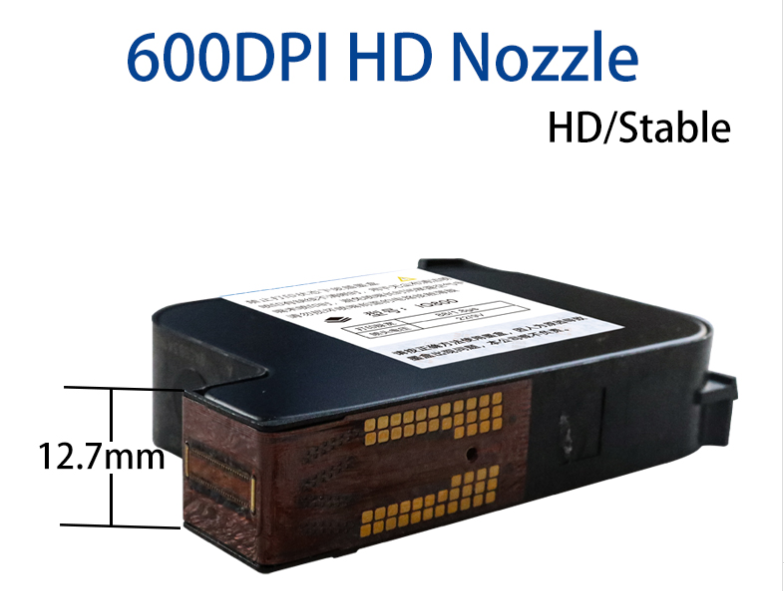
1.Quick drying ink cartridges are engineered to set rapidly on the substrate surface, often within milliseconds.
2.Standard inks prioritize stability, cost efficiency, and general-purpose use, with longer drying times.
The wrong choice can lead to smearing, rework, downtime, or unreadable codes—especially as line speeds increase.
Drying Speed: Why Time-to-Set Matters on Modern Lines
Quick Drying Ink Cartridge
Quick drying ink is designed for environments where printed products are handled, stacked, or conveyed almost immediately after marking.
Key advantages:
1.Minimal smudging on fast-moving lines
2.Reliable code integrity during downstream contact
3.Better performance on non-absorbent substrates
Standard Ink
Standard ink typically requires more time to dry and performs best when:
1.Line speeds are moderate
2.There is sufficient dwell time after printing
3.Substrates allow absorption
Critical insight:
As production speeds increase, standard ink often becomes a hidden bottleneck rather than a cost-saving option.
Substrate Compatibility: One Ink Does Not Fit All
Ink behavior changes dramatically depending on surface characteristics.
Where Quick Drying Ink Performs Best
1.Plastic films and laminates
2.Foils and coated materials
3.Glossy or low-surface-energy packaging
Where Standard Ink Still Makes Sense
1.Porous cardboard or paperboard
2.Low-speed secondary packaging
3.Non-contact-heavy processes
Using standard ink on challenging substrates may appear acceptable during trials but often fails under continuous production conditions.
Print Quality and Code Legibility Over Time
Print quality is not just about initial appearance—it’s about maintaining readability throughout the product lifecycle.
Quick drying ink cartridges typically offer:
1.Sharper edges at high firing frequencies
2.Reduced dot gain and haloing
3.More consistent barcode scan rates
Standard ink may show:
1.Feathering on certain materials
2.Inconsistent contrast at higher speeds
3.Increased rejection rates during inspections
For industries with traceability or regulatory requirements, these differences directly affect compliance risk.
Operational Impact: Downtime vs Stability
Quick Drying Ink Cartridge
1.Optimized for continuous high-speed operation
2.Lower risk of smearing-related stoppages
3.Reduced need for line adjustments
Standard Ink
1.Stable in low-demand environments
2.May require speed reductions or buffer zones
3.Higher likelihood of manual intervention
In high-output facilities, even small disruptions multiply into significant losses.
Cost Considerations: Looking Beyond Cartridge Price
At first glance, standard ink often appears cheaper. However, experienced procurement teams evaluate total cost of ownership, not unit price.
Hidden costs associated with standard ink may include:
1.Product rework or scrap
2.Slower line speeds
3.Increased quality inspections
4.Compliance-related delays
Quick drying ink cartridges, while sometimes higher in upfront cost, often reduce indirect operational expenses.
Risk Management and Compliance Perspective
From a risk assessment standpoint:
1.Quick drying ink reduces variability in high-speed environments
2.Standard ink increases dependency on operator control and environmental consistency
In regulated industries, inconsistent codes are not just quality issues—they are business risks.
Which Ink Is Right for You?
Choose a quick drying ink cartridge if:
1.Your line speed is high or increasing
2.Products are handled immediately after printing
3.You print on plastics, films, or coated materials
4.Code quality and traceability are critical
Choose standard ink if:
1.Line speed is low to moderate
2.Substrates are highly absorbent
3.Cost sensitivity outweighs performance demands
Why Many Manufacturers Reevaluate Ink Choices Over Time
As production lines evolve, many facilities outgrow standard ink solutions. What worked at lower volumes may no longer support current throughput, quality expectations, or compliance standards.
Revisiting ink strategy is often one of the simplest ways to unlock efficiency without changing hardware.
Talk to Our Company About the Right Ink for Your Application
Ink selection should never be guesswork—especially when production speed, print quality, and compliance are on the line.
Our company helps manufacturers evaluate real production conditions and match them with the right quick drying ink cartridge or standard ink solution.
Contact our team today to discuss your substrates, line speed, and coding requirements—and get expert guidance tailored to your operation.
+MoreRelated recommendations
-

Handheld Inkjet Printer Warranty Questions Buyers Should Ask Before Ordering
Ask these handheld inkjet printer warranty questions to clar...
-
Handheld Inkjet Printer Order Checklist: Printer, Ink, Accessories, and Spare Parts
Use this purchase checklist to confirm the printer, ink, acc...
-

What Information Should You Send for an Accurate Handheld Inkjet Printer Quote?
Use this RFQ worksheet to send the material, message, print ...
-
How to Print Scannable Barcodes and QR Codes on Plastic Packaging
Learn how to print scannable barcodes and QR codes on plasti...
Contact Us

Service phone number+8618759952301
—— Add WeChat communication


