
How to Choose the Right Quick Drying Ink Cartridge for High-Speed Production Lines
2026-02-03(148)Views
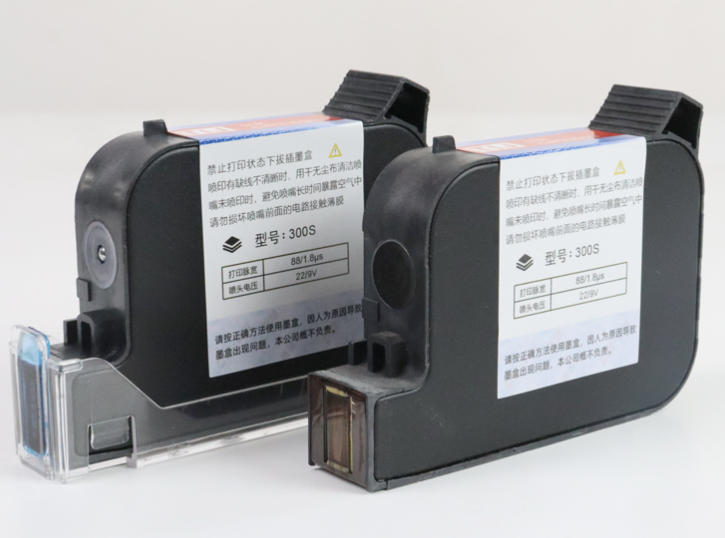
In high-speed production environments, coding and marking failures are rarely caused by the printer alone. More often, the root issue lies in the ink cartridge selection. Choosing the wrong quick drying ink cartridge can lead to smearing, unreadable codes, rejected products, and costly line slowdowns.
This guide explains how to select the right quick drying ink cartridge for high-speed production lines, based on real-world operating conditions—not marketing claims. Whether you are running packaging, food, beverage, pharmaceutical, or industrial manufacturing lines, this article will help you make a technically sound and operationally safe decision.
Why Ink Selection Matters More on High-Speed Lines
As line speeds increase, the margin for error shrinks. Codes must dry within milliseconds, adhere to challenging substrates, and remain readable through downstream handling.
A quick drying ink cartridge is not simply “faster-drying ink.” It is a system-level component that must align with:
1.Line speed and dwell time
2.Substrate surface energy
3.Environmental conditions
4.Printer firing frequency
5.Compliance and readability requirements
On high-speed production lines, ink mismatch becomes visible immediately—through smudging, haloing, poor contrast, or premature wear.
Step 1: Start with Line Speed, Not Ink Chemistry
One of the most common mistakes buyers make is selecting ink based solely on formulation (solvent vs water-based) without first defining actual line speed.
Key questions to ask:
1.What is the maximum and average line speed (m/min or units/min)?
2.How much time passes between printing and first contact?
3.Is the product stationary, indexed, or moving continuously?
Why this matters:
At higher speeds, ink must achieve surface set before mechanical contact. If the dry time exceeds the available dwell window—even slightly—smearing becomes inevitable.
High-speed lines demand ink that dries fast and maintains dot integrity under rapid firing conditions.
Step 2: Match Ink to Substrate Reality (Not Assumptions)
Quick drying performance varies dramatically depending on substrate.
Common substrate challenges:
1.Plastic films & laminates: low surface energy, poor ink wetting
2.Coated cartons: fast absorption but potential feathering
3.Foils & metals: zero absorption, high smudge risk
4.Recycled materials: inconsistent surface behavior
A cartridge that performs well on corrugated board may fail completely on flexible packaging.
Best practice:
Always select quick drying ink based on tested substrate combinations, not generic material categories.
Step 3: Balance Dry Time vs Adhesion
Faster drying is not always better.
Some ultra-fast drying inks sacrifice long-term adhesion, leading to:
1.Code rub-off during packing
2.Fading during storage
3.Barcode scan failures at distribution points
For high-speed production, the goal is controlled drying:
1.Fast enough to prevent smearing
2.Stable enough to maintain adhesion and contrast
This balance is influenced by solvent system, pigment load, and substrate interaction—not just “dry time” listed on a datasheet.
Step 4: Consider Environmental Conditions on the Line
High-speed lines amplify environmental effects.
Factors that directly impact quick drying ink performance:
1.Ambient temperature
2.Humidity levels
3.Airflow from conveyors or blowers
4.Seasonal changes between shifts
An ink cartridge that works during summer trials may behave very differently in winter conditions.
This is why real-world testing matters more than lab specifications.
Step 5: Evaluate Printer Compatibility and Firing Frequency
Not all quick drying ink cartridges behave the same across different printers.
Important considerations:
1.Firing frequency at maximum speed
2.Nozzle recovery during continuous operation
3.Cartridge temperature stability
4.Maintenance intervals under high throughput
In high-speed production, ink stress increases. Choosing a cartridge designed for continuous high-frequency firing reduces downtime and print inconsistency.
Step 6: Think Beyond Ink—Think System Fit
Experienced operations teams understand one critical truth:
When quick drying ink fails, it is often a system mismatch—not an ink defect.
Successful selection requires alignment between:
1.Printer hardware
2.Ink cartridge
3.Substrate
4.Line mechanics
5.Operator handling
This is why many high-speed facilities involve technical specialists early in the ink selection process.
Common Mistakes to Avoid When Choosing Quick Drying Ink
1.Selecting ink based only on “fast dry” claims
2.Ignoring downstream handling and contact points
3.Testing ink at low speeds only
4.Overlooking environmental variability
5.Treating ink as a consumable instead of a performance component
Avoiding these mistakes can prevent costly rework and compliance issues.
When to Seek Expert Guidance
If your production line runs at high speed and any of the following apply, expert input is recommended:
1.Frequent smudging or unreadable codes
2.Multiple substrates on one line
3.Seasonal performance inconsistencies
4.Tight compliance or traceability requirements
Talk to Our Team
Choosing the right quick drying ink cartridge for a high-speed production line requires more than reading specifications—it requires understanding your real operating conditions.
Our team works directly with manufacturers to match ink solutions to actual line speeds, substrates, and production constraints.
Contact our company today to discuss your application, request ink recommendations, or arrange real-world testing tailored to your production line.
+MoreRelated recommendations
-
Handheld Inkjet Printer Warranty Questions Buyers Should Ask Before Ordering
Ask these handheld inkjet printer warranty questions to clar...
-
Handheld Inkjet Printer Order Checklist: Printer, Ink, Accessories, and Spare Parts
Use this purchase checklist to confirm the printer, ink, acc...
-
What Information Should You Send for an Accurate Handheld Inkjet Printer Quote?
Use this RFQ worksheet to send the material, message, print ...
-
How to Print Scannable Barcodes and QR Codes on Plastic Packaging
Learn how to print scannable barcodes and QR codes on plasti...
Contact Us

Service phone number+8618759952301
—— Add WeChat communication


