
Common Buying Mistakes That Lead to Expensive Printing Problems
2026-07-28(2)Views
Purchasing a handheld inkjet printer may appear to be a straightforward equipment decision.
However, many costly production problems begin long before the printer is installed.
They begin during the purchasing process.
Selecting equipment based only on price, overlooking application requirements, or failing to evaluate supplier capabilities can result in unnecessary downtime, poor print quality, increased maintenance costs, and reduced production efficiency.
The good news is that most of these problems are preventable.
By understanding the most common purchasing mistakes, manufacturers can make more informed decisions and significantly reduce long-term operational risks.
If you're still comparing industrial printing solutions, our handheld inkjet printer buying guide for manufacturers provides a complete framework for evaluating equipment, suppliers, total ownership costs, and long-term production requirements.
This article highlights the most common purchasing mistakes and explains how to avoid them before investing in a handheld inkjet printer.
Why Buying Mistakes Are More Expensive Than Most Manufacturers Expect
The purchase price of a handheld inkjet printer is easy to compare.
The long-term consequences of a poor purchasing decision are much harder to calculate.
An unsuitable printer may lead to:
1. Frequent production interruptions
2. Poor print consistency
3. Product rework
4. Increased labor requirements
5. Higher maintenance expenses
6. Delayed customer deliveries
7. Reduced equipment lifespan
These costs often exceed the initial difference between competing printer quotations.
For this reason, experienced purchasing teams evaluate long-term operational value rather than focusing exclusively on the purchase price.
Mistake 1: Choosing the Lowest Price Instead of the Best Value
Price is naturally an important consideration.
However, selecting equipment based only on the lowest quotation often ignores other factors that influence long-term operating costs.
A lower-priced printer may require:
1. More maintenance
2. More operator intervention
3. More frequent consumable replacement
4. More production downtime
Instead of asking:
"Which printer is cheapest?"
Manufacturers should ask:
"Which printer creates the greatest value over its entire lifecycle?"
Mistake 2: Ignoring Production Requirements
Every manufacturing environment is different.
A printer that performs well in one factory may not be suitable for another.
Before purchasing, manufacturers should evaluate:
1. Production volume
2. Product materials
3. Printing location
4. Environmental conditions
5. Required print content
6. Traceability requirements
Choosing equipment without understanding these variables often results in unnecessary operational challenges.
Mistake 3: Evaluating Specifications Instead of Applications
Technical specifications provide useful information, but they do not guarantee successful production results.
For example, two printers with similar print resolution may perform very differently when printing on:
1. Curved plastic bottles
2. Metal components
3. Corrugated cartons
4. Flexible packaging
Real-world application performance should always take priority over specification sheets.
Mistake 4: Skipping Print Sample Testing
One of the most preventable purchasing mistakes is ordering equipment without first testing it on actual production materials.
Testing allows manufacturers to verify:
1. Print clarity
2. Ink adhesion
3. Drying performance
4. Barcode readability
5. Overall production compatibility
Skipping this step increases purchasing uncertainty and operational risk.
Mistake 5: Underestimating Future Business Growth
Many companies purchase equipment based only on today's production requirements.
However, business needs often change over time.
Production volume may increase.
New products may be introduced.
Customer coding requirements may become more complex.
Choosing equipment with limited flexibility may require earlier replacement or additional investment in the future.
Planning for future growth helps maximize the value of today's purchasing decision.
Mistake 6: Ignoring Total Cost of Ownership
One of the most expensive purchasing mistakes is evaluating only the purchase price while overlooking the total cost of ownership (TCO).
The actual cost of operating a handheld inkjet printer includes much more than the initial investment.
Manufacturers should evaluate factors such as:
1. Ink consumption
2. Routine maintenance
3. Replacement parts
4. Operator training
5. Production downtime
6. Equipment lifespan
7. Productivity improvements
A printer with a higher purchase price may deliver a lower overall cost when it operates more reliably and requires less maintenance over time.
Purchasing decisions should therefore consider lifecycle costs rather than initial expenditure alone.
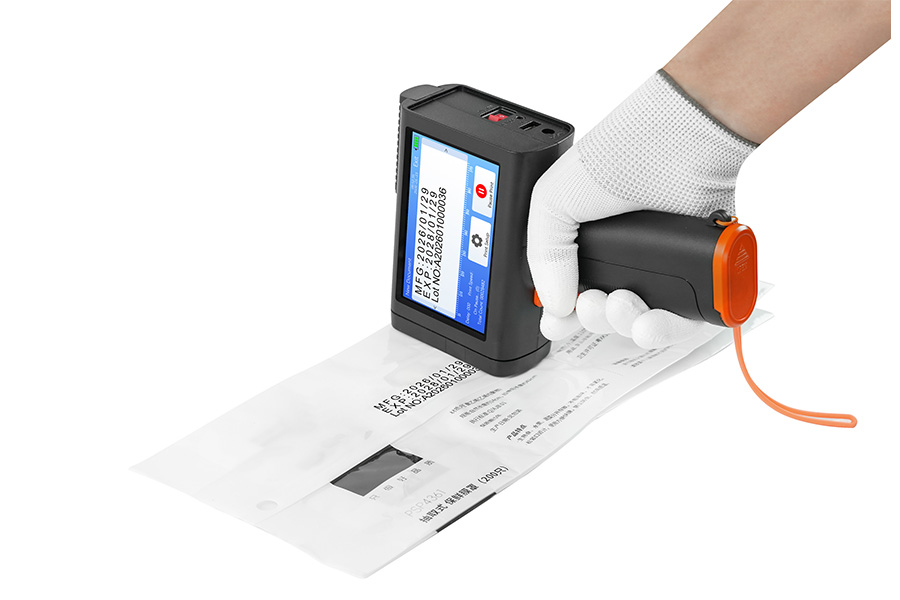
Mistake 7: Overlooking Technical Support
Industrial printing equipment operates continuously in demanding production environments.
When technical issues arise, timely support becomes critical.
Unfortunately, many buyers evaluate hardware specifications carefully while paying little attention to after-sales service.
Before purchasing, manufacturers should verify:
1. Is technical support available after installation?
2. Can operators receive training?
3. Are firmware updates provided?
4. Is application guidance available?
5. Can consumables and spare parts be supplied consistently?
Reliable technical support reduces production interruptions and protects long-term productivity.
For a more detailed evaluation framework, see What Technical Support Should You Expect from an Industrial Inkjet Printer Supplier?
Mistake 8: Choosing a Supplier Instead of Choosing a Long-Term Partner
Purchasing a handheld inkjet printer is rarely a one-time transaction.
As production evolves, businesses may require:
1. Additional printers
2. New ink formulations
3. Software updates
4. Production expansion
5. Technical consultation
6. Product customization
A supplier that understands your manufacturing process can continue supporting your business as these requirements change.
Instead of selecting a vendor based only on pricing, manufacturers should evaluate whether the supplier has the expertise and resources to become a long-term partner.
Mistake 9: Failing to Ask the Right Questions Before Purchasing
Many purchasing problems can be prevented simply by asking more informed questions during the evaluation process.
Examples include:
1. Is this printer suitable for our materials?
2. Can it support future production growth?
3. What level of technical support is included?
4. How quickly can consumables be supplied?
5. What testing has been performed using similar applications?
Manufacturers that prepare structured evaluation questions generally make more confident purchasing decisions.
For a complete evaluation checklist, refer to 10 Questions to Ask Before Buying a Handheld Inkjet Printer.
Handheld Inkjet Printer Buying Checklist
Use the following checklist before making your final purchasing decision.
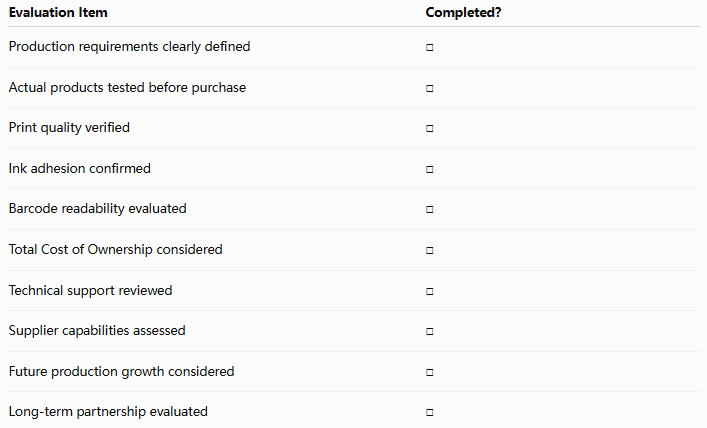
Completing this checklist helps reduce purchasing risk and improves confidence when selecting industrial coding equipment.
A Smarter Purchasing Process
Rather than making decisions based on a single quotation, successful manufacturers typically follow a structured evaluation process.
Step 1: Define production requirements.
↓
Step 2: Compare suitable printer solutions.
↓
Step 3: Test print quality using actual products.
↓
Step 4: Evaluate the manufacturer and technical support.
↓
Step 5: Compare Total Cost of Ownership rather than purchase price alone.
↓
Step 6: Select the solution that provides the best long-term business value.
Following a structured process reduces uncertainty and helps ensure the selected printer supports operational goals for years to come.
Frequently Asked Questions
1. What is the most common mistake when buying a handheld inkjet printer?
The most common mistake is selecting equipment based only on purchase price without evaluating production requirements, long-term operating costs, and supplier support.
2. Why is print testing important before purchasing?
Testing on actual products verifies print clarity, adhesion, drying performance, and compatibility with real production conditions, reducing purchasing risk.
3. Should technical support influence purchasing decisions?
Yes.
Responsive technical support, operator training, software updates, and reliable consumable supply all contribute to long-term equipment performance.
4. How can manufacturers avoid expensive purchasing mistakes?
By following a structured evaluation process that includes application testing, supplier assessment, lifecycle cost analysis, and technical support evaluation.
5. Is the lowest-priced printer usually the most economical choice?
Not necessarily.
A printer with a higher initial price may provide lower operating costs, better reliability, and higher productivity throughout its service life.
Better Decisions Lead to Better Production Results
Most expensive printing problems do not begin on the production line—they begin during the purchasing process.
Manufacturers that evaluate equipment carefully, verify real-world performance, assess supplier capabilities, and consider long-term operating value are far more likely to achieve stable production and lower lifecycle costs.
The objective is not simply to purchase a handheld inkjet printer.
The objective is to invest in a solution that supports productivity, product quality, and future business growth.
By avoiding the common mistakes outlined in this guide, businesses can make purchasing decisions with greater confidence and reduce costly operational risks.
Ready to Choose the Right Handheld Inkjet Printer?
Every manufacturing application is different, and the best solution depends on your products, production environment, coding requirements, and long-term business objectives.
Our specialists can help you compare options, evaluate print samples, analyze application requirements, and recommend the most suitable handheld inkjet printing solution for your operation.
Ready to Improve Your Printing Efficiency?
Get expert advice and the best solution tailored to your business.
Get Your Free Quote Within 24 Hours✔ Fast response ✔ Custom solution ✔ No obligation
+MoreRelated recommendations
-
Common Buying Mistakes That Lead to Expensive Printing Problems
Discover the most common handheld inkjet printer buying mist...
-
What Technical Support Should You Expect from an Industrial Inkjet Printer Supplier?
Learn what technical support to expect from an industrial in...
-
How to Test Print Quality Before Purchasing a Handheld Inkjet Printer
Learn how to test print quality before purchasing a handheld...
-
OEM vs. Standard Handheld Inkjet Printers: Which Is Best for Your Brand?
Compare OEM vs. standard handheld inkjet printers to determi...
Contact Us

Service phone number+8618759952301
—— Add WeChat communication


