
10 Questions to Ask Before Buying a Handheld Inkjet Printer
2026-07-10(80)Views
Purchasing a handheld inkjet printer is an important decision for manufacturers.
Unlike consumer products, industrial printing equipment directly affects:
1. Production efficiency
2. Product identification
3. Traceability
4. Daily operations
A wrong purchasing decision may create problems such as:
1. Poor print results
2. Frequent maintenance
3. Unnecessary operating costs
4. Production interruptions
The challenge is that many buyers focus on the wrong questions.
They often begin with:
1. How much does the printer cost?
2. What is the highest resolution?
3. How many lines can it print?
These questions are useful, but they are not enough.
A successful purchase requires understanding whether the printer matches:
1. Your products
2. Your production environment
3. Your marking requirements
4. Your future needs
Before comparing specific models, manufacturers should first understand the key questions that determine whether a handheld inkjet printer is the right investment.
For companies building a complete purchasing strategy, this handheld inkjet printer buying guide for manufacturers provides a broader framework covering selection, evaluation, and implementation considerations.
This article explains the 10 most important questions manufacturers should ask before making a purchase decision.
Question 1: What Exactly Do We Need to Print?
The first question is not:
“Which printer should we buy?”
It is:
“What information needs to be printed?”
Different applications require different printing capabilities.
Common Printing Requirements
Manufacturers may need to print:
1. Text
2. Numbers
3. Dates
4. Batch codes
5. Serial numbers
6. Barcodes
7. QR codes
8. Logos
Why This Question Matters
A factory printing simple production dates has different requirements from a company printing complex traceability information.
For example:
A small manufacturer may only need:
1. Product code
2. Manufacturing date
A larger industrial supplier may require:
1. Serial tracking
2. Customer identification
3. Barcode information
Understanding the actual printing requirement prevents purchasing unnecessary features.
Question 2: What Materials Will We Print On?
The second critical question is:
“What surfaces need to be marked?”
A handheld inkjet printer does not print on every material in exactly the same way.
Different surfaces have different characteristics.
Common Printing Materials
Examples include:
1. Plastic
2. Metal
3. Glass
4. Cardboard
5. Wood
6. Packaging films
Why Material Testing Matters
Surface properties affect:
1. Ink adhesion
2. Drying speed
3. Print durability
4. Readability
For example:
Plastic may require different ink performance compared with cardboard.
Metal may require stronger adhesion and durability.
A professional evaluation should always consider the actual product material.
Question 3: Where Will Printing Actually Happen?
Many buyers focus on the printer but forget the working environment.
The location of printing affects the best solution.
Ask:
1. Will printing happen on a production line?
2. In a warehouse?
3. During inspection?
4. After assembly?
5. In different factory areas?
Why Location Matters
A handheld printer is valuable because it provides mobility.
However, manufacturers should understand how operators will actually use it.
Consider:
1. Product movement
2. Operator workflow
3. Available space
4. Accessibility
Question 4: How Often Will Printing Information Change?
Information changes are one of the biggest reasons manufacturers choose flexible printing solutions.
Ask:
1. How often do product codes change?
2. How many batches are produced?
3. How frequently do customer requirements change?
Low Change Environment
Example:
1. One product
2. Fixed information
3. Stable production
A simple solution may be enough.
High Change Environment
Example:
1. Multiple products
2. Different customer orders
3. Frequent batch updates
A flexible handheld printing solution may provide more value.
Question 5: What Print Quality Does Our Application Require?
Print quality is not only about resolution numbers.
Manufacturers should consider:
1. Readability
2. Consistency
3. Adhesion
4. Durability
Example
A barcode application requires:
1. Clear edges
2. Reliable scanning
A simple text application may have different requirements.
The best printer is the one that achieves the required production result.
For a deeper evaluation of printer comparison methods beyond specifications, manufacturers should review:
How to Compare Handheld Inkjet Printers Beyond Specifications
Question 6: How Will We Test the Printer Before Purchase?
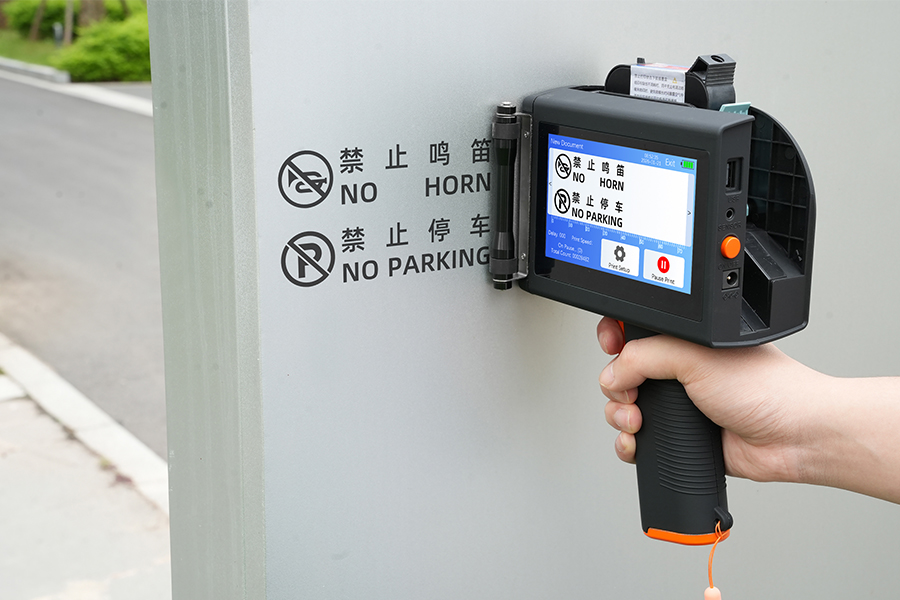
A common mistake is purchasing without real application testing.
A printer demonstration using a supplier's sample may not represent your actual production environment.
A Proper Testing Process Should Include:
Product Testing
Use your actual products.
Information Testing
Print the information you actually need.
Durability Testing
Check whether the printing remains readable during handling.
Why Testing Reduces Risk
Testing helps confirm:
1. Material compatibility
2. Print quality
3. Operator usability
Before final purchase, manufacturers should understand how to properly evaluate results through:
How to Test Print Quality Before Purchasing a Handheld Inkjet Printer
Question 7: What Is the Expected Daily Usage?
Usage frequency affects purchasing decisions.
A printer used occasionally has different requirements from one used throughout the day.
Consider:
1. Printing frequency
2. Number of operators
3. Production schedule
4. Working conditions
Occasional Use
Important factors:
1. Easy operation
2. Quick setup
3. Low maintenance
Daily Industrial Use
Important factors:
1. Reliability
2. Stability
3. Long-term support
Question 8: What Maintenance Requirements Should We Expect?
Every industrial device requires proper maintenance.
Before purchasing, ask:
1. How often does maintenance occur?
2. How are cleaning procedures performed?
3. What consumables are required?
Why Maintenance Matters
A printer that is difficult to maintain may create:
1. Operator frustration
2. Production delays
3. Additional costs
Manufacturers should understand daily operation requirements before purchasing.
Question 9: What Support Will We Receive After Purchase?
The relationship with the supplier does not end after delivery.
Manufacturers should ask:
1. Is technical support available?
2. Are operation instructions provided?
3. Can problems be solved quickly?
Why Support Matters
Industrial printing problems often occur during real production.
When support is needed, response quality becomes important.
Question 10: Does This Solution Support Our Future Growth?
The final question is:
“Will this printer still meet our needs as our business grows?”
Manufacturing requirements often change.
Today:
1. Simple batch coding
Tomorrow:
1. More products
2. More customers
3. More traceability requirements
Future Planning Considerations
Think about:
1. Increasing product variety
2. Additional printing requirements
3. Higher production expectations
A good purchasing decision considers future needs, not only today's situation.
A Pre-Purchase Checklist for Evaluating a Handheld Inkjet Printer
The 10 questions above help manufacturers understand their actual requirements.
Before making a final purchasing decision, it is useful to organize those requirements into a simple evaluation checklist.
A good purchasing process should consider five areas:
1. Application suitability
2. Printing requirements
3. Operational conditions
4. Supplier capability
5. Future needs
Handheld Inkjet Printer Buying Checklist
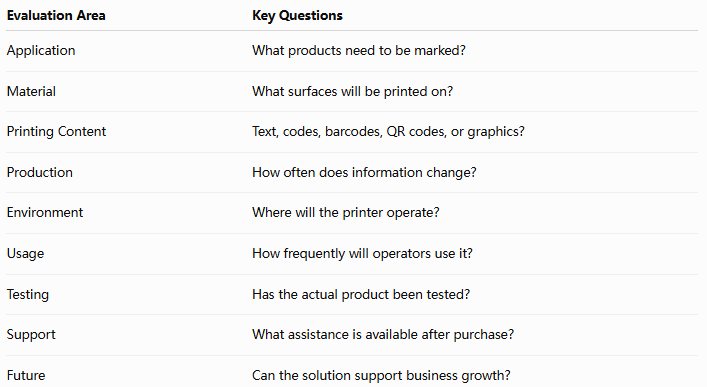
This checklist helps manufacturers avoid purchasing based only on product appearance or marketing claims.
Common Mistake: Choosing a Printer Before Understanding the Application
One of the most common purchasing mistakes is selecting equipment too early.
Some buyers begin with:
1. Searching for the cheapest model
2. Comparing online specifications
3. Looking only at technical features
However, the correct order should be:
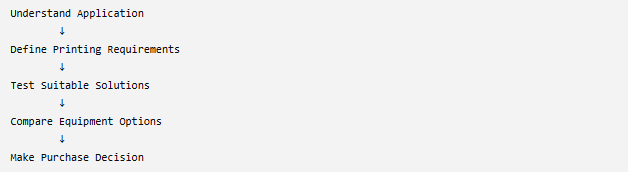
The printer should fit the manufacturing process.
The manufacturing process should not be forced to fit the printer.
Common Mistake: Focusing Only on Price
Price is an important factor, but it should not be the only factor.
A lower initial purchase price may create problems if the printer:
1. Does not meet print requirements
2. Requires frequent troubleshooting
3. Creates production interruptions
Example
Two printers may have similar purchase prices.
However:
Printer A:
1. Works reliably
2. Matches the application
3. Requires simple operation
Printer B:
1. Requires frequent adjustments
2. Produces inconsistent results
3. Needs additional support
The real value difference appears during daily operation.
Common Mistake: Buying Based Only on Specifications
Technical specifications are useful, but numbers alone do not determine practical performance.
For example:
A printer may advertise:
1. High resolution
2. Large print height
3. Fast speed
But the important question is:
Can it consistently solve your actual production problem?
Real Application Factors Matter More
Manufacturers should consider:
1. Actual product surface
2. Required readability
3. Production environment
4. Operator workflow
This is why comparing handheld inkjet printers should go beyond specifications.
Common Mistake: Skipping Real Product Testing
Many purchasing problems happen because buyers evaluate printers without testing their own products.
A sample printed on another material does not always represent production results.
Proper Testing Should Include:
Your Actual Product
Not only supplier samples.
Your Actual Printing Content
Including:
1. Batch numbers
2. Barcodes
3. Dates
4. Codes
Your Actual Working Conditions
Including:
1. Production environment
2. Operator usage
3. Handling process
Common Mistake: Ignoring Operator Experience
A printer may have excellent technical capability, but if operators find it difficult to use, efficiency may suffer.
Before purchasing, consider:
1. Interface simplicity
2. Learning time
3. Daily operation steps
4. Maintenance process
Why User Experience Matters
Industrial equipment is used every day.
Small operation difficulties can become repeated production problems.
A practical solution should be:
1. Easy to understand
2. Easy to operate
3. Easy to maintain
How to Communicate With a Handheld Inkjet Printer Supplier
A high-quality inquiry provides better recommendations.
Instead of asking:
“How much is your printer?”
Provide application details.
Information Suppliers Need
Product Information
Include:
1. Product type
2. Material
3. Surface condition
4. Product size
Printing Requirements
Explain:
1. What needs to be printed
2. Print size
3. Required durability
4. Daily quantity
Production Information
Share:
1. Current marking method
2. Existing problems
3. Future requirements
Example of a High-Quality Inquiry
Instead of:
“I need a handheld inkjet printer.”
A better inquiry would be:
“We manufacture plastic components. We need to print batch numbers and production dates on finished parts. Daily output is approximately 2,000 pieces. Products are stored indoors, and we need clear identification after handling.”
This allows suppliers to recommend a more accurate solution.
Why Application Discussion Matters Before Purchase
Professional suppliers should not only sell equipment.
They should help evaluate:
1. Whether handheld printing is suitable
2. What ink type may work
3. What printing method fits the workflow
The goal is not simply selling a machine.
The goal is achieving stable production results.
A Practical Buying Process for Manufacturers
A reliable purchasing process usually follows these steps:
Step 1: Identify the Production Challenge
Define:
1. Current problem
2. Desired improvement
3. Expected result
Step 2: Collect Application Information
Prepare:
1. Product samples
2. Photos
3. Printing requirements
Step 3: Evaluate Possible Solutions
Compare:
1. Application suitability
2. Operation method
3. Long-term practicality
Step 4: Test Before Purchase
Confirm:
1. Print quality
2. Material compatibility
3. Workflow suitability
Step 5: Confirm Support and Implementation
Understand:
1. Training
2. Technical assistance
3. Maintenance expectations
Frequently Asked Questions
1. What is the most important question before buying a handheld inkjet printer?
The most important question is:
“What production problem are we trying to solve?”
The printer should be selected based on the application, not only the equipment features.
2. Should I compare handheld inkjet printers by specifications?
Specifications are useful, but they should not be the only factor.
Manufacturers should also evaluate:
1) Actual print performance
2) Product compatibility
3) Workflow requirements
3. Why should I test print quality before buying?
Because actual products can behave differently from samples.
Testing confirms:
1) Print clarity
2) Adhesion
3) Durability
4) Application suitability
4. What information should I provide when requesting a quotation?
A useful inquiry should include:
1) Product material
2) Printing content
3) Production volume
4) Working environment
5) Current challenges
5. How early should I involve a supplier?
The earlier a qualified supplier understands your application, the easier it is to identify the correct solution.
Early communication can prevent purchasing mistakes.
Ask the Right Questions Before Investing
Buying a handheld inkjet printer is not simply a product selection decision.
It is a manufacturing improvement decision.
The best results come from understanding:
1. What needs to be printed
2. Where printing happens
3. How production operates
4. What challenges need to be solved
Manufacturers that ask the right questions before purchase are more likely to select equipment that provides long-term value.
A successful printing solution should not only work on the first day.
It should continue supporting production as requirements change.
Need Help Evaluating Your Printing Requirements?
Not sure which handheld inkjet printing solution fits your products?
Send us your product details, printing requirements, and production challenges.
Our team can help evaluate your application and recommend a suitable solution.
Ready to Improve Your Printing Efficiency?
Get expert advice and the best solution tailored to your business.
Get Your Free Quote Within 24 Hours✔ Fast response ✔ Custom solution ✔ No obligation
+MoreRelated recommendations
-
How to Print Durable Codes on Plastic Caps, Lids, and Closures
Learn how to print durable lot and date codes on plastic cap...
-
How to Print Batch Codes on Flexible Plastic Bags and Pouches
Learn how to print durable batch codes on flexible plastic b...
-
How to Print Expiry Dates on Plastic Bottles Without Smudging
Learn how to print expiry dates on plastic bottles without s...
-
PE vs PP vs PET vs PVC: Ink Adhesion Test
Compare PE, PP, PET, and PVC with a controlled ink adhesion ...
Contact Us

Service phone number+8618759952301
—— Add WeChat communication


