
Thermal Inkjet (TIJ) Printer: Complete Guide for Industrial Use
2026-06-03(0)Views
Industrial production environments demand printing solutions that are fast, precise, reliable, and easy to maintain. From packaging facilities and food production plants to pharmaceutical manufacturing and logistics operations, industrial coding and marking systems directly influence production efficiency, traceability compliance, and operational costs.
Among modern coding technologies, Thermal Inkjet (TIJ) printers have become one of the fastest-growing solutions for industrial marking applications.
But what exactly is a TIJ printer? How does it work? Is it better than Continuous Inkjet (CIJ)? Which industries benefit most? And how can manufacturers choose the right industrial TIJ system?
This complete guide explains everything manufacturers need to know before investing in an industrial Thermal Inkjet printer.
What Is a Thermal Inkjet (TIJ) Printer?
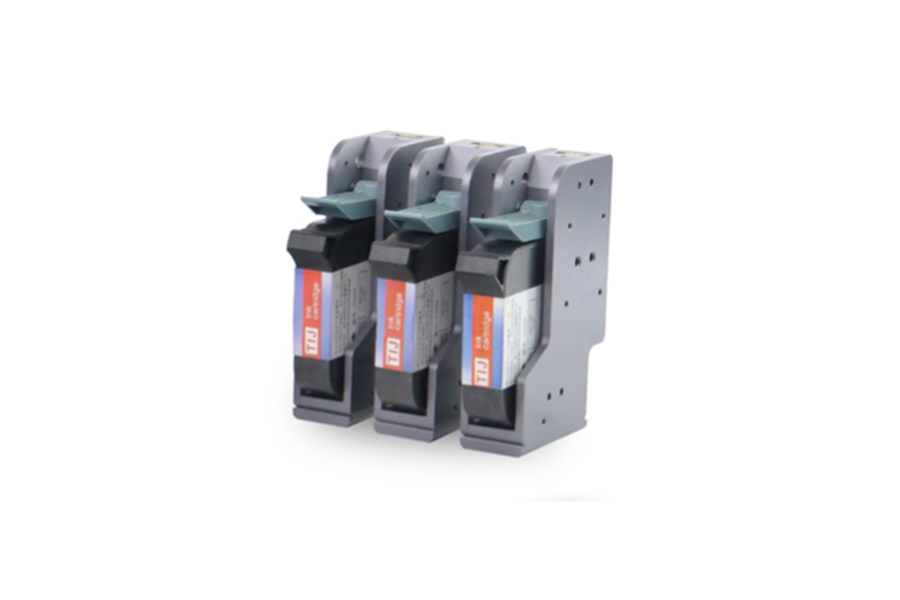
A Thermal Inkjet Printer (TIJ Printer) is an industrial printing system that creates high-resolution markings by rapidly heating tiny ink chambers inside a cartridge.
The heating process generates microscopic vapor bubbles that force ink droplets through nozzles onto a product surface.
Unlike traditional continuous ink systems, TIJ technology prints only when required, reducing ink waste and simplifying maintenance.
Industrial TIJ printers are widely used for printing:
1. Barcodes
2. QR codes
3. Batch numbers
4. Production dates
5. Expiration dates
6. Serial numbers
7. Logos
8. Variable data
9. Product identification information
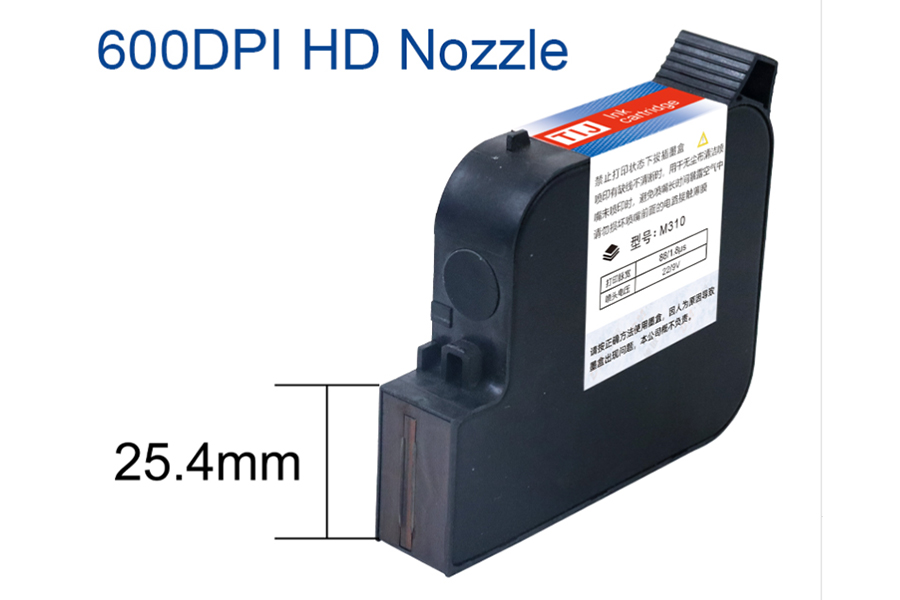
Modern industrial TIJ systems commonly achieve resolutions up to:
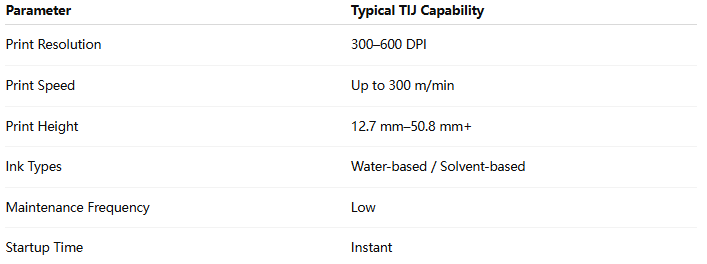
How Thermal Inkjet Technology Works
Industrial TIJ printing follows a straightforward process:
Step 1: Digital Print Data Processing
The controller receives information such as:
1)Barcode information
2)Production dates
3)Batch codes
4)Variable serial numbers
Step 2: Thermal Bubble Generation
Micro-heaters inside the cartridge rapidly heat ink.
Temperature spikes can exceed 300°C momentarily.
This forms microscopic vapor bubbles.
Step 3: Ink Ejection
Bubble expansion pushes controlled droplets through print nozzles.
Step 4: Bubble Collapse
The vapor bubble collapses immediately.
Fresh ink refills the chamber.
The cycle repeats thousands of times per second.
The result is extremely sharp printing quality suitable for industrial traceability requirements.
Why Industrial Manufacturers Are Moving Toward TIJ Printers
Industrial facilities increasingly replace older coding technologies because TIJ systems offer advantages in speed, print clarity, and operating simplicity.
Key benefits include:
1. High Print Resolution
TIJ technology commonly produces:
1)Crisp QR codes
2)Sharp barcodes
3)Fine text
4)Complex logos
Industries requiring machine-readable codes particularly benefit.
For barcode-focused production environments, explore:
TIJ Printer for Barcode Printing
2. Lower Maintenance Requirements
Unlike CIJ systems requiring pumps, filters, and solvent circulation, TIJ printers often operate with cartridge replacement only.
This reduces:
1)Downtime
2)Maintenance labor
3)Spare part costs
For maintenance planning, read:
TIJ Printer Maintenance Guide
3. Cleaner Operation
TIJ systems avoid continuous solvent circulation.
Benefits include:
1)Reduced contamination risk
2)Cleaner production environments
3)Lower operator intervention
Particularly valuable in:
1)Pharmaceutical manufacturing
2)Food packaging
3)Cosmetics production
4. Easy Integration into Existing Lines
Modern TIJ printers integrate with:
1)Conveyor systems
2)Packaging machinery
3)PLC systems
4)ERP systems
5)Vision inspection systems
Integration strategies vary by production design.
Learn more:
TIJ Printer Integration with Production Lines
TIJ Printer vs Other Industrial Coding Technologies
Selecting coding equipment often involves comparing multiple technologies.
Industrial Printing Technology Comparison
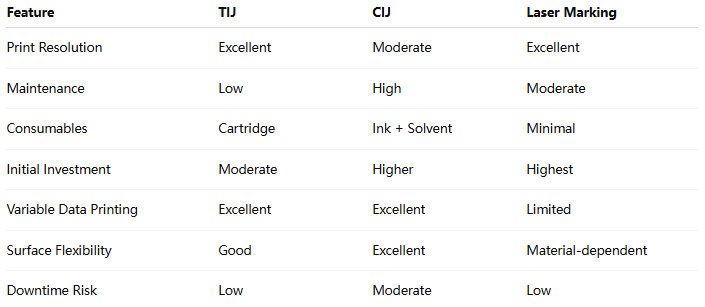
Manufacturers comparing TIJ and CIJ systems should review:
TIJ Printer vs CIJ: Which Is Better?
Industrial Applications of Thermal Inkjet Printers
TIJ printers support multiple industries.
Food & Beverage Packaging
Printing:
1. Expiration dates
2. Batch numbers
3. QR traceability codes
Requirements:
1. High speed
2. Food-safe coding compliance
3. Minimal downtime
Pharmaceutical Manufacturing
Critical uses:
1. Serialization
2. Compliance labeling
3. Lot coding
Pharmaceutical production benefits from TIJ precision and reduced contamination risks.
Electronics Manufacturing
Applications include:
1. PCB marking
2. Component identification
3. Variable manufacturing codes
Fine-resolution capability is especially important.
Logistics & Warehousing
Industrial TIJ printers support:
1. Shipping labels
2. Tracking information
3. Barcode identification
Growing e-commerce demand increases coding volume requirements.
More examples:
Industrial Applications of TIJ Printers
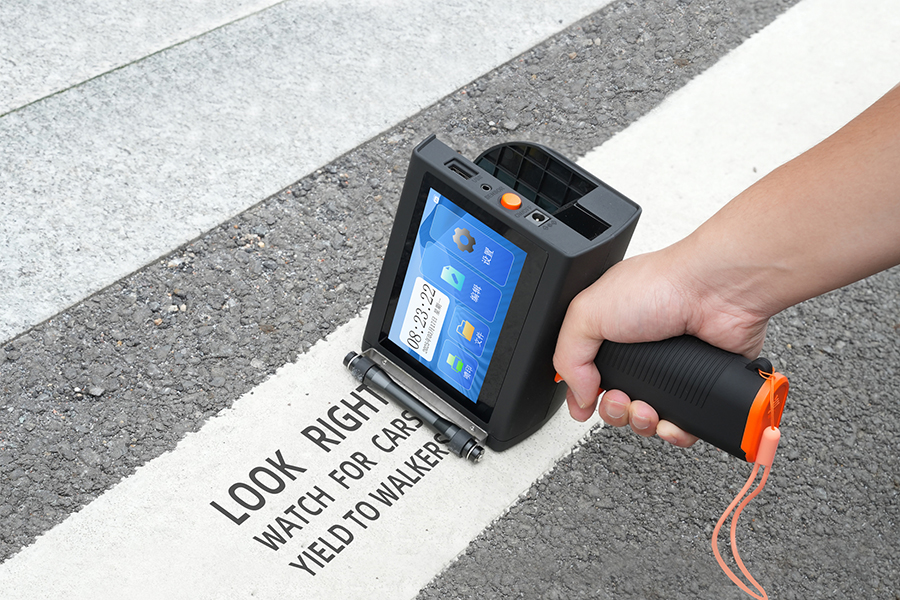
How to Choose the Right Industrial TIJ Printer
Choosing a TIJ printer depends on operational requirements.
Production Speed
Evaluate:
1. Conveyor speed
2. Daily production volume
3. Required throughput
High-speed environments may need advanced controller capability.
Detailed buying considerations:
How to Choose a TIJ Printer for Your Production Line
Print Height Requirements
Typical print heights:

Ink Compatibility
Material compatibility matters.
Examples:

Integration Capability
Evaluate:
1. Encoder compatibility
2. Sensor inputs
3. MES connectivity
4. PLC communication
Integration capability significantly impacts scalability.
TIJ Printer Cost Breakdown
Purchase cost involves more than printer hardware.
Industrial buyers should consider:
Equipment Investment
Includes:
1. Controller
2. Printhead
3. Mounting system
4. Software
Consumable Costs
Recurring costs:
1. Ink cartridges
2. Cleaning supplies
3. Spare components
Downtime Impact
Unplanned downtime affects:
1. Labor efficiency
2. Throughput
3. Production scheduling
Detailed financial planning:
TIJ Printer Cost Breakdown: What to Expect
Common TIJ Printer Problems and Solutions
Even reliable systems require troubleshooting.
Problem: Missing Print Lines
Potential causes:
1. Clogged nozzle
2. Cartridge aging
3. Incorrect settings
Solution:
1. Cartridge cleaning
2. Replacement procedures
3. Calibration checks
Problem: Barcode Readability Failure
Potential causes:
1. Incorrect resolution
2. Improper substrate compatibility
Solution:
1. Adjust DPI settings
2. Optimize ink selection
Problem: Ink Drying Too Slowly
Potential causes:
1. Material mismatch
2. Environmental humidity
Solution:
1. Faster curing ink selection
2. Production environment adjustments
Additional troubleshooting:
Common TIJ Printer Problems
Portable vs Industrial TIJ Printers
Not all TIJ systems serve identical production needs.
Portable TIJ Printers
Best for:
1. Warehousing
2. Small batch production
3. Manual coding
Advantages:
1. Flexibility
2. Lower investment
Industrial TIJ Printers
Best for:
1. Automated production
2. High throughput
3. Continuous operation
Advantages:
1. Stability
2. Scalability
3. Integration capability
Detailed comparison:
Portable vs Industrial TIJ Printers
Industrial TIJ Trends for 2026
Emerging developments include:
Smart Factory Connectivity
Manufacturers increasingly demand:
1. Industry 4.0 integration
2. Cloud monitoring
3. Data analytics
Higher Resolution Demands
QR code traceability requirements continue increasing.
Sustainable Printing
Industrial buyers increasingly evaluate:
1. Lower waste generation
2. Reduced maintenance consumables
3. Energy efficiency
Future-ready systems increasingly combine coding reliability with digital manufacturing compatibility.
For current equipment comparisons:
Best TIJ Printers for Packaging in 2026
Why Manufacturers Choose Professional TIJ Solutions
Industrial coding affects:
1. Product traceability
2. Compliance
3. Brand quality perception
4. Production uptime
Selecting the wrong printer may create:
1. Production interruptions
2. Increased operating cost
3. Quality failures
Professional TIJ solutions help manufacturers improve coding reliability while reducing maintenance complexity.
Request Expert TIJ Printer Consultation
Choosing industrial printing equipment impacts production efficiency for years.
Our engineering team helps manufacturers evaluate:
√ Production speed requirements
√ Material compatibility
√ Integration challenges
√ Ink selection
√ Total ownership cost optimization
→ Request a Custom TIJ Printing Solution Today
Contact our specialists for printer recommendations, integration guidance, and industrial coding consultation.
FAQ
Is TIJ better than CIJ?
TIJ provides higher print resolution and lower maintenance, while CIJ may perform better on certain high-speed or uneven-surface applications.
How long do TIJ cartridges last?
Cartridge lifespan depends on:
1. Print density
2. Production volume
3. Ink type
Industrial environments typically evaluate cost per printed unit.
Can TIJ print QR codes?
Yes. TIJ printers are highly suitable for QR codes due to excellent resolution capability.
Are TIJ printers suitable for food packaging?
Yes. Many food manufacturers use TIJ systems for expiration dates, lot coding, and traceability information.
What production speed can industrial TIJ printers support?
Modern industrial TIJ systems commonly support production speeds exceeding 300 meters per minute depending on application requirements.
Thermal Inkjet technology continues becoming a preferred industrial coding solution because it combines:
1. High resolution
2. Reduced maintenance
3. Flexible integration
4. Reliable variable data printing
Manufacturers evaluating coding equipment should assess operational requirements carefully to maximize long-term production performance.
Industrial TIJ systems are no longer simply coding tools—they are increasingly critical infrastructure for traceability, compliance, and production optimization.
Ready to Improve Your Printing Efficiency?
Get expert advice and the best solution tailored to your business.
Start your project✔ Fast response ✔ Custom solution ✔ No obligation
+MoreRelated recommendations
-
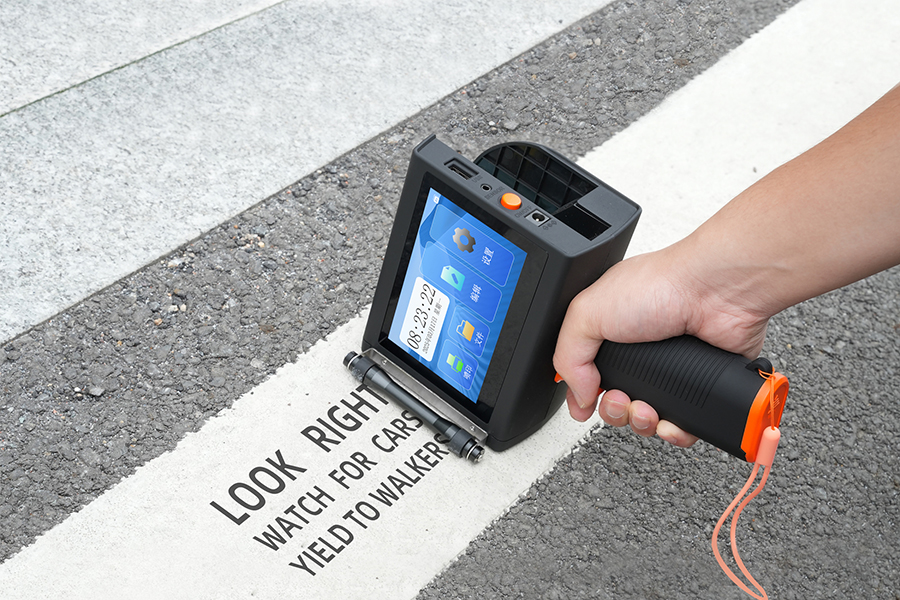
Thermal Inkjet (TIJ) Printer: Complete Guide for Industrial Use
Industrial production environments demand printing solutions...
-
How Ink Formulation Impacts Print Quality in Industrial Inkjet Printing
Ink formulation is the core foundation of industrial inkjet ...
-
Best Ink for Non-Porous Packaging Materials: Industrial Selection Guide
Non-porous packaging materials such as plastic films, coated...
-
Industrial Ink for Plastic and Film Packaging: Performance, Challenges, and Solutions
Plastic and film packaging are among the most widely used ma...
Contact Us

Service phone number+8618759952301
—— Add WeChat communication


