
How to Print Expiry Dates on Plastic Bottles Without Smudging
2026-08-20(26)Views

Start with the Smudge Clock
A bottle can leave the printhead looking perfect and still reach the case packer unreadable. The missing measurement is often time: how long does the mark have before something touches it? Build the coding decision around that interval.
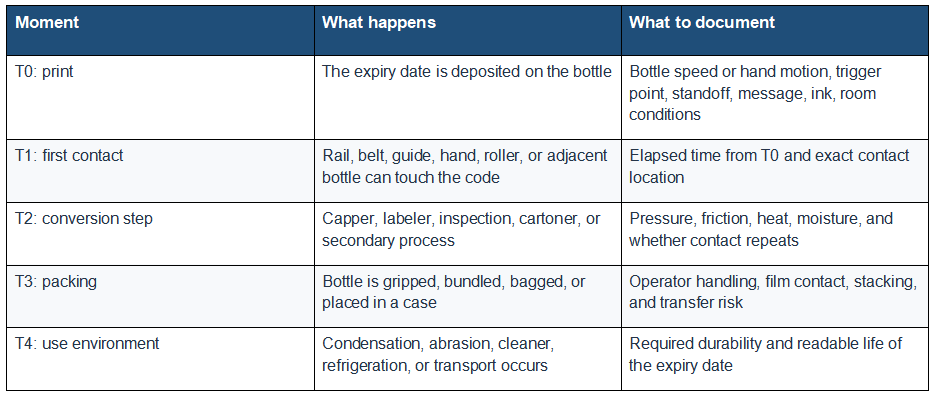
Your minimum dry-window target is not a number copied from a brochure. It is the measured T0-to-T1 interval plus an operating margin agreed during the line trial. If the date is still vulnerable at T1, change the ink, code position, timing, contact path, or process—not merely the font.
Map the Bottle Before Choosing the Print Zone
Resin identification is only the first step. Record whether the bottle is HDPE, PET, PP, PVC, multilayer, coated, colored, textured, made with recycled content, or supplied with release-agent residue. Then map the physical bottle.
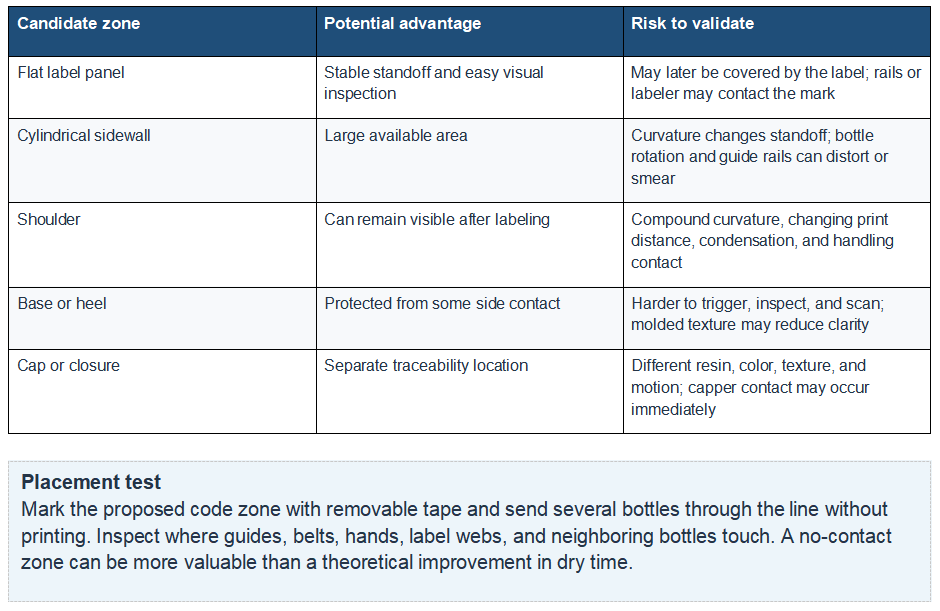
A Seven-Station Setup for a Smudge-Resistant Date
Station 1 — Define the exact expiry-date message
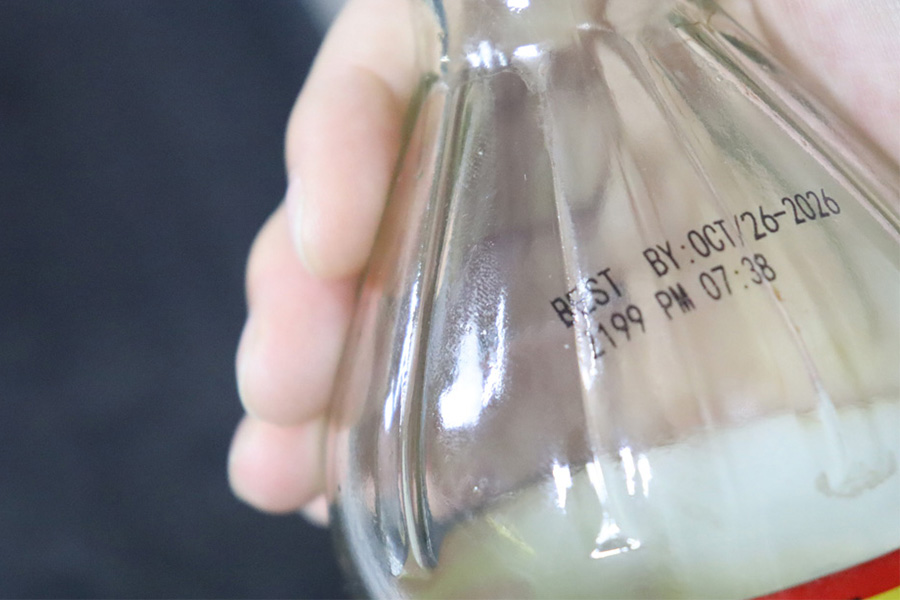
Specify the required wording and format before testing: for example, “EXP,” “BEST BY,” or a market-required phrase; date order; lot code; plant code; and time if needed. Use a short, high-contrast layout with enough character height and spacing for the viewing distance. Avoid unnecessary bolding or heavy ink density until the surface test proves it is needed.
Station 2 — Reproduce the real bottle condition
Test bottles from the actual supplier and production lot. Include the state in which they are printed: empty or filled, warm or cold, dry or recently washed, rigid or squeezable. A room-temperature empty PET bottle is not evidence for a chilled, wet, filled bottle.
Station 3 — Match ink to the tested surface
Use an ink identified by its supplier for the relevant nonporous surface, then qualify it. Solvent-based TIJ inks are marketed for materials such as BOPP, PET, and foil, but supplier compatibility language is a candidate-screening tool, not a production guarantee. Review safety data, food-packaging restrictions, and migration requirements with the responsible compliance team.
Station 4 — Stabilize print distance and motion
Keep the printhead within the equipment’s recommended standoff and as square as possible to the target. On a handheld printer, use a guide wheel, fixture, or bottle cradle when repeatability matters. On a conveyor, control bottle orientation, spacing, trigger position, and side-to-side movement. A wavering distance can create fading that operators mistake for an ink problem.
Station 5 — Protect the dry window
Measure T0 to T1 on the real line. If the window is too short, move the print upstream, relocate the code away from the rail, reduce immediate handling, change the guide geometry, or test another qualified ink. Do not promise a universal “one-second dry time” without the exact bottle, deposit, temperature, humidity, and contact method.
Station 6 — Challenge the code as the buyer will use it
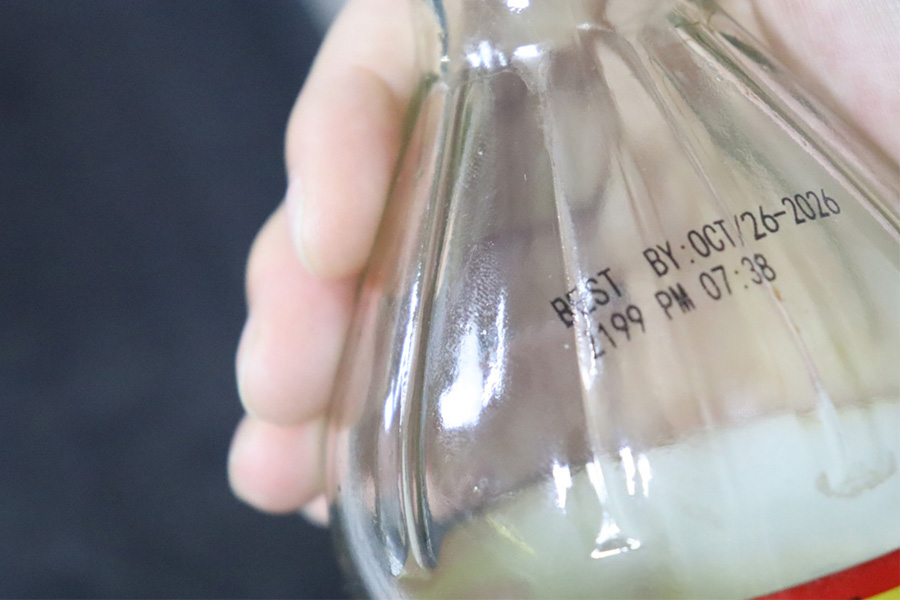
After the intended dry interval, run defined touch, rub, condensation, refrigeration, cleaner, or abrasion checks. Photograph results and preserve controls. If the product is regulated, the buyer’s quality and compliance teams should define the acceptance standard.
Station 7 — Lock the approved recipe
Save the message, printer setting, cartridge identity, print zone, guide setup, trigger position, and test record. Train operators to recognize a wrong bottle orientation, wet surface, damaged nozzle, expired/open cartridge, or unexpected line contact before a batch is released.
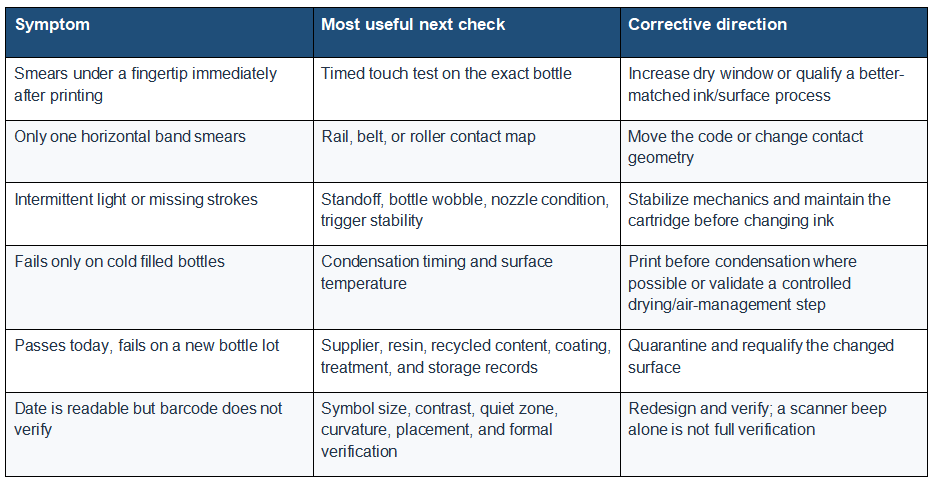
Diagnose the Smear by Where and When It Appears
When the Bottle Carries a Barcode or 2D Code
Human-readable expiry dates and machine-readable symbols do not share identical acceptance rules. GS1 guidance highlights quiet zones, contrast, symbol dimensions, packaging deformation, and positioning on cylindrical packages. If the code enters a GS1 workflow, use an ISO-compliant verifier and the applicable GS1 application standard. A successful scan with one phone or handheld scanner is a functional check, not a formal print-quality grade.
Run a Bottle Trial That Answers a Purchasing Question
A useful trial is a representative production run, not a single showpiece. Include normal speed variation, start/stop conditions, multiple operators if handheld printing is planned, beginning/middle/end-of-run samples, and the earliest downstream contact. Predefine what counts as readable, smudge-free, durable, and positioned correctly.
If the resin or treatment is uncertain, first use the PE vs PP vs PET vs PVC ink adhesion test to establish a controlled material baseline. For packaging teams that also code flexible formats, the related guide on printing batch codes on flexible plastic bags and pouches addresses wrinkles, seals, fill condition, and web mechanics.
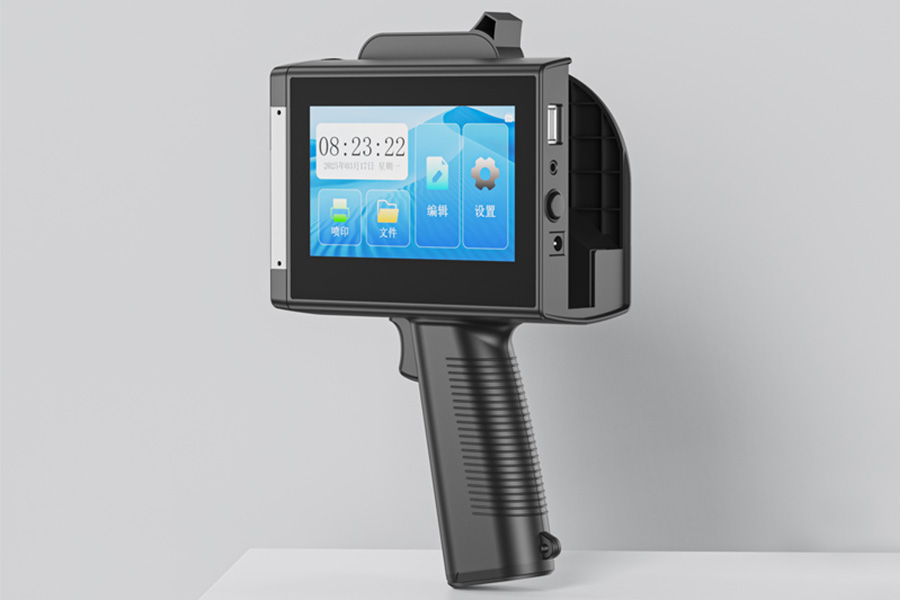
For printer selection, ink screening, print-height choices, and sample-test planning across plastic applications, return to the core guide for handheld inkjet printing on plastic.

Buyer FAQs
What ink is best for printing expiry dates on plastic bottles?
The right candidate depends on the exact bottle surface, compliance requirements, dry window, and durability target. Start with an ink intended for the substrate class, then qualify the complete configuration on production bottles.
Should we print before or after filling?
Print at the stage that provides a clean, stable, dry surface and enough time before contact—while still producing the correct variable data. Filling may change bottle stiffness, temperature, condensation, orientation, and available code zones, so compare both workflows when the answer is not obvious.
Can a handheld inkjet printer code round bottles?
Yes, especially for short runs, rework, or manual operations, but repeatability improves with a guide, fixture, or cradle. Validate operator motion, standoff, curvature, and code placement across the expected range of bottles.
Ready to Improve Your Printing Efficiency?
Get expert advice and the best solution tailored to your business.
Start your project✔ Fast response ✔ Custom solution ✔ No obligation
+MoreRelated recommendations
-
How to Print Durable Codes on Plastic Caps, Lids, and Closures
Learn how to print durable lot and date codes on plastic cap...
-
How to Print Batch Codes on Flexible Plastic Bags and Pouches
Learn how to print durable batch codes on flexible plastic b...
-
How to Print Expiry Dates on Plastic Bottles Without Smudging
Learn how to print expiry dates on plastic bottles without s...
-
PE vs PP vs PET vs PVC: Ink Adhesion Test
Compare PE, PP, PET, and PVC with a controlled ink adhesion ...
Contact Us

Service phone number+8618759952301
—— Add WeChat communication


