
How Handheld Inkjet Printers Help Solve Last-Minute Coding Changes
2026-02-11(167)Views
Last-minute coding changes are one of the most common—and costly—challenges in modern packaging and production environments. Whether driven by regulatory updates, customer requests, production delays, or data errors, these changes often occur after lines are already running.
For many operations, traditional automated coding systems struggle to adapt quickly. This is where handheld inkjet printers provide a flexible, reliable solution for handling last-minute coding changes without disrupting production.
Why Last-Minute Coding Changes Happen So Often
Despite careful planning, coding changes remain unavoidable due to:
1.Late updates to expiration dates or lot numbers
2.Customer-specific labeling requirements
3.Regulatory or compliance adjustments
4.Production rescheduling or line delays
Data entry or system synchronization errors
When changes occur too close to shipment, every minute of downtime matters.
The Hidden Cost of Delaying a Coding Update
Failing to address coding changes quickly can lead to:
1.Shipment delays
2.Rejected products
3.Rework and relabeling costs
4.Compliance risks
5.Loss of customer trust
In high-pressure situations, flexibility becomes more valuable than automation speed.
Why Automated Coding Systems Struggle with Last-Minute Changes
Automated coding systems are optimized for stability—not agility.
Common limitations include:
1.Required line stops for content changes
2.Reprogramming and verification steps
3.Dependency on trained technicians
4.Risk of misprints during restart
Even minor updates can trigger significant downtime.
How Handheld Inkjet Printers Enable Instant Coding Adjustments
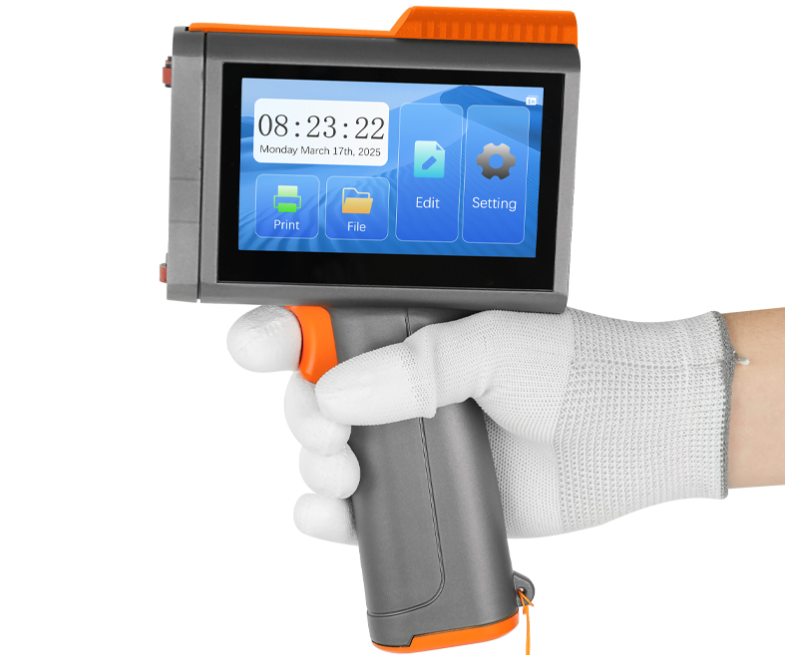
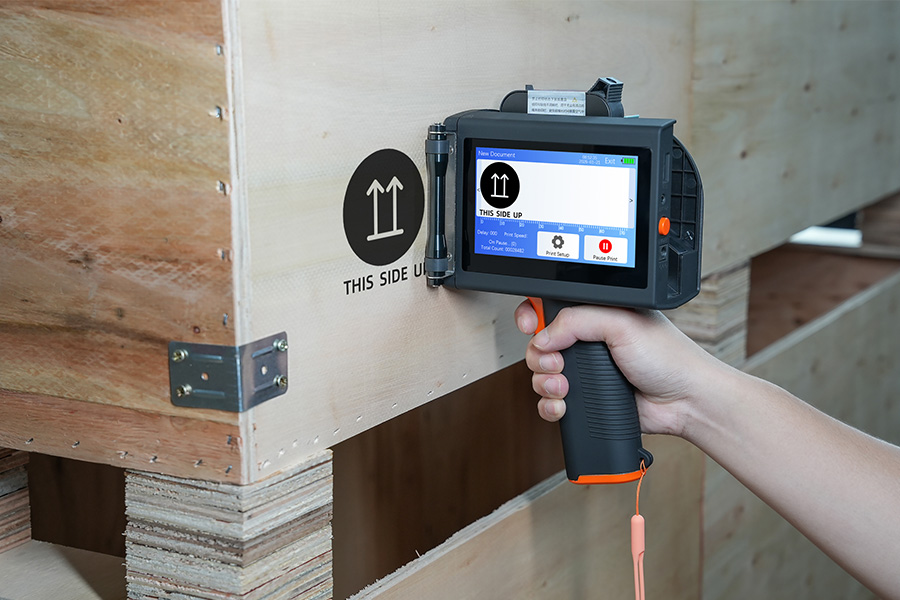
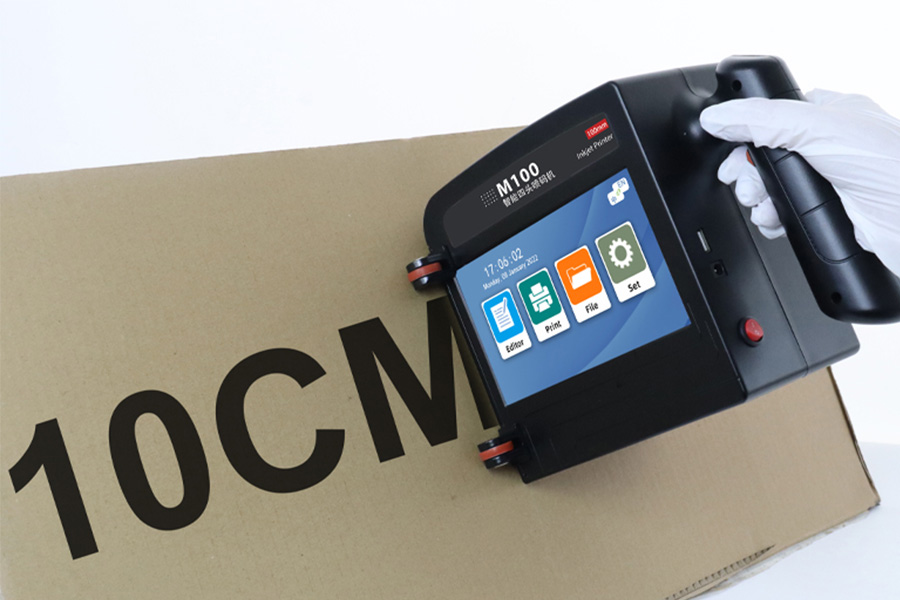
Handheld inkjet printers are designed for on-demand, operator-controlled printing, making them ideal for late-stage changes.
They allow operators to:
1.Update print content in seconds
2.Apply new codes directly to finished products
3.Verify output visually in real time
No line shutdown. No system reconfiguration.
Direct Printing at the Point of Exception
One of the strongest advantages of handheld inkjet printers is localized intervention.
Instead of stopping an entire production line:
1.Only affected cartons, cases, or pallets are re-coded
2.Normal production continues uninterrupted
3.Errors are corrected exactly where they occur
This targeted approach dramatically reduces waste and downtime.
Reducing Risk During High-Pressure Situations
Last-minute changes often happen under tight deadlines. Stress increases the risk of mistakes.
Handheld inkjet printers help reduce risk by:
1.Simplifying the printing process
2.Eliminating complex software workflows
3.Allowing operators to focus on accuracy
Clear, immediate feedback helps catch errors before products leave the facility.
Ideal Use Cases for Last-Minute Coding Changes
Handheld inkjet printers are especially effective in:
1.E-commerce and fulfillment centers
2.Contract packaging operations
3.Food and beverage production
4.Pharmaceutical and cosmetic packaging
5.Warehouses handling mixed SKUs
Any environment with variable data and time-sensitive shipments benefits from this flexibility.
Supporting Compliance Without Slowing Down
Regulatory requirements often change faster than production schedules.
With handheld inkjet printers:
1.Compliance updates can be implemented immediately
2.Existing inventory can be corrected without reprocessing
3.Audit readiness improves through clear, legible codes
This makes them a valuable tool for compliance-driven industries.
A Practical Complement to Automated Systems
Handheld inkjet printers are not a replacement for automation—they are a safety net.
Many operations use them as:
1.A backup solution for urgent changes
2.A tool for rework and exceptions
3.A bridge between planning errors and shipment deadlines
This hybrid approach increases overall system resilience.
Why Flexibility Is a Competitive Advantage
In today’s supply chains, responsiveness is a differentiator.
Companies that can adapt to last-minute changes:
1.Ship faster
2.Waste less
3.Maintain stronger customer relationships
Handheld inkjet printers support this agility without adding complexity.
Talk to Our Company About Smarter Coding Flexibility
If last-minute coding changes are slowing down your operation, our company can help you implement a flexible coding strategy that minimizes disruption and protects delivery timelines.
We work with manufacturers and logistics teams to integrate handheld inkjet printers into real-world workflows—where change is inevitable.
Contact our company today to find out how handheld inkjet printers can help you manage last-minute coding changes with confidence.
+MoreRelated recommendations
-
Handheld Inkjet Printer Warranty Questions Buyers Should Ask Before Ordering
Ask these handheld inkjet printer warranty questions to clar...
-
Handheld Inkjet Printer Order Checklist: Printer, Ink, Accessories, and Spare Parts
Use this purchase checklist to confirm the printer, ink, acc...
-
What Information Should You Send for an Accurate Handheld Inkjet Printer Quote?
Use this RFQ worksheet to send the material, message, print ...
-
How to Print Scannable Barcodes and QR Codes on Plastic Packaging
Learn how to print scannable barcodes and QR codes on plasti...
Contact Us

Service phone number+8618759952301
—— Add WeChat communication


