
Struggling with Hard-to-Reach Surfaces? Portable Handheld Inkjet Printing Solves It
2026-04-24(200)Views
Printing on flat, easy-to-access surfaces is simple. But what happens when your products are large, curved, uneven, or fixed in place? For many businesses, this is where traditional printing systems fail—leading to delays, poor print quality, and rising labor costs.
If you're dealing with hard-to-reach surfaces, the solution isn’t forcing your workflow to fit the printer—it’s switching to a tool that adapts to your environment: a portable handheld inkjet printer.
Why Hard-to-Reach Surfaces Are a Real Challenge
In many industries, products are not designed for easy printing.
Typical Problem Scenarios:
1.Large pipes or construction materials
2.Installed equipment or machinery
3.Curved containers and irregular packaging
4.Heavy items that cannot be moved
Traditional systems require repositioning the product—wasting time and increasing risk.
The Limitations of Conventional Printing Methods

These limitations make it difficult to maintain efficiency when dealing with non-standard surfaces.
What Makes Portable Handheld Inkjet Printing Different?
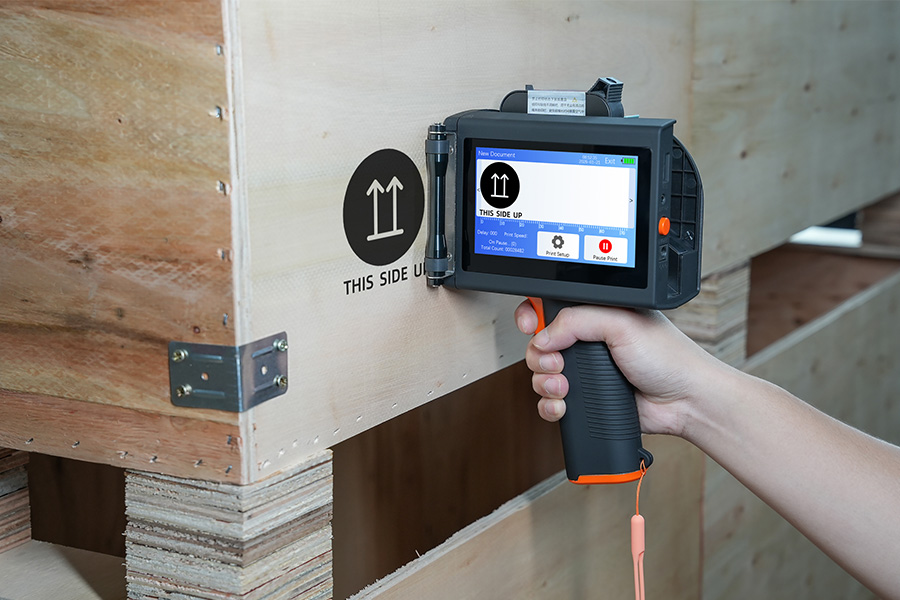
A portable handheld inkjet printer allows you to bring the printing process directly to the surface—no matter where it is.
Core Advantages:
1.Fully mobile operation
2.Direct printing on uneven or vertical surfaces
3.Minimal setup time
4.High adaptability across materials

Mobility transforms how and where you can print.
Key Benefits for Hard-to-Reach Surface Printing
1. Print Without Moving the Product
Instead of transporting heavy or fixed items, you print directly on-site.
Ideal for:
1)Industrial equipment
2)Large packaging units
3)Construction materials
2. Adapt to Any Surface Shape
Whether it’s flat, curved, or uneven:
1)Cylindrical objects (pipes, bottles)
2)Textured materials
3)Irregular shapes
A portable handheld inkjet printer handles them all with ease.
3. Reduce Labor and Handling Costs

Less movement means fewer workers and faster turnaround.
4. Improve Print Accuracy in Difficult Positions
With direct control, operators can:
1)Adjust angle and distance in real time
2)Ensure precise placement
3)Avoid misprints caused by misalignment
5. Increase Operational Flexibility
Portable solutions allow you to:
1)Print across multiple locations
2)Respond quickly to changes
3)Handle diverse product types
Flexibility becomes a competitive advantage.

Not sure which printer fits your application?
Request a Custom Solution Today
Not sure which printer fits your application?
Request a Custom Solution TodayCommon Applications Across Industries
Portable handheld inkjet printing is widely used in:
1.Manufacturing: marking parts, batch numbers
2.Logistics: printing on cartons and pallets
3.Construction: marking pipes, steel, and materials
4.Warehousing: inventory and location coding
It’s especially valuable where mobility and adaptability are critical.
What to Consider Before Choosing a Solution
To get the best results, evaluate the following:
√ Surface Compatibility
Ensure the printer supports materials like plastic, metal, wood, or concrete
√ Ink Performance
Look for:
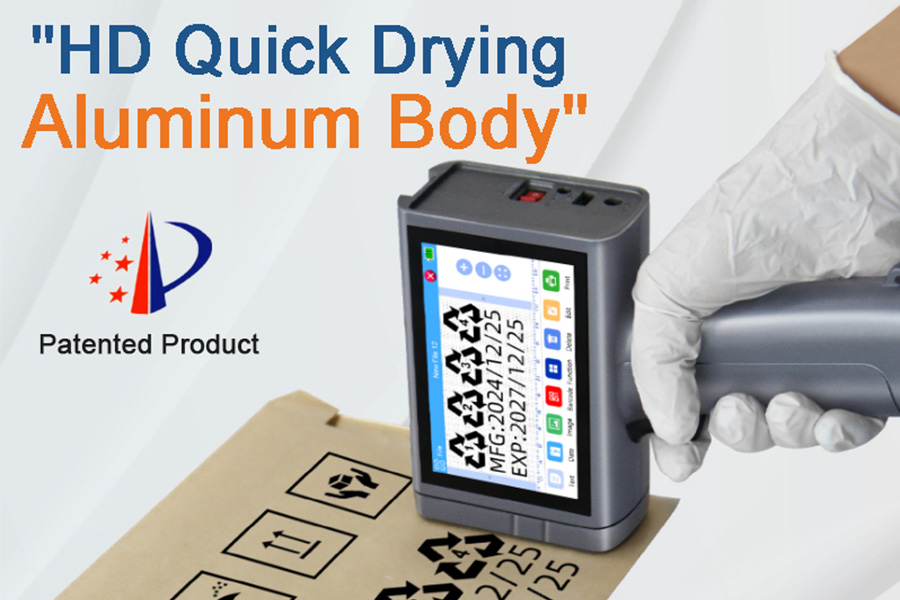
1.Fast drying
2.Strong adhesion
3.Resistance to environmental conditions
√ Ease of Operation
Simple interface and minimal training requirements
√ Portability
Lightweight design for extended use
√ Reliability
Stable performance in real-world environments
Real-World Case: Solving a Surface Access Problem
A manufacturer needed to print batch codes on large plastic drums stored in fixed positions.
Challenges:
1.Limited access space
2.Manual labeling inefficiency
3.Frequent alignment errors
After adopting a portable handheld inkjet printer:
1.Printing time reduced by 55%
2.Error rate dropped significantly
3.Workflow simplified across the facility
Direct printing solved both access and efficiency issues.
Common Mistakes to Avoid
× Using fixed printers for mobile applications
× Ignoring surface type compatibility
× Choosing low-quality ink solutions
× Overcomplicating the setup
× Not testing real working conditions
Expert Insights: Why Mobility Matters More Than Ever
Industry experts emphasize that:
1.Production environments are becoming more dynamic
2.Flexibility is critical for efficiency
3.Mobile solutions reduce dependency on infrastructure
Portable handheld inkjet printing is no longer optional—it’s a strategic upgrade.
Frequently Asked Questions (FAQ)
Q1: Can handheld inkjet printers print on curved surfaces?
A: Yes, they are specifically designed to handle curved and irregular surfaces.
Q2: Are they suitable for industrial environments?
A: Absolutely. Many models are built for durability and continuous use.
Q3: What types of ink are used?
A: Fast-drying, surface-specific inks for materials like plastic, metal, and more.
Q4: Do I need special training to use one?
A: No, most devices are user-friendly and require minimal training.
Print Where Others Can’t
If you're struggling with hard-to-reach surfaces, the issue isn’t your workflow—it’s your equipment.
A portable handheld inkjet printer gives you:
1.Freedom to print anywhere
2.Precision on complex surfaces
3.Faster and more efficient operations
It’s the practical solution for modern, flexible production needs.
Ready to Improve Your Printing Efficiency?
Get expert advice and the best solution tailored to your business.
Contact us for a quotation✔ Fast response ✔ Custom solution ✔ No obligation
+MoreRelated recommendations
-
Handheld Inkjet Printer Warranty Questions Buyers Should Ask Before Ordering
Ask these handheld inkjet printer warranty questions to clar...
-
Handheld Inkjet Printer Order Checklist: Printer, Ink, Accessories, and Spare Parts
Use this purchase checklist to confirm the printer, ink, acc...
-
What Information Should You Send for an Accurate Handheld Inkjet Printer Quote?
Use this RFQ worksheet to send the material, message, print ...
-
How to Print Scannable Barcodes and QR Codes on Plastic Packaging
Learn how to print scannable barcodes and QR codes on plasti...
Contact Us

Service phone number+8618759952301
—— Add WeChat communication


