
Quick Drying Ink for Industrial Inkjet: Complete Guide
2026-05-19(150)Views
Industrial printing environments are becoming faster, more precise, and more demanding. In modern production lines—especially in packaging, logistics, electronics, and non-porous material marking—the performance of quick drying ink for industrial inkjet systems directly determines production efficiency, print quality, and operational cost.
Slow drying ink can cause smudging, barcode unreadability, line stoppages, and even batch waste. As a result, fast-drying ink technology is no longer optional—it is a core requirement for high-speed industrial inkjet printing systems.
This guide provides a comprehensive overview of industrial quick drying inks, including formulation principles, performance factors, application scenarios, and selection strategies.
1. Why Quick Drying Ink Matters in Industrial Inkjet Printing
In high-speed industrial environments (50–300 meters per minute), ink drying time becomes a critical bottleneck.
If ink does not dry instantly, the following issues occur:
1)Smudging during handling or stacking
2)Ink transfer between surfaces (set-off)
3)Barcode scanning failure
4)Conveyor contamination
5)Increased downtime for cleaning
Manufacturers dealing with print transfer defects often explore How Quick Drying Ink Reduces Smudging to improve barcode readability and maintain cleaner production output.
These problems are especially serious in:
1)Food packaging lines
2)Pharmaceutical packaging
3)Logistics labeling systems
4)Plastic film printing
In these applications, ink drying performance directly affects compliance, traceability, and production yield.
Related topic:
Why Fast-Drying Ink Is Essential for High-Speed Lines
2. What Is Quick Drying Ink for Industrial Inkjet?
Quick drying ink refers to industrial ink formulations designed to solidify or evaporate within milliseconds to seconds after printing.
Drying mechanisms typically include:
1)Solvent Evaporation
Ink dries as volatile solvents evaporate rapidly into the air.
2)Absorption into Substrate
Used mainly for porous materials like paper.
3)Chemical Crosslinking
Ink forms a cured film through chemical reaction (UV or reactive systems).
In industrial inkjet systems, solvent evaporation is the most common mechanism for high-speed applications.
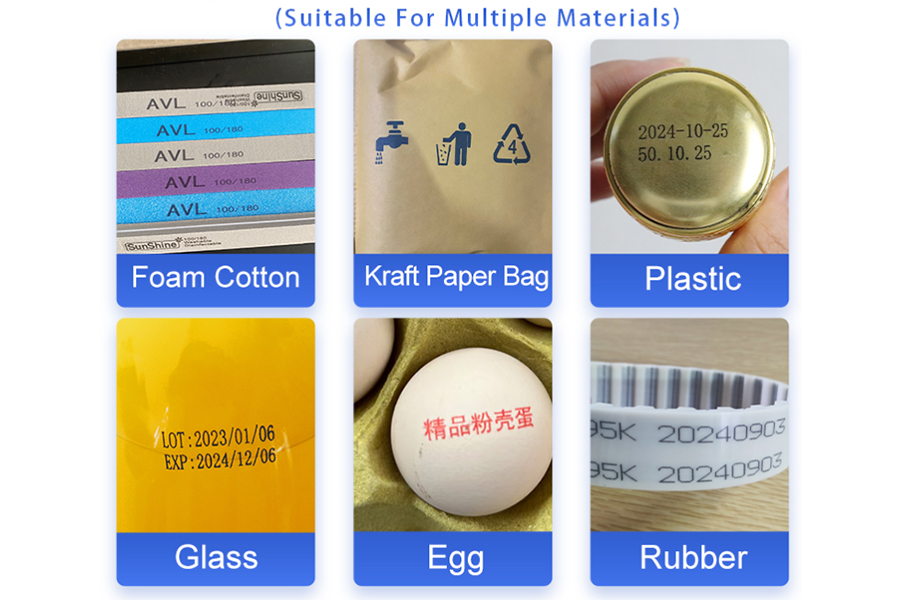
Not sure which printer fits your application?
Consulting experts' advice
Not sure which printer fits your application?
Consulting experts' advice3. Key Factors That Affect Ink Drying Speed
The drying performance of industrial ink is not determined by a single factor, but by a combination of formulation and environmental conditions.
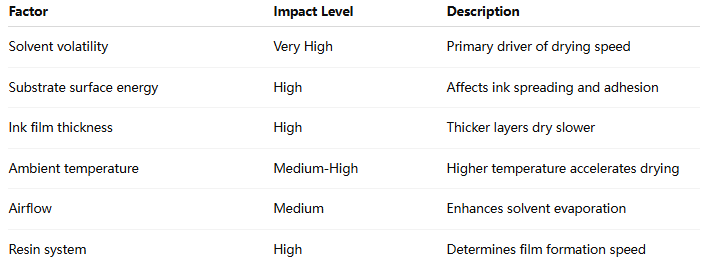
In real industrial production, ink formulation and drying equipment must work together.
4. Quick Drying Ink in High-Speed Production Lines
High-speed production lines require consistent and predictable ink behavior rather than just fast drying.
Benefits include:
1)Higher production throughput
2)Reduced maintenance downtime
3)Improved print consistency
4)Lower defect rates
5)Better barcode readability
Related articles:
Ink Performance in High-Speed Production
Common Ink Drying Problems and Solutions
Ink Drying Time: What Affects Performance
5. Performance Differences Across Printing Substrates
5.1 Non-Porous Materials (Plastic, PE, PP, Film)
These materials do not absorb ink, meaning drying relies entirely on solvent evaporation.
Challenges:
5.1.1 Slow drying risk
5.1.2 Smudging during stacking
5.1.3 Poor adhesion without proper formulation
Solutions:
5.1.1 Fast-evaporating solvent systems
5.1.2 Surface treatment (corona/plasma)
5.1.3 Assisted drying (hot air or IR)
Related:
Industrial Ink for Plastic and Film Packaging
5.2 Coated Paper and Packaging Board
Moderate absorption allows faster drying and better stability.
Use cases:
5.2.1 Cartons
5.2.2 Labels
5.2.3 Retail packaging
5.3 Metalized Films and Foil
Highly non-absorbent and low surface energy.
Requires:
5.3.1 High-adhesion resin systems
5.3.2 Rapid film formation chemistry
Related:
Best Ink for Non-Porous Packaging Materials
6. Solvent-Based vs Water-Based Ink: Which Dries Faster?
One of the most common industrial questions is whether solvent-based or water-based ink dries faster.
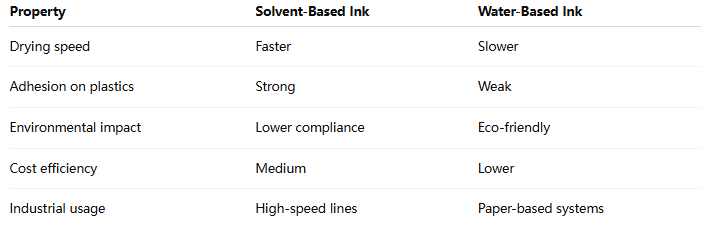
In most high-speed industrial inkjet applications, solvent-based inks remain the dominant solution.
Related:
Solvent vs Water-Based Ink: Which Dries Faster?
7. How Ink Formulation Impacts Drying and Print Quality
Ink formulation is the core determinant of drying behavior.
7.1 Solvent System
Higher volatility solvents = faster drying but increased safety and stability challenges.
7.2 Resin System (Tg Value)
Higher glass transition temperature improves drying speed and film formation but may reduce flexibility.
7.3 Additives
7.3.1 Anti-skinning agents
7.3.2 Wetting agents
7.3.3 Drying accelerators
Related:
How Ink Formulation Impacts Print Quality
8. Common Industrial Ink Drying Problems and Solutions
Smudging after printing
Cause: insufficient drying time
Solution: increase solvent volatility or add drying assistance
Barcode unreadability
Cause: incomplete curing
Solution: improve airflow or ink formulation
Ink transfer during stacking
Cause: slow surface film formation
Solution: faster resin system or reduced ink film thickness
Related:
Common Ink Drying Problems and Solutions
9. How to Choose Quick Drying Ink Cartridges
Selection should follow a structured decision model:
9.1 Substrate type (plastic, paper, metal)
9.2 Line speed (m/min)
9.3 Environmental conditions
9.4 Required durability (scratch, chemical resistance)
9.5 Equipment compatibility
Simplified model:
Material difficulty + Production speed + Environmental stability = Ink requirement level
Related:
How to Choose Quick Drying Ink Cartridges
10. Real Industrial Applications
Food Packaging Printing
Requires fast drying + migration resistance + high-speed compatibility
Logistics Labeling
Requires instant dry + high barcode readability
Electronics Marking
Requires high adhesion + scratch resistance
11. Frequently Asked Questions (FAQ)
Is faster drying always better?
Not always. Faster drying may reduce adhesion or durability if not balanced properly.
Can equipment solve drying issues alone?
Only partially. Drying performance is primarily determined by ink formulation.
Why does ink behave differently on different machines?
Due to variations in temperature control, nozzle structure, and ink delivery systems.
Does quick drying ink clog printheads?
It can if volatility is not properly balanced in formulation.
If you are looking for:
1、Industrial high-speed inkjet printing solutions
2、Fast drying ink for plastic and film packaging
3、Customized ink formulation for your production line
4、Stability improvement for high-speed coding systems
We can provide:
1、Free ink compatibility analysis
2、Sample testing support
3、Industrial application consulting
Contact us to optimize your inkjet production performance and reduce downtime.
Ready to Improve Your Printing Efficiency?
Get expert advice and the best solution tailored to your business.
Get a free quote✔ Fast response ✔ Custom solution ✔ No obligation
+MoreRelated recommendations
-
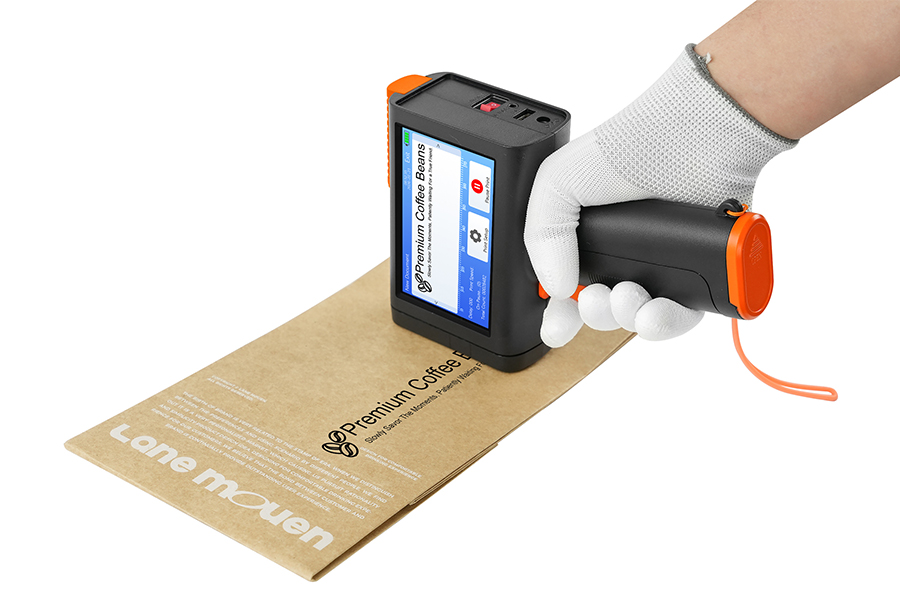
Why More Manufacturers Are Switching to Handheld Inkjet Printers
In the past, industrial coding was dominated by fixed-positi...
-
Handheld Inkjet Printer Cost: Initial Investment and Operating Expenses
When businesses evaluate handheld inkjet printers, the first...
-
Handheld Inkjet Printer Maintenance Guide for Long-Term Reliability
In industrial environments, equipment reliability is not det...
-
How to Choose the Right Handheld Inkjet Printer for Your Business
Learn how to choose the right handheld inkjet printer for yo...
Contact Us

Service phone number+8618759952301
—— Add WeChat communication


