
How Quick Drying Ink Reduces Smudging in Industrial Inkjet Printing
2026-05-20(19)Views
Smudging is one of the most common and costly problems in industrial inkjet printing systems, especially in high-speed production environments. When ink does not dry fast enough, it can transfer to adjacent surfaces, blur printed codes, or contaminate packaging lines.
In industries such as food packaging, pharmaceuticals, logistics labeling, and plastic film printing, even minor smudging can lead to rejected batches and compliance risks.
This article explains how quick drying ink reduces smudging, the scientific principles behind it, and how manufacturers can optimize their production lines for stable, high-speed output.
Understanding Smudging in Industrial Inkjet Systems
Smudging occurs when printed ink is still in a semi-liquid state and is disturbed before it fully stabilizes on the substrate.
This can happen due to:
1. Contact with rollers or stacking surfaces
2. High-speed conveyor movement
3. Insufficient drying time
4. Low surface energy of the substrate
5. Excess ink deposition
In industrial environments operating at 50–300 m/min, even milliseconds of delay in drying can trigger visible defects.
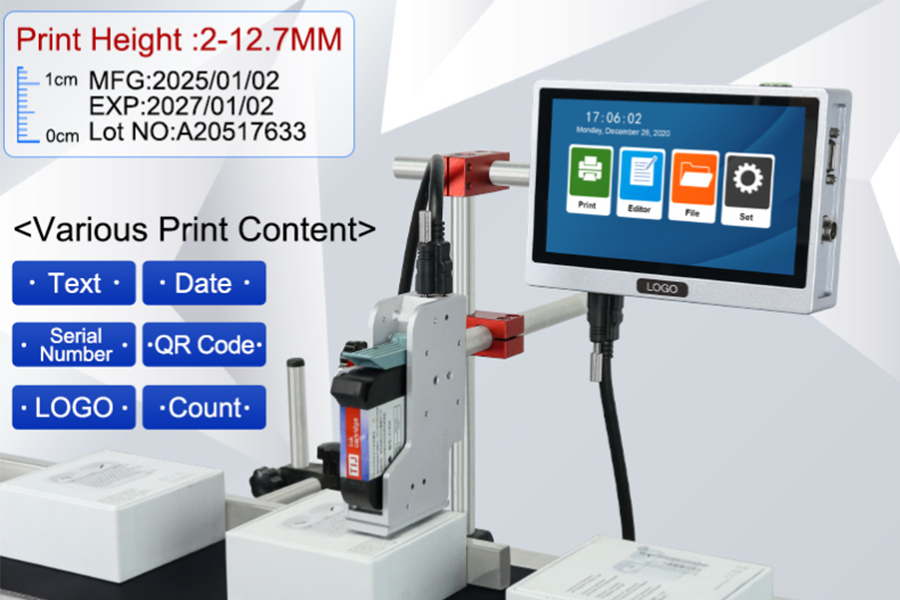
Not sure which printer fits your application?
View the model that suits you
Not sure which printer fits your application?
View the model that suits youWhy Drying Speed Directly Controls Smudging Risk
The relationship is simple:
The slower the ink dries, the higher the smudging probability.
Quick drying ink reduces smudging by rapidly transitioning from liquid phase to solid or semi-solid film state.
This prevents:
1. Ink transfer during mechanical contact
2. Smear caused by friction
3. Dot expansion on non-porous surfaces
Key mechanism:
Quick drying ink works through:
1. Rapid solvent evaporation
2. Fast resin film formation
3. Controlled viscosity increase after deposition
Industrial Mechanism: How Quick Drying Ink Prevents Smudging
1. Solvent Evaporation Speed
Fast-drying inks use high-volatility solvents that evaporate immediately after printing.
This reduces the time ink remains in a transferable state.
2. Surface Film Formation
Once solvent begins to evaporate, resin systems quickly form a protective surface layer.
This film acts as a barrier that prevents:
1)Ink migration
2)Smear from contact pressure
3)Dot distortion
3. Viscosity Lock Effect
As solvent leaves the ink, viscosity increases rapidly, effectively “locking” the printed pattern in place.
This is critical in high-speed conveyor systems.
Real Industrial Comparison: Fast Drying vs Standard Ink
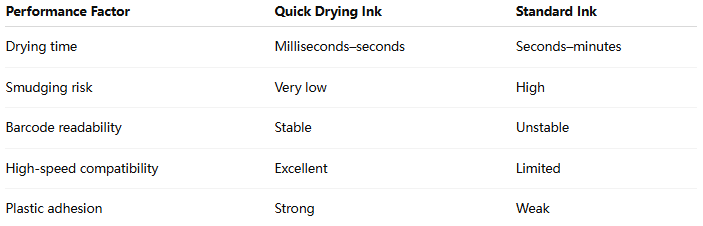
In real production environments, standard inks often fail when line speeds exceed 100 m/min.
Smudging in Non-Porous Materials (Critical Issue)
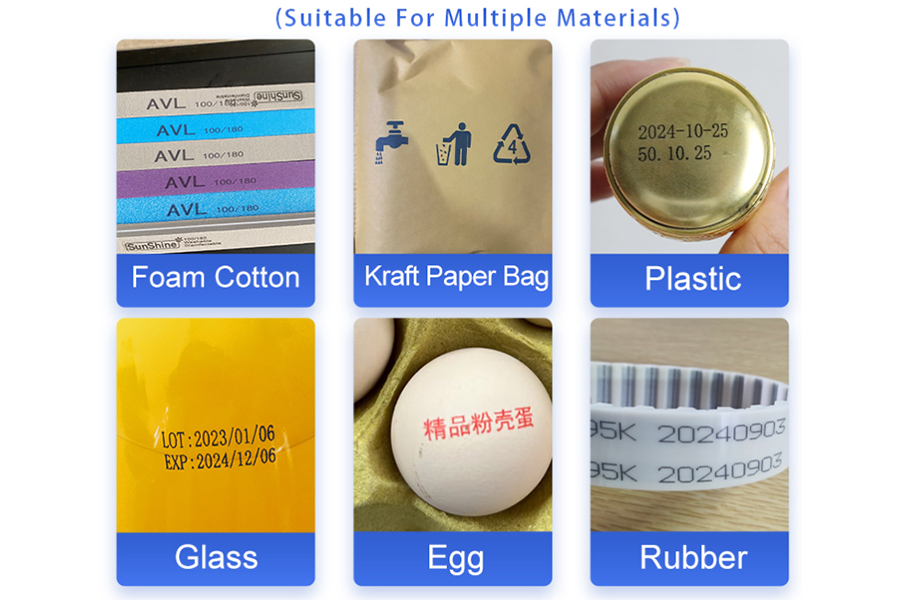
Smudging is most severe on non-porous materials such as:
1. PE plastic
2. PP packaging film
3. PET bottles
4. Aluminum foil
These surfaces do not absorb ink, meaning drying depends entirely on evaporation and film formation.
Related reading:
Best Ink for Non-Porous Packaging Materials
Role of Ink Formulation in Smudge Prevention
Ink formulation determines whether smudging occurs even more than machine settings.
Key formulation factors:
1. Solvent system
Higher volatility solvents reduce drying time but must be balanced for safety and stability.
2. Resin selection
High Tg resins improve film strength and reduce smear.
3. Additives
1)Anti-smudge agents
2)Wetting control agents
3)Drying accelerators
Related reading:
How Ink Formulation Impacts Print Quality
Machine Parameters That Influence Smudging
Even with fast drying ink, system configuration matters:
1. Printhead-to-surface distance
2. Conveyor speed synchronization
3. Airflow or hot air assistance
4. Ambient humidity control
Poor system tuning can still cause smudging even with premium ink.
Industrial Application Scenarios
1. Food Packaging Lines
High-speed sealing + stacking requires instant dry ink to avoid contamination.
2. Logistics Barcode Printing
Smudging leads to unreadable QR codes and tracking failures.
Related:
Ink Performance in High-Speed Production
3. Pharmaceutical Packaging
Regulatory compliance requires stable, non-transferable marking.
Common Mistakes That Cause Smudging
Many factories blame ink when the real issue is system mismatch:
1. Using general-purpose ink on plastic film
2. Ignoring airflow conditions
3. Running excessive ink density
4. Using wrong solvent balance
How to Reduce Smudging Effectively (Industrial Best Practice)
To minimize smudging:
1. Match ink type to substrate
2. Optimize drying environment
3. Use fast evaporation solvent systems
4. Control ink volume per print
5. Integrate airflow or IR drying
Advanced Insight: Why Some Fast Ink Still Smudges
A common misconception is that “faster drying = no smudging.”
In reality, failure happens when:
1. Surface film forms too slowly
2. Ink penetrates unevenly
3. Resin structure is incompatible with substrate
This is why formulation engineering is more important than speed alone.
FAQ
Q1: Can quick drying ink completely eliminate smudging?
It significantly reduces it, but system setup and substrate compatibility also matter.
Q2: Why does smudging happen more on plastic?
Because plastic is non-porous and does not absorb ink.
Q3: Does increasing temperature help reduce smudging?
Yes, but only if ink formulation supports thermal evaporation.
Q4: Is UV ink better for smudge prevention?
UV ink cures instantly, but requires different equipment and higher investment.
If your production line is experiencing:
1. Smudging issues
2. Barcode unreadability
3. Ink transfer during stacking
4. High-speed printing instability
We can help you:
1. Analyze your current ink-system compatibility
2. Recommend optimized quick drying ink formulations
3. Provide industrial-grade samples for testing
Contact us for a free production line ink compatibility evaluation.
Ready to Improve Your Printing Efficiency?
Get expert advice and the best solution tailored to your business.
Start your project✔ Fast response ✔ Custom solution ✔ No obligation
+MoreRelated recommendations
-
Why Fast-Drying Ink Is Essential for High-Speed Industrial Inkjet Production Lines
In modern industrial manufacturing, production speed has inc...
-
How Quick Drying Ink Reduces Smudging in Industrial Inkjet Printing
Smudging is one of the most common and costly problems in in...
-
Quick Drying Ink for Industrial Inkjet: Complete Guide
Industrial printing environments are becoming faster, more p...
-
Industrial Inkjet Troubleshooting Guide for Beginners
Industrial inkjet printers are widely used in manufacturing ...
Contact Us

Service phone number+8618759952301
—— Add WeChat communication


