
Permanent Coding on Stainless Steel: Challenges and Best Practices
2026-08-03(2)Views
Stainless steel components are used in some of the most demanding industrial environments.
Unlike disposable packaging or short-life consumer products, stainless steel parts often remain in service for years—or even decades. Throughout that lifecycle, product identification must continue to perform its purpose.
A printed code may be used to identify:
1. Production batches
2. Component serial numbers
3. Traceability records
4. Inspection status
5. Quality certifications
6. Manufacturing dates
7. Asset management information
8. QR codes for digital maintenance records
If that information becomes unreadable, manufacturers may lose the ability to verify product history, support warranty claims, or comply with customer documentation requirements.
For this reason, industrial coding on stainless steel is not simply about creating a visible mark.
It is about creating a durable identification system that remains readable throughout the intended service life of the component.
As discussed in our Printing on Different Materials with Handheld Inkjet Printers: The Complete Industrial Guide, different materials require different printing strategies. Stainless steel presents unique challenges because its smooth, non-absorbent surface behaves very differently from plastics, paper-based packaging, or porous materials.
This article focuses specifically on how manufacturers can achieve reliable and long-lasting coding on stainless steel products.
What Does "Permanent Coding" Really Mean?
Many buyers use the term permanent without defining it.
In manufacturing, permanent coding does not necessarily mean that a mark can never be removed.
Instead, it generally means the printed information remains readable for as long as the application requires under normal operating conditions.
For example:
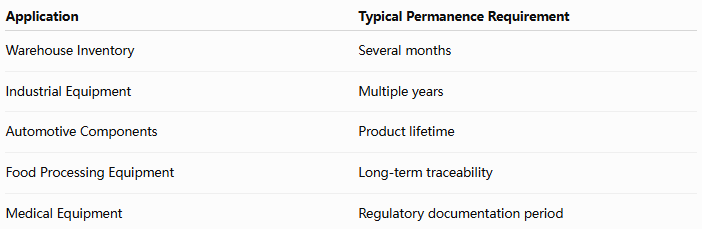
The required level of durability depends on the product, the industry, and customer specifications.
Therefore, manufacturers should begin by defining how long the code needs to remain functional, rather than simply asking whether it is "permanent."
Why Stainless Steel Is Challenging for Inkjet Coding
At first glance, stainless steel appears to be an ideal printing surface.
It is flat, clean, and dimensionally stable.
However, these characteristics also create several technical challenges.
Unlike porous materials, stainless steel does not absorb any liquid ink.
Instead, every printed droplet remains on the surface until curing is complete.
As a result, print durability depends almost entirely on surface interaction and process control.
Several additional factors further increase the difficulty.
Smooth Surface Finish
Highly polished stainless steel provides very little microscopic texture for the ink to anchor to.
This increases the importance of proper surface preparation and process consistency.
Oil Residue from Manufacturing
Many stainless steel components retain small amounts of:
1. Cutting oil
2. Lubricants
3. Anti-corrosion coatings
4. Fingerprints
5. Dust from machining
Even when these contaminants are not visible, they can reduce print consistency and long-term durability.
Frequent Handling
Unlike consumer packaging, stainless steel components are often handled repeatedly during:
1. Machining
2. Assembly
3. Inspection
4. Storage
5. Shipping
6. Installation
Repeated contact increases abrasion and creates higher durability requirements.
Harsh Service Environments
Many stainless steel products operate in environments involving:
1. Moisture
2. Cleaning chemicals
3. Industrial oils
4. Outdoor exposure
5. High temperatures
6. Repeated maintenance
Each of these conditions influences the expected lifespan of printed identification.
Defining Performance Requirements Before Selecting a Coding Solution
Instead of asking:
"Can this printer print on stainless steel?"
Manufacturers achieve better results by asking a more practical question:
"What must the printed code survive?"
Answering this question helps define realistic performance requirements.
Consider the following evaluation criteria.
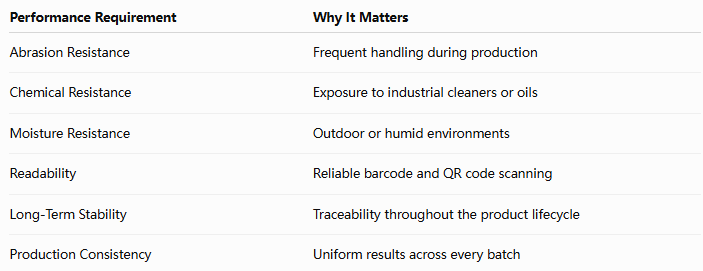
By defining these requirements before production begins, manufacturers can select a coding process that supports both operational efficiency and long-term quality objectives.
Different Stainless Steel Products Require Different Coding Strategies
Although all are described as stainless steel, industrial products vary significantly in how they are manufactured and used.
A strategy suitable for one product category may not perform well for another.
Fabricated Equipment
Examples include:
1. Food processing machinery
2. Pharmaceutical equipment
3. Industrial cabinets
4. Stainless steel worktables
These products are generally larger, manually handled, and often cleaned regularly.
Readability and resistance to cleaning are typically higher priorities than ultra-fast production speed.
Precision Machined Components
Typical examples include:
1. Valve bodies
2. Pump components
3. Precision fittings
4. Mechanical assemblies
These parts may have limited printable space, requiring high-definition characters and consistent positioning.
In these applications, print accuracy is often as important as durability.
Stainless Steel Pipes and Tubes
Long products introduce different production challenges.
Instead of repeated handling, manufacturers focus on maintaining consistent print quality during continuous movement through the production line.
Printing position, product orientation, and synchronization become key process considerations.
How Surface Finish Affects Permanent Coding Performance
Not all stainless steel surfaces behave the same during industrial printing.
Although two components may be manufactured from the same grade of stainless steel, their surface finish can significantly influence print quality, durability, and long-term readability.
Understanding the surface condition before production helps engineers establish a more reliable coding process.
Polished Stainless Steel
Mirror-polished stainless steel is widely used in industries such as:
1. Food processing
2. Pharmaceutical manufacturing
3. Medical equipment
4. Commercial kitchens
Its smooth appearance improves hygiene and corrosion resistance, but it also reduces the microscopic surface texture available for the printed code.
Typical considerations include:
1. Higher sensitivity to surface contamination
2. Greater visibility of print defects
3. More demanding quality inspections
4. Increased importance of consistent print positioning
For these applications, repeatability often matters more than printing speed.
Brushed Stainless Steel
Brushed finishes are common on:
1. Industrial machinery
2. Equipment enclosures
3. Control cabinets
4. Manufacturing workstations
The directional texture creates a different visual background for printed information.
Manufacturers should evaluate:
1. Character contrast
2. Barcode edge definition
3. Print orientation relative to the brushed pattern
4. Scanner readability under different lighting conditions
Although brushed finishes generally provide consistent printing conditions, they require validation during production setup.
Bead-Blasted or Matte Finishes
Matte stainless steel reduces reflections and is commonly used where glare is undesirable.
However, the microscopic surface texture varies depending on the blasting process.
Instead of assuming all matte finishes behave identically, manufacturers should validate print quality on actual production samples before approval.
While stainless steel is widely used in industrial manufacturing, aluminum components present a different set of printing challenges because of their softer surface, oxide layer, and various finishing processes. Manufacturers working with lightweight metal parts may also benefit from our guide on How Surface Finish Affects Inkjet Printing on Aluminum Parts, which explains how different aluminum finishes influence print consistency, readability, and long-term durability.
Surface Cleanliness Is Often More Important Than Surface Finish
Production engineers frequently focus on the visible appearance of stainless steel while overlooking invisible contaminants.
Even small amounts of residue can reduce print consistency.
Typical contaminants include:
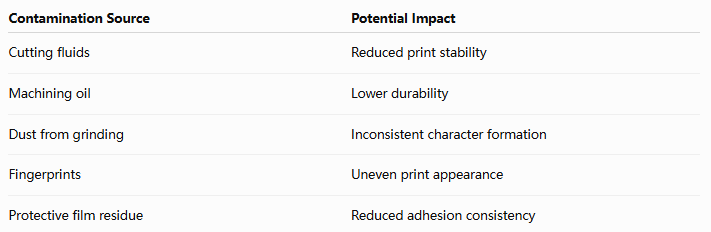
Establishing a consistent cleaning procedure before coding improves repeatability without changing equipment.
Defining Durability Requirements Before Production
Not every stainless steel component requires the same level of permanence.
Instead of using a single quality standard for every product, manufacturers often classify applications according to expected service conditions.
Standard Factory Identification
Typical requirements include:
1. Internal production tracking
2. Warehouse inventory management
3. Assembly identification
Primary objective:
Maintain readability until the manufacturing process is complete.
Customer Delivery Identification
Products entering distribution channels require additional durability because they experience:
1. Packaging
2. Transportation
3. Warehouse storage
4. Customer handling
Codes should remain readable throughout the supply chain.
Lifetime Product Traceability
Some industries require identification that remains readable throughout the operational life of the product.
Typical examples include:
1. Industrial valves
2. Stainless steel pumps
3. Processing equipment
4. OEM mechanical assemblies
In these applications, manufacturers typically implement more comprehensive validation procedures before approving production.
Validating Permanent Codes Before Mass Production
Durability should never be assumed.
Instead, manufacturers should verify whether printed information continues to meet operational requirements after exposure to realistic conditions.
A structured validation process reduces uncertainty before full-scale manufacturing begins.
Not sure which printer fits your application?
Get a free quote
Not sure which printer fits your application?
Get a free quoteRecommended Validation Methods
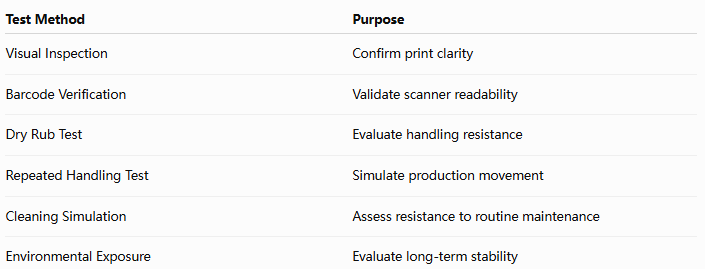
The exact validation process should reflect the intended application rather than following a universal procedure.
Common Causes of Premature Code Failure
When permanent identification fails earlier than expected, the printer itself is not always responsible.
Many issues originate elsewhere in the production process.
Inconsistent Surface Preparation
Components produced on different machining lines may arrive with varying levels of cleanliness.
Without standardized preparation procedures, print consistency becomes difficult to maintain.
Frequent Mechanical Contact
Products repeatedly sliding against fixtures, conveyors, or storage racks experience greater abrasion than anticipated during laboratory testing.
Production Changes Without Revalidation
Changing any of the following may influence coding performance:
1. New stainless steel supplier
2. Different surface finish
3. Modified production sequence
4. Updated cleaning chemicals
5. New customer requirements
Whenever significant changes occur, manufacturers should validate the coding process again rather than assuming previous settings remain suitable.
Case Study: Improving Traceability on Stainless Steel Pump Components
A manufacturer of industrial pump assemblies required machine-readable serial numbers on stainless steel housings.
Initial production achieved acceptable print appearance, but some codes became difficult to scan after multiple assembly stages.
Instead of replacing the printer, the engineering team reviewed the production process.
The investigation identified two contributing factors:
1. Components were handled several times before packaging.
2. Cleaning procedures differed between production shifts.
After implementing standardized surface preparation and introducing barcode verification before final assembly, the manufacturer achieved:
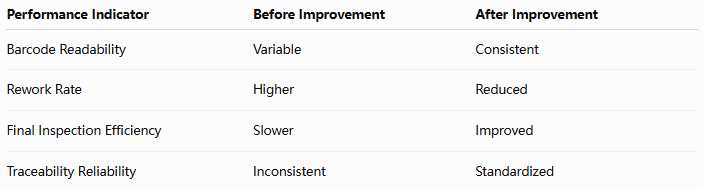
The improvement resulted from better process control rather than major equipment changes.
Need a Reliable Coding Solution for Stainless Steel Products?
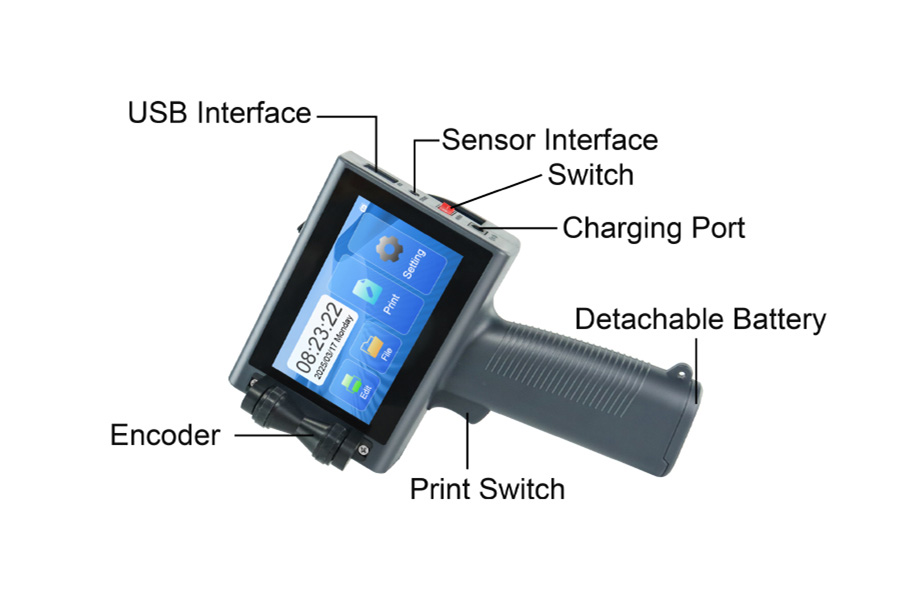
Whether you manufacture food equipment, industrial machinery, precision components, or stainless steel assemblies, our engineering team can help evaluate your production requirements and recommend the most suitable handheld inkjet printing solution.
Building a Standardized Permanent Coding Process
Manufacturers that consistently achieve reliable identification on stainless steel rarely depend on individual operator experience alone.
Instead, they develop standardized procedures that define how permanent coding should be implemented, verified, and maintained across different production lines.
A standardized process helps ensure that every component receives the same level of quality regardless of production volume, operator shifts, or manufacturing location.
Typical documentation includes:
1. Approved product categories
2. Printing location specifications
3. Code size and readability requirements
4. Verification procedures
5. Inspection frequency
6. Corrective actions for failed inspections
This approach reduces variability while improving long-term traceability.
Permanent Coding Workflow
The following workflow provides a practical framework for introducing permanent coding into stainless steel manufacturing.
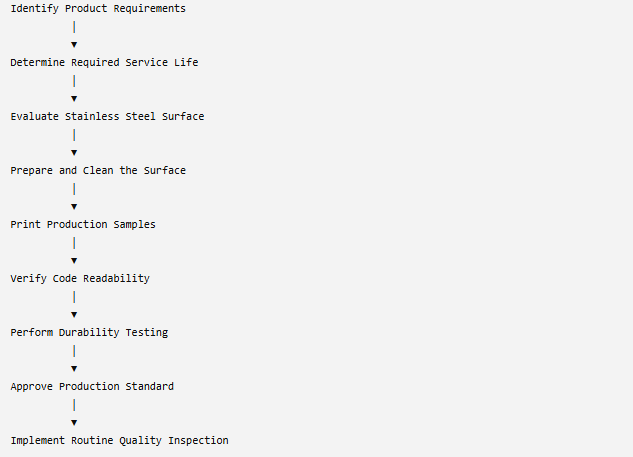
Rather than treating printing as an isolated task, this workflow integrates coding into the overall manufacturing quality system.
Quality Control Checklist for Stainless Steel Coding
Before releasing products for shipment, many manufacturers perform routine verification to ensure coding quality remains consistent.
The following checklist can be incorporated into daily production inspections.
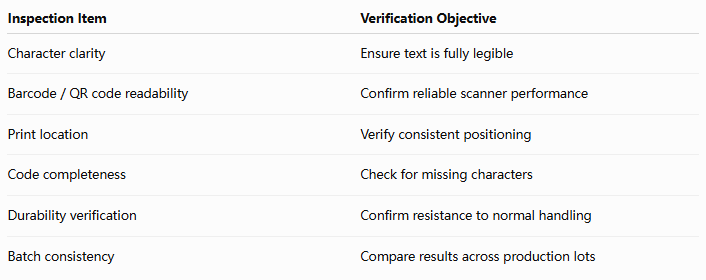
Routine inspections allow production teams to identify trends before they become large-scale quality issues.
Best Practices for Long-Term Traceability
Permanent coding is most effective when it supports the complete lifecycle of the product.
Manufacturers can improve long-term performance by following several practical principles.
Define Traceability Requirements Early
Determine how the code will be used before selecting the coding process.
Questions to consider include:
1. Will the code be scanned automatically?
2. Will customers rely on serial numbers for service records?
3. Is regulatory documentation required?
4. How long must the identification remain readable?
Standardize Printing Locations
Consistent print placement improves:
1. Inspection efficiency
2. Scanner performance
3. Operator training
4. Customer recognition
Whenever possible, designate a fixed coding area during product design.
Validate Process Changes
Any significant production change should trigger a review of the coding process.
Examples include:
1. New stainless steel suppliers
2. Updated manufacturing methods
3. New cleaning procedures
4. Revised customer specifications
5. Equipment layout modifications
Periodic validation helps maintain stable quality over time.
Frequently Asked Questions
Can handheld inkjet printers create permanent codes on stainless steel?
Yes.
With an appropriate industrial printing solution and a validated production process, handheld inkjet printers can produce durable identification suitable for many manufacturing applications.
The required durability should always be evaluated against the product's intended service conditions.
Does every stainless steel finish require the same production settings?
No.
Surface finish, cleanliness, and manufacturing conditions may all influence printing performance.
Production samples should always be validated before full-scale manufacturing.
How can manufacturers confirm that a code is durable enough?
The most reliable approach is to perform validation under conditions that simulate actual production, handling, storage, and end-use environments.
Testing should reflect how the product will be used—not only how it is manufactured.
Why do some codes remain readable while others fade more quickly?
Differences in handling, cleaning frequency, environmental exposure, and production consistency can all influence long-term performance.
Establishing standardized operating procedures helps reduce these variations.
Should permanent coding be inspected during production or only before shipment?
Both.
In-process inspections identify problems early, while final inspections confirm that products meet customer and traceability requirements before delivery.
Is visual inspection sufficient?
Visual inspection is important, but it should be combined with barcode or QR code verification whenever machine-readable identification is required.
How often should permanent coding procedures be reviewed?
Manufacturers should review procedures whenever significant process changes occur and conduct periodic audits to ensure standards continue to be followed.
Permanent coding on stainless steel is not defined by the printer alone.
It is the result of a controlled manufacturing process that considers product requirements, surface condition, production consistency, durability validation, and quality management.
By integrating coding into the overall production workflow, manufacturers can improve traceability, reduce rework, support regulatory compliance, and deliver products with reliable identification throughout their intended service life.
Instead of viewing permanent coding as a final production step, leading manufacturers treat it as an essential component of product quality and lifecycle management.
Improve Your Stainless Steel Coding Process
If your production involves stainless steel components, machinery, equipment, or fabricated assemblies, our technical specialists can help you build a coding process that matches your manufacturing requirements.
We can assist with:
1. Stainless steel coding evaluations
2. Sample printing and durability testing
3. Barcode and QR code verification
4. Production workflow optimization
5. Handheld inkjet printer recommendations
6. OEM and customized industrial coding solutions
Ready to Improve Your Printing Efficiency?
Get expert advice and the best solution tailored to your business.
Start your project✔ Fast response ✔ Custom solution ✔ No obligation
+MoreRelated recommendations
-
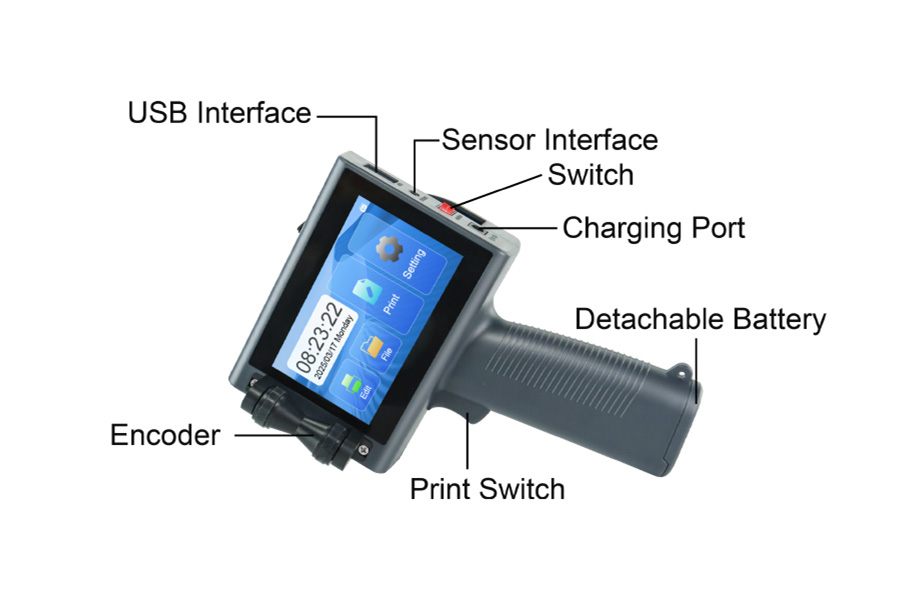
Permanent Coding on Stainless Steel: Challenges and Best Practices
Learn how to achieve durable, permanent coding on stainless ...
-
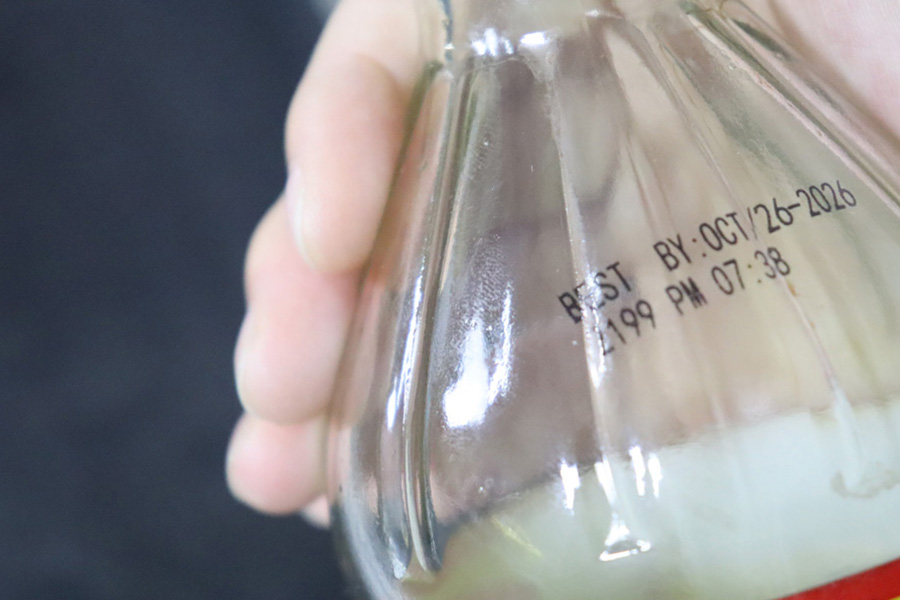
Printing on Plastic Packaging Without Smearing or Ink Transfer
Discover practical strategies to prevent smearing and ink tr...
-
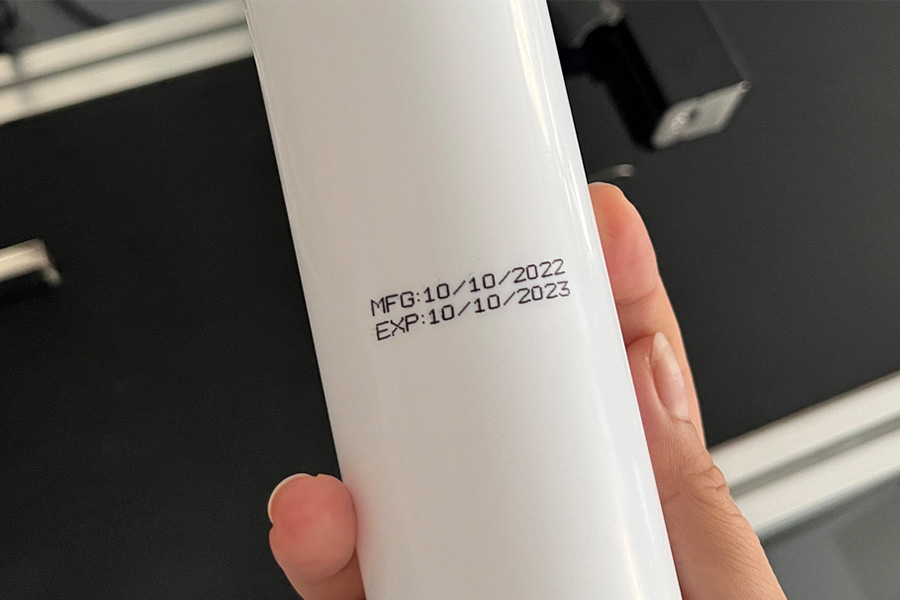
Choosing the Right Ink for Non-Porous Plastic Surfaces
Learn how to choose the right industrial ink for non-porous ...
-
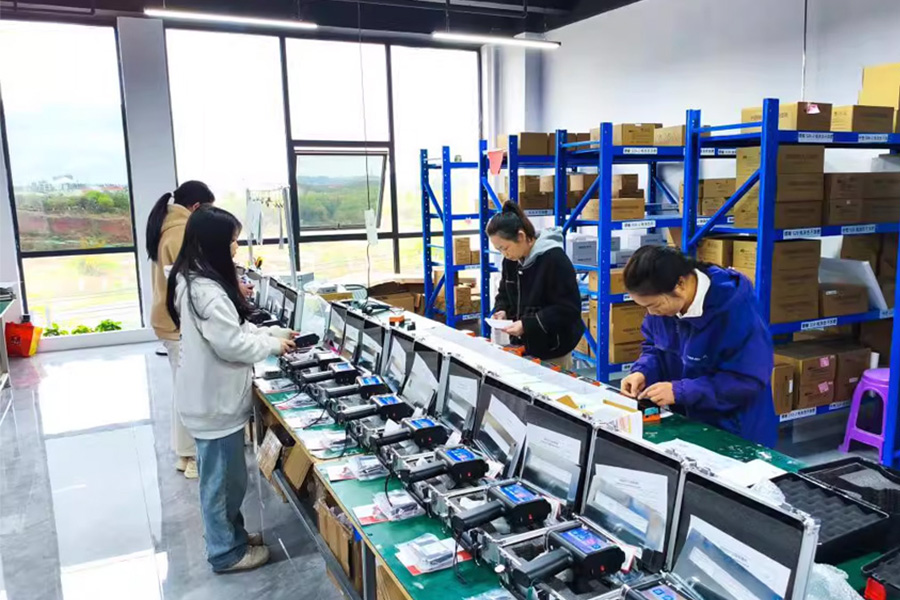
How Ink Adhesion Varies Across Different Plastic Materials
Learn why ink adhesion differs across PE, PP, PET, PVC, ABS,...
Contact Us

Service phone number+8618759952301
—— Add WeChat communication


