
Plastic Printing That Scales: What to Consider Before You Invest
2026-04-20(168)Views
As production demand grows, many businesses quickly discover that their current plastic printing setup cannot keep up. What worked at low volume often fails under pressure—leading to inconsistent print quality, rising costs, and production bottlenecks.
If you're planning to invest in a scalable plastic printing solution, the goal is not just to print—but to print reliably, efficiently, and at scale.
Why Scalability Matters in Plastic Printing
Scaling production without upgrading your printing capability can result in:
1.Increased defect rates
2.Slower production lines
3.Higher consumable waste
4.Frequent equipment failures
A scalable plastic printing solution ensures your operation can grow without sacrificing quality or cost efficiency.
What Does “Scalable Plastic Printing” Really Mean?
A scalable system is one that can handle increasing demand without major reinvestment or operational disruption.
Key Characteristics:

The Cost of Not Scaling Properly

Without scalability, costs rise faster than production.
6 Critical Factors to Consider Before Investing
1. Compatibility with Plastic Materials
Plastic printing involves different substrates:
1)PE, PP, PET, PVC
2)Rigid vs flexible surfaces
Your solution must support multiple material types without constant adjustment.
2. Print Stability at High Speeds
At scale, speed alone isn’t enough—stability is everything.
Look for:
1)Consistent print clarity
2)No smudging at high throughput
3)Reliable ink delivery system
Unstable printing leads to rework and lost productivity.
3. Consumable Efficiency at Volume
When scaling, consumables become a major cost driver.

Even small inefficiencies multiply at high volumes.
4. Automation and Integration Readiness
A scalable plastic printing system must integrate with:
1)Conveyor systems
2)Packaging lines
3)Data systems (ERP, barcode systems)
Automation reduces labor costs and increases consistency.
5. Maintenance and System Reliability
Frequent maintenance becomes more disruptive as volume increases.
Prioritize:
1)Low-maintenance design
2)Easy part replacement
3)Minimal downtime
Reliability directly impacts your ability to scale.
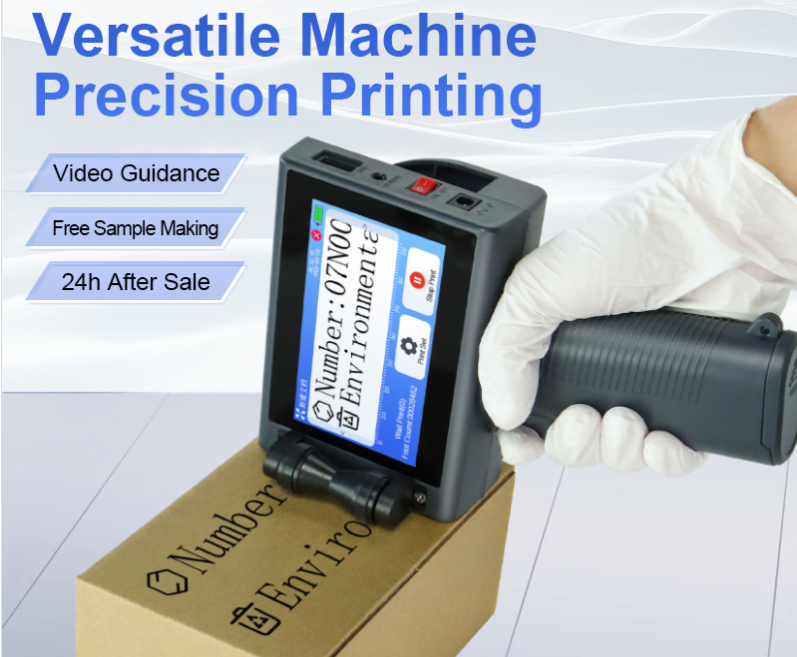
Not sure which printer fits your application?
Consulting experts' advice
Not sure which printer fits your application?
Consulting experts' advice6. Supplier Capability and Long-Term Support
Your supplier plays a key role in scalability.
Evaluate:
1)Technical expertise
2)Response time
3)Availability of consumables
4)Customization capability
A strong supplier ensures your system evolves with your business.
Technology Comparison for Scalable Plastic Printing

TIJ systems are increasingly preferred for scalable plastic printing due to low maintenance and flexible deployment.
Real Case: Scaling Without Increasing Costs
A manufacturer producing plastic packaging needed to double output.
Before Investment:
1.Frequent reprints
2.High ink consumption
3.Manual processes
After implementing a scalable plastic printing solution:
1.Output increased by 60%
2.Consumable cost per unit reduced by 30%
3.Downtime reduced significantly
Scalability improved both efficiency and profitability.
Common Mistakes When Investing in Plastic Printing
× Choosing equipment based on current volume only
× Ignoring consumable cost at scale
× Overlooking integration needs
× Selecting technology that cannot adapt
× Working with inexperienced suppliers
Expert Insights: How to Future-Proof Your Investment
To ensure long-term success, industry professionals recommend:
1.Investing in flexible, modular systems
2.Prioritizing total cost efficiency over initial price
3.Testing real production scenarios
4.Choosing solutions that support automation
The best investments are those that grow with your business.
Frequently Asked Questions (FAQ)
Q1: What makes a plastic printing system scalable?
A: The ability to maintain performance, cost efficiency, and reliability as production volume increases.
Q2: Is it better to invest in high-end equipment early?
A: If scalability is a goal, investing in a capable system early can reduce long-term costs.
Q3: How do I control costs when scaling?
A: Focus on consumable efficiency, automation, and system reliability.
Q4: Can one system handle multiple plastic materials?
A: Yes, with the right ink and configuration, many systems can support multiple substrates.
Invest Once, Scale Confidently
Choosing a plastic printing solution that scales is not just about meeting today’s needs—it’s about preparing for tomorrow’s growth.
By focusing on:
1.Stability
2.Efficiency
3.Flexibility
4.Supplier support
You can build a system that delivers consistent performance at any scale.
Ready to Improve Your Printing Efficiency?
Get expert advice and the best solution tailored to your business.
Contact us for a quotation✔ Fast response ✔ Custom solution ✔ No obligation
+MoreRelated recommendations
-
Handheld Inkjet Printer Warranty Questions Buyers Should Ask Before Ordering
Ask these handheld inkjet printer warranty questions to clar...
-

Handheld Inkjet Printer Order Checklist: Printer, Ink, Accessories, and Spare Parts
Use this purchase checklist to confirm the printer, ink, acc...
-

What Information Should You Send for an Accurate Handheld Inkjet Printer Quote?
Use this RFQ worksheet to send the material, message, print ...
-
How to Print Scannable Barcodes and QR Codes on Plastic Packaging
Learn how to print scannable barcodes and QR codes on plasti...
Contact Us

Service phone number+8618759952301
—— Add WeChat communication


