
Why More Manufacturers Are Switching to Handheld Inkjet Printers
2026-07-02(153)Views
In the past, industrial coding was dominated by fixed-position systems.
Factories installed inline printers on production lines, optimized everything around automation, and rarely considered alternatives.
But manufacturing is changing.
Production cycles are shorter, product variations are higher, and traceability requirements are stricter than ever before.
As a result, more manufacturers are making a clear shift:
From fixed coding systems → to flexible handheld inkjet printing systems
This is not a temporary trend.
It is a structural shift in how production environments are designed.
If you're evaluating whether handheld coding systems fit your production environment, our complete guide to handheld inkjet printer applications and selection explains the core technologies, industrial applications, equipment selection criteria, and long-term implementation strategies that help manufacturers build more flexible and efficient coding workflows.
The Real Reason Behind the Shift: Manufacturing Complexity
Modern manufacturing is no longer stable and repetitive.
Instead, it is characterized by:
1. Frequent product changeovers
2. Multiple packaging formats
3. Small batch production
4. Customized orders
5. Short product lifecycles
In this environment, fixed coding systems often become inefficient.
They require:
1. Setup time
2. Line modifications
3. Dedicated installation space
4. Maintenance downtime
Handheld systems eliminate many of these constraints.
Before companies make the switch, they often evaluate how handheld inkjet printing technology works in real production environments, because flexibility depends on understanding the underlying system behavior.
Reason #1: Flexibility Across Multiple Production Lines
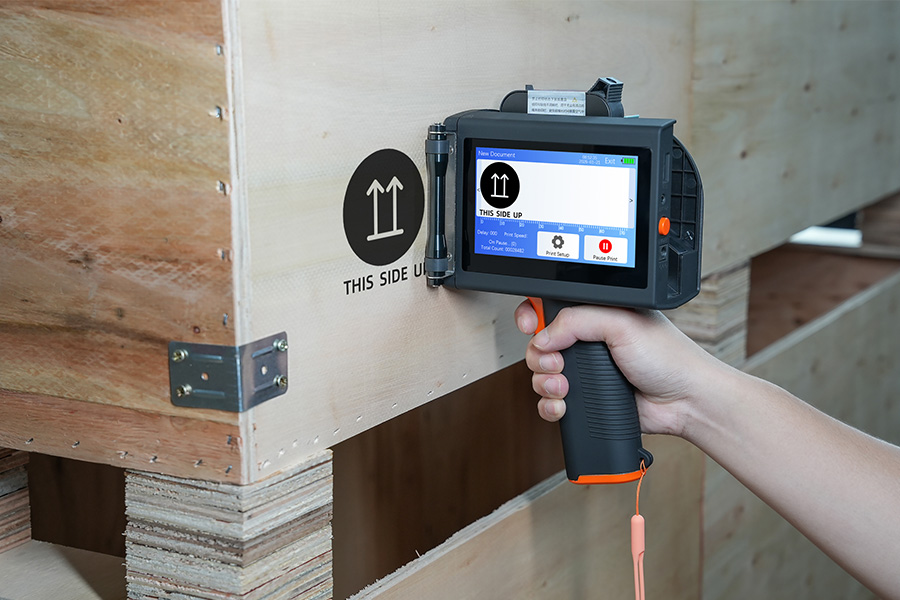
One of the biggest advantages of handheld systems is mobility.
A single device can be used across:
1. Multiple production lines
2. Different product categories
3. Various packaging formats
4. Warehouse and logistics areas
Industrial Impact
Instead of installing multiple fixed printers, companies can:
1. Reduce equipment redundancy
2. Improve asset utilization
3. Simplify maintenance management
Real Example
A contract packaging facility serving 12 different clients replaced three fixed coding systems with handheld printers.
Result:
1. Setup time reduced
2. Changeover speed increased
3. Equipment cost optimized
Reason #2: Lower Total Operating Cost
Although handheld systems require operator involvement, they often reduce total cost in real production environments.
Key savings come from:
1. Reduced installation cost
2. Lower maintenance complexity
3. Less downtime
4. Flexible ink usage
Factories evaluating cost efficiency often rely on calculating coding equipment ROI in manufacturing environments to compare long-term financial impact.
Reason #3: Faster Production Changeovers
In modern manufacturing, time lost during changeovers is expensive.
Fixed systems require:
1. Reconfiguration
2. Calibration
3. Line adjustment
Handheld systems eliminate most of these steps.
Operators simply:
1. Select template
2. Load product
3. Print directly
Impact

Reason #4: Improved Traceability Requirements
Global supply chains now demand detailed product tracking.
Common requirements include:
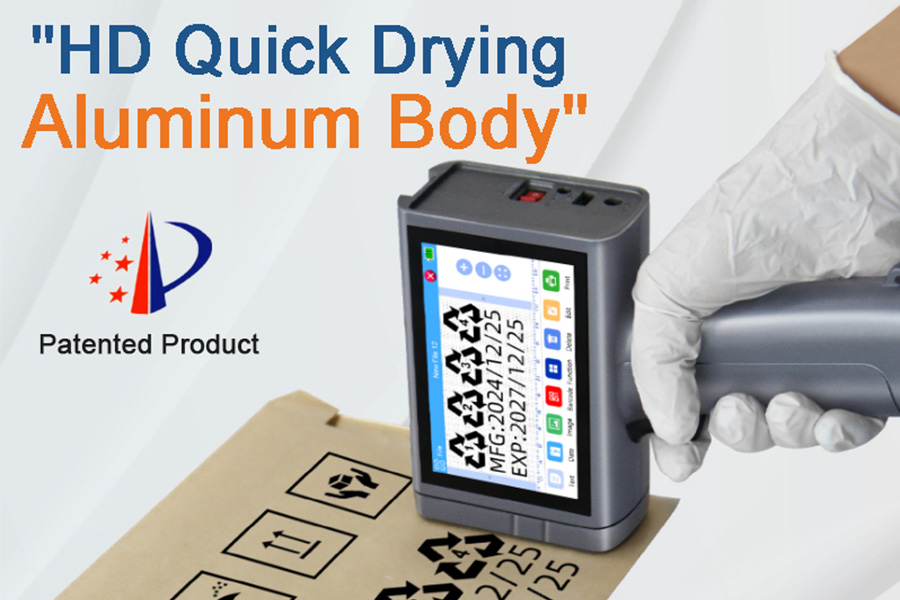
1. Serial numbers
2. QR codes
3. Batch tracking
4. Production data linkage
Handheld printers allow traceability to be applied:
1. At any production stage
2. Across different materials
3. Without fixed infrastructure
This flexibility is especially important for companies implementing printing batch numbers and expiry dates efficiently across multiple product types.
Reason #5: Adaptability to Different Materials
Manufacturers increasingly work with multiple substrates:
1. Plastic packaging
2. Metal components
3. Glass containers
4. Carton packaging
Fixed systems are often limited to specific line configurations.
Handheld systems allow:
1. Ink switching
2. Surface flexibility
3. On-demand printing adjustments
Companies dealing with multiple substrates often reference printing on plastic, metal, and glass surfaces as part of their evaluation process.
Reason #6: Reduced Infrastructure Dependency
Fixed inkjet systems require:
1. Mounting structures
2. Conveyor integration
3. Electrical installation
4. Maintenance access space
Handheld systems remove most infrastructure requirements.
This makes them especially useful for:
1. Small factories
2. Temporary production lines
3. Contract manufacturers
4. Warehouse operations

Reason #7: Easier Deployment and Training
Modern handheld systems are designed for usability.
Operators typically need:
1. Minimal training
2. Basic template selection skills
3. Simple maintenance knowledge
Example
A packaging plant reduced onboarding time for new operators from 3 days to under 3 hours after switching to handheld systems.
Reason #8: Better Support for High-Mix Low-Volume Production
High-mix production is now the norm in many industries.
This includes:
1. Customized packaging
2. Seasonal products
3. Small batch orders
Fixed systems are inefficient in these scenarios.
Handheld systems excel because they support:
1. Frequent code changes
2. Flexible templates
3. Rapid switching between SKUs
Industry Trend: Shift Toward Flexible Manufacturing
The adoption of handheld inkjet printers is part of a larger trend:
Manufacturing is shifting from automation-only systems to hybrid flexible systems.
This includes:
1. Digital production planning
2. On-demand coding
3. Mobile printing solutions
4. Distributed production workflows
Case Study: Contract Packaging Industry
A contract packaging company handling food, cosmetics, and pharmaceutical products faced:
1. High setup time
2. Multiple coding systems
3. Frequent changeovers
Before:
1. Fixed inline printers for each line
2. High maintenance complexity
3. Low flexibility
After switching:
1. Handheld inkjet system adoption
2. Shared equipment across lines
3. Faster production transitions
Results:
1. Reduced equipment cost
2. Increased flexibility
3. Improved client response time
Common Misunderstandings About Switching
Misunderstanding #1: Handheld means lower quality
Not true. Print quality depends on ink and system configuration, not form factor.
Misunderstanding #2: Only small factories use handheld printers
In reality, large manufacturers also use them for secondary coding tasks.
Misunderstanding #3: Fixed systems are always more efficient
Only true in stable, high-volume production environments.
Misunderstanding #4: Handheld printers cannot handle compliance requirements
Modern systems support QR codes, batch tracking, and regulatory formats.
When Should Manufacturers Switch?
Switching makes sense when:
√ Frequent product changes
√ Multiple production lines
√ High setup cost for fixed systems
√ Need for flexible coding locations
√ Increasing traceability requirements
Decision Flow

FAQ
Why are manufacturers switching to handheld inkjet printers?
Because production environments require more flexibility and faster changeovers.
Are handheld printers replacing inline systems?
Not completely. They are often used alongside them in hybrid setups.
Is handheld printing suitable for large factories?
Yes, especially for multi-line or multi-product operations.
Does handheld printing reduce cost?
In many flexible production environments, yes—especially when changeover time is high.
What industries are adopting handheld printers fastest?
Food, beverage, cosmetics, logistics, packaging, and contract manufacturing.
The shift toward handheld inkjet printers is not driven by technology alone.
It is driven by a fundamental change in manufacturing:
1. More product variation
2. Shorter production cycles
3. Higher traceability requirements
4. Greater need for operational flexibility
In this environment, fixed coding systems are no longer sufficient on their own.
Handheld inkjet printers provide a flexible, cost-efficient, and scalable alternative that aligns with modern production realities.
For many manufacturers, the question is no longer whether to adopt handheld printing.
It is how quickly they can integrate it into their production workflow.
Ready to Improve Your Printing Efficiency?
Get expert advice and the best solution tailored to your business.
Get Your Free Quote Within 24 Hours✔ Fast response ✔ Custom solution ✔ No obligation
+MoreRelated recommendations
-
Handheld Inkjet Printer Warranty Questions Buyers Should Ask Before Ordering
Ask these handheld inkjet printer warranty questions to clar...
-
Handheld Inkjet Printer Order Checklist: Printer, Ink, Accessories, and Spare Parts
Use this purchase checklist to confirm the printer, ink, acc...
-
What Information Should You Send for an Accurate Handheld Inkjet Printer Quote?
Use this RFQ worksheet to send the material, message, print ...
-
How to Print Scannable Barcodes and QR Codes on Plastic Packaging
Learn how to print scannable barcodes and QR codes on plasti...
Contact Us

Service phone number+8618759952301
—— Add WeChat communication


