
What Is a Handheld Inkjet Printer and How Does It Work?
2026-06-19(196)Views
Walk through almost any modern manufacturing facility, warehouse, packaging center, or construction material plant, and you will quickly notice one common requirement: products need to be identified.
Whether it is a production date on a food package, a batch number on a pharmaceutical carton, a QR code on a logistics label, or a serial number on a metal component, accurate product marking is now a fundamental part of industrial operations.
For many years, businesses relied on labels, stamps, or fixed coding equipment to accomplish this task. While these methods remain useful in certain situations, growing demands for flexibility and traceability have created a need for more adaptable solutions.
This is where handheld inkjet printers have gained significant popularity.
Portable, easy to deploy, and capable of printing variable information on demand, handheld coding systems are helping manufacturers reduce costs while improving operational efficiency.
But what exactly is a handheld inkjet printer, and how does it work?
More importantly, how can businesses determine whether this technology is the right fit for their production environment?
Understanding the Role of Product Coding in Modern Manufacturing
Before discussing the printer itself, it is important to understand why coding matters.
Today's manufacturers face increasing pressure to improve product traceability.
Governments, distributors, and consumers all expect products to carry information that allows them to be tracked throughout the supply chain.
Typical coding requirements include:
1. Manufacturing dates
2. Expiry dates
3. Batch numbers
4. Lot codes
5. Serial numbers
6. QR codes
7. Barcodes
Production shift information
Without accurate coding, companies may struggle with:
1. Product recalls
2. Inventory tracking
3. Quality control
4. Regulatory compliance
As traceability requirements continue to increase, coding equipment has become a critical component of production operations rather than simply a finishing tool.
What Is a Handheld Inkjet Printer?
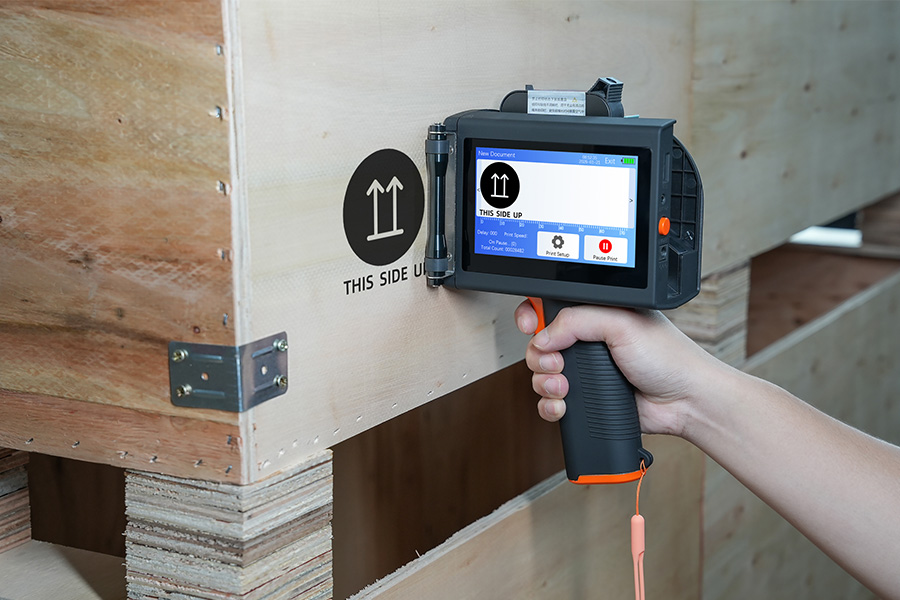
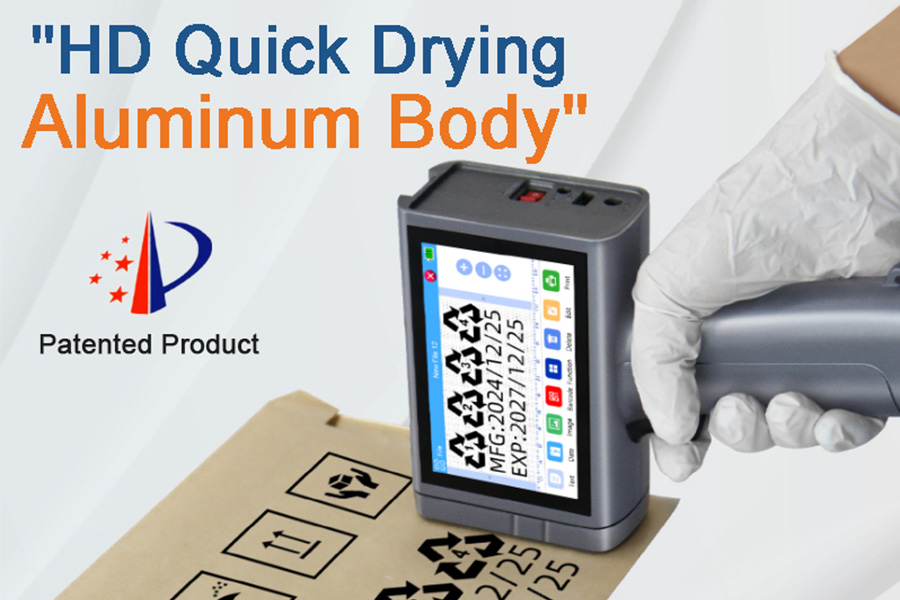
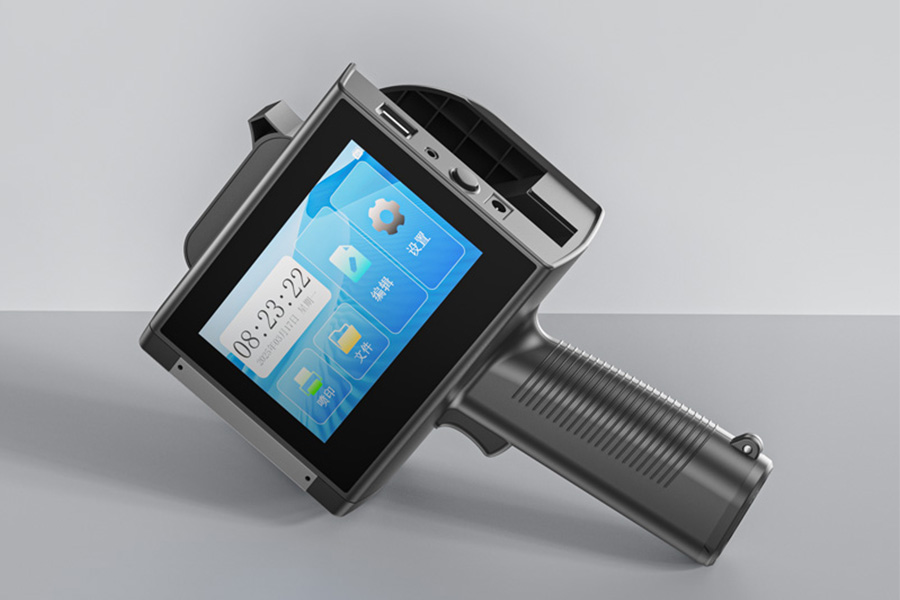
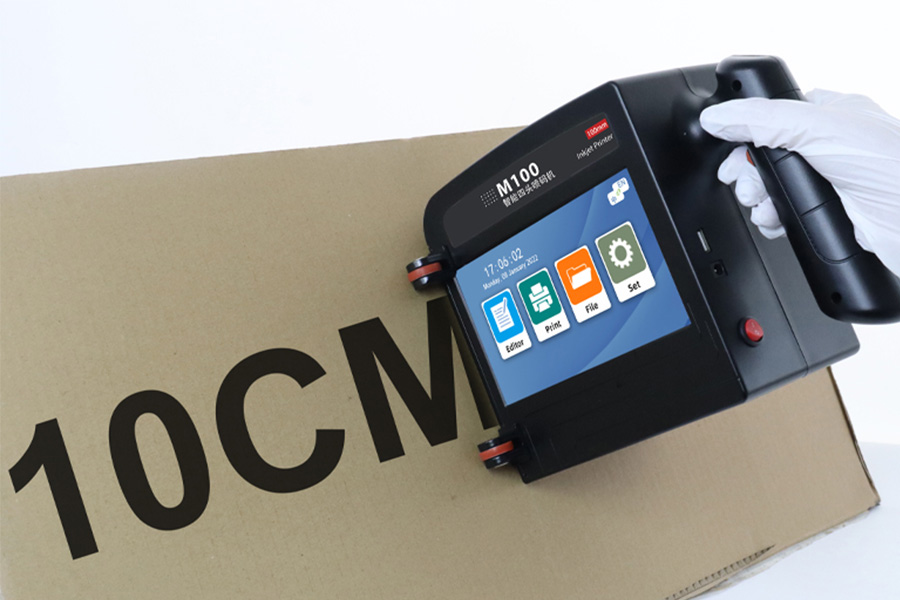
A handheld inkjet printer is a portable device that prints information directly onto products, packaging, or industrial materials.
Unlike traditional online printers that are mounted on a conveyor line, handheld systems are operated manually.
The operator simply moves the printer across the target surface while the device automatically prints the selected information.
The printed content may include:
|
Content Type |
Example |
|
Date Codes |
2026-06-08 |
|
Expiry Dates |
EXP 2028-06-08 |
|
Batch Numbers |
LOT260608 |
|
Serial Numbers |
SN100025 |
|
Barcodes |
Code128 |
|
QR Codes |
Product Traceability |
|
Logos |
Company Branding |
Because these printers are portable, they can be used in multiple locations without requiring permanent installation.
This flexibility is one reason they have become increasingly popular in manufacturing, warehousing, logistics, and packaging operations.
Why Handheld Inkjet Printers Have Become So Popular
Several industry trends have contributed to the growth of handheld coding systems.
Shorter Production Runs
Manufacturers are producing more product variations than ever before.
Rather than producing a single product for months at a time, many facilities now switch between products multiple times each day.
Handheld printers simplify this process because code information can be changed instantly.
Growing Traceability Requirements
Modern supply chains require detailed product identification.
Many companies must now print:
1. Dynamic batch numbers
2. Variable QR codes
3. Real-time production data
Handheld systems make this possible without expensive infrastructure upgrades.
Lower Equipment Investment
Compared with fully automated coding systems, handheld printers typically require much lower initial investment.
For small and medium-sized businesses, this can significantly reduce the barrier to implementing industrial coding solutions.
How Does a Handheld Inkjet Printer Work?
Although handheld printers appear simple from the outside, they rely on sophisticated printing technology.
Most modern systems use Thermal Inkjet (TIJ) technology.
The process works as follows:

The printer receives data entered by the operator.
This data may include:
1. Text
2. Dates
3. Barcodes
4. QR codes
5. Logos
The controller then converts this information into print instructions.
As the printhead moves across the surface, microscopic droplets of ink are deposited in precise positions to create the desired image.
The Technology Behind Thermal Inkjet Printing
The key component inside most handheld printers is the TIJ print cartridge.
Each cartridge contains:
1. Ink reservoir
2. Printhead
3. Nozzle array
4. Electronic circuitry
When printing begins, tiny resistors inside the cartridge heat rapidly.
This creates pressure that forces microscopic droplets of ink through the nozzle openings.
Thousands of droplets are generated every second.
Because each droplet is precisely controlled, the printer can create highly detailed text and graphics.
Typical Print Resolution
|
Technology |
Resolution |
|
Rubber Stamp |
Very Low |
|
Label Printing |
Medium |
|
CIJ Printing |
Medium |
|
TIJ Handheld Printing |
Up to 600 DPI |
This high resolution makes handheld printers suitable for machine-readable codes such as QR codes and barcodes.
What Can a Handheld Inkjet Printer Print On?
One of the biggest advantages of modern handheld printers is material compatibility.
Common substrates include:
1. Corrugated cartons
2. Paper
3. Plastic containers
4. PVC
5. Glass
6. Steel
7. Aluminum
8. Wood
9. Packaging films
However, successful printing depends on selecting the correct ink formulation.
For example:
Porous materials such as cardboard absorb ink differently than non-porous materials such as stainless steel or glass.
Businesses working across multiple materials often perform sample testing before deployment.
Real Industrial Example
A manufacturer of industrial pipe systems needed to print:
1. Production dates
2. Product specifications
3. Batch numbers
directly onto large PVC pipes.
Traditional labeling methods created adhesion problems during outdoor storage.
After implementing handheld inkjet printing, the company was able to print directly on the pipe surface, eliminating label failures while improving traceability.
The project also reduced annual labeling costs.
This example illustrates one of many industrial applications where handheld coding systems provide the most value, particularly when products are difficult to label or move through fixed production-line equipment.

Handheld Printer vs Traditional Coding Methods
Many buyers compare handheld printers against existing marking methods.
Labels
Advantages:
1.Familiar process
Disadvantages:
1. Ongoing consumable costs
2. Labor requirements
3. Potential peeling
Rubber Stamps
Advantages:
1.Low cost
Disadvantages:
1. Poor consistency
2. Limited flexibility
Handheld Inkjet Printing
Advantages:
1. Variable data printing
2. High resolution
3. Fast code changes
4. Portable operation
For businesses evaluating equipment upgrades, understanding these differences is often the first step before comparing handheld and automated coding solutions for long-term production requirements.
Is a Handheld Inkjet Printer Right for Your Business?
Handheld printers are often ideal for:
√ Small and medium manufacturers
√ Warehouses
√ Packaging operations
√ Construction materials
√ Contract packers
√ Multi-SKU production environments
However, companies operating extremely high-speed automated production lines may benefit from fixed coding systems.
The best solution depends on production volume, product variety, and operational goals.
For organizations evaluating equipment options, a broader complete guide to handheld inkjet printer applications and selection can help determine which coding approach aligns best with long-term production requirements.
Common Misconceptions About Handheld Inkjet Printers
"They Are Only for Small Businesses"
Not true.
Many large manufacturers use handheld printers for secondary coding operations, warehouse marking, and low-volume production runs.
"Print Quality Is Poor"
Modern TIJ technology can produce high-resolution results suitable for industrial traceability systems.
"They Can Only Print Text"
Most industrial models support:
1. QR codes
2. Barcodes
3. Graphics
4. Logos
5. Variable data
Frequently Asked Questions
What is the difference between a handheld inkjet printer and a label printer?
A handheld printer prints directly onto the product or packaging surface, while a label printer produces separate adhesive labels.
Can handheld printers print QR codes?
Yes. Most industrial systems support QR code printing.
Do handheld printers require installation?
No. Most models are ready to use with minimal setup.
What materials can be printed?
Common materials include cardboard, plastic, metal, glass, wood, and PVC.
Are handheld printers suitable for industrial environments?
Yes. Industrial-grade models are designed specifically for manufacturing and logistics applications.
Handheld inkjet printers have evolved into highly capable industrial coding tools that combine portability, flexibility, and high-resolution printing.
As manufacturers face increasing demands for traceability, product identification, and operational efficiency, these systems offer an attractive alternative to traditional coding methods.
By understanding how the technology works, what materials it can print on, and where it provides the greatest value, businesses can make more informed decisions when evaluating coding solutions.
Whether you are marking cartons, bottles, metal parts, construction materials, or warehouse inventory, handheld inkjet technology can provide a practical and scalable approach to product identification.
Ready to Improve Your Printing Efficiency?
Get expert advice and the best solution tailored to your business.
Start your project✔ Fast response ✔ Custom solution ✔ No obligation
+MoreRelated recommendations
-
Handheld Inkjet Printer Warranty Questions Buyers Should Ask Before Ordering
Ask these handheld inkjet printer warranty questions to clar...
-
Handheld Inkjet Printer Order Checklist: Printer, Ink, Accessories, and Spare Parts
Use this purchase checklist to confirm the printer, ink, acc...
-
What Information Should You Send for an Accurate Handheld Inkjet Printer Quote?
Use this RFQ worksheet to send the material, message, print ...
-
How to Print Scannable Barcodes and QR Codes on Plastic Packaging
Learn how to print scannable barcodes and QR codes on plasti...
Contact Us

Service phone number+8618759952301
—— Add WeChat communication


