
Handheld Inkjet Printer vs Online Inkjet Printer: Which Is Better for Industrial Coding?
2026-06-22(162)Views
One of the most common questions manufacturers ask when evaluating coding and marking equipment is surprisingly straightforward:
Should we choose a handheld inkjet printer or an online inkjet printer?
At first glance, the answer may seem obvious. Many buyers assume that automated systems are always superior because they require less manual involvement. Others believe handheld printers are the most cost-effective choice because they are less expensive to purchase.
In reality, neither assumption is entirely correct.
The best solution depends on production volume, product variety, factory layout, labor costs, traceability requirements, and long-term business objectives.
A handheld printer can outperform an online system in one facility, while the exact opposite may be true in another.
This article examines both technologies from a practical business perspective, helping manufacturers determine which solution delivers the best operational and financial value.
The Real Question Isn't "Which Is Better?"
Many buyers start their research by comparing equipment specifications.
They compare:
1. Print resolution
2. Print speed
3. Screen size
4. Cartridge capacity
5. Purchase price
While these factors matter, they rarely determine whether a project succeeds.
The real question should be:
Which solution fits the way your production operation actually works?
A factory producing 500,000 identical products per month has very different coding requirements than a contract packaging company handling 30 different products every week.
Understanding this distinction prevents one of the most common purchasing mistakes: buying equipment based on specifications rather than operational requirements.
Understanding the Two Technologies
Before comparing advantages and disadvantages, it's important to define both systems.
What Is a Handheld Inkjet Printer?
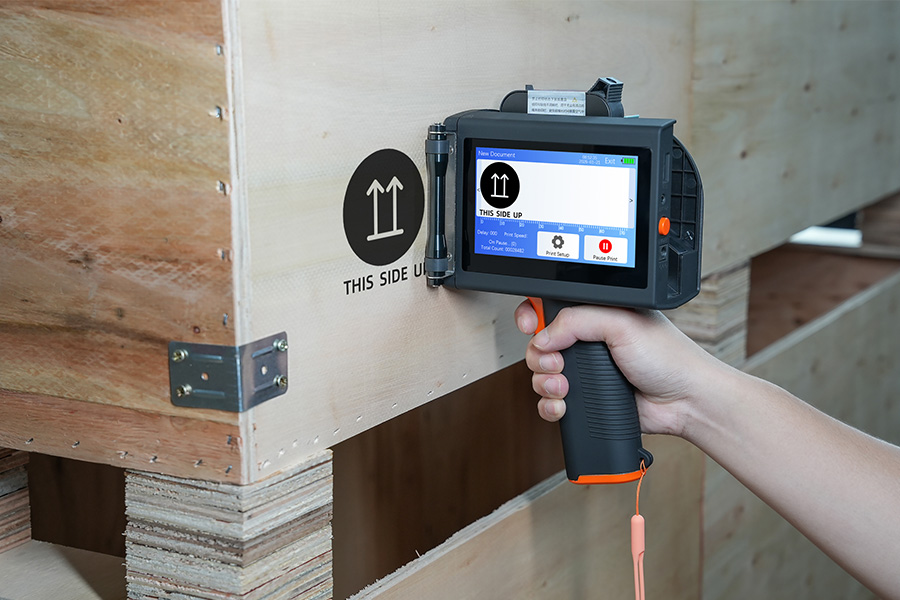
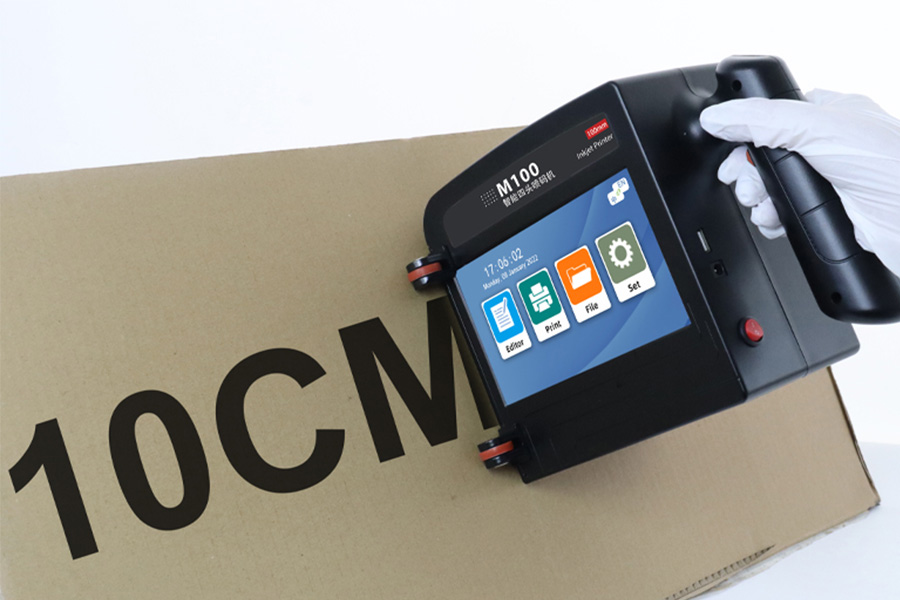
A handheld inkjet printer is a portable coding device operated manually by an employee.
The operator moves the printer across the product surface while the system applies text, dates, QR codes, barcodes, logos, or other information.
Because the device is portable, it can be used in multiple production areas.
Companies new to coding equipment often begin by understanding how handheld inkjet printing technology works before evaluating whether it fits their production environment.
Typical applications include:
1. Carton marking
2. Warehouse coding
3. Pipe marking
4. Construction materials
5. Small-batch manufacturing
6. Contract packaging
What Is an Online Inkjet Printer?
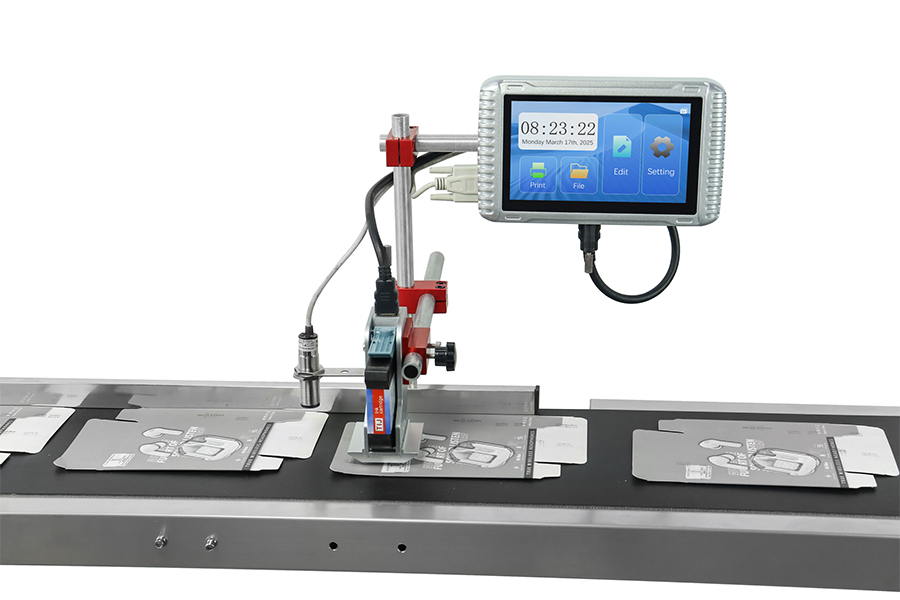
An online inkjet printer (sometimes called an inline or production-line printer) is installed directly on a conveyor system.
Products move automatically past the printhead while codes are applied without operator intervention.
These systems are designed for continuous production environments.
Typical applications include:
1. Food manufacturing
2. Beverage bottling
3. Pharmaceutical packaging
4. High-speed consumer goods production
5. Automotive parts manufacturing
Online printers are often integrated into larger automation systems.
The Biggest Difference: Flexibility vs Automation
The most important distinction between these technologies is not print quality.
It is operational flexibility.
Handheld Printer
Optimized for flexibility.
Online Printer
Optimized for automation.
This difference influences almost every purchasing decision.
Scenario 1: Multiple Products, Frequent Changeovers
1. Consider a packaging company handling:
2. Product A in the morning
3. Product B after lunch
4. Product C in the evening
Each product requires different:
1. Batch numbers
2. Date formats
3. QR codes
4. Packaging sizes
In this environment, a handheld printer often provides greater efficiency.
Operators can switch templates instantly and move between production areas without modifying equipment installations.
Scenario 2: Continuous High-Speed Production
Now consider a beverage factory producing:

Production runs continuously.
The coding information changes only occasionally.
Stopping production to manually code products would be impractical.
In this case, online printing becomes the obvious choice.
Automation eliminates manual handling while maintaining consistent throughput.
Cost Comparison: The Number Most Buyers Focus On
Equipment cost is often the first factor buyers investigate.
However, purchase price alone rarely tells the full story.
Typical Investment Comparison
|
Category |
Handheld Printer |
Online Printer |
|
Equipment Cost |
Low |
High |
|
Installation Cost |
Minimal |
Significant |
|
Line Modification |
None |
Often Required |
|
Training |
Simple |
Moderate |
|
Maintenance Complexity |
Low |
Moderate |
|
Initial Investment |
Lower |
Higher |
For many small and medium-sized manufacturers, the lower entry cost makes handheld systems attractive.
However, evaluating only equipment cost ignores long-term operational economics.
The Hidden Cost Many Buyers Forget
Many purchasing teams focus exclusively on hardware expenses.
They often overlook:
1. Downtime
2. Labor
3. Production interruptions
4. Changeover efficiency
5. Packaging waste
These factors can dramatically affect total ownership cost.
Example
A company purchases an inexpensive online coding system.
To install the printer, they must:
1. Modify conveyors
2. Add mounting hardware
3. Integrate sensors
4. Pause production
The installation cost eventually exceeds the printer price itself.
Meanwhile, a handheld system could have been operational within hours.
This is why experienced buyers spend time calculating coding equipment ROI rather than simply comparing equipment prices.
Production Volume: The Most Important Decision Factor
If there is one metric that should drive the decision, it is production volume.
Low Volume
Best Fit:
Handheld Printer
Examples:
1. Specialty foods
2. Craft beverages
3. Custom packaging
4. Industrial components
Medium Volume
Best Fit:
Depends on flexibility requirements.
Many facilities operate hybrid systems.
High Volume
Best Fit:
Online Printer
Examples:
1. Bottling plants
2. Pharmaceutical production
3. Consumer packaged goods
Decision Matrix
|
Daily Production |
Recommended Solution |
|
Under 5,000 Units |
Handheld |
|
5,000–30,000 Units |
Evaluate Both |
|
Above 30,000 Units |
Usually Online |
This is not an absolute rule, but it serves as a useful starting point.
Factory Layout Matters More Than Most People Realize
A surprising number of projects fail because factory layout was ignored.
Consider two examples.
Factory A
Single conveyor line.
Single product family.
Centralized production.
Online coding works well.
Factory B
Multiple workstations.
Various product sizes.
Several packaging areas.
Products frequently moved manually.
Portable equipment often delivers greater value.
This is one reason many industrial applications of handheld marking equipment continue to expand despite increasing factory automation.
Print Quality: Is There Really a Difference?
Many buyers assume online systems produce superior print quality.
Years ago, this was often true.
Today, the gap has narrowed significantly.
Modern handheld TIJ printers can achieve:
1. Up to 600 DPI
2. High-quality QR codes
3. Clear barcodes
4. Sharp logos
For most industrial coding applications, print quality differences are minimal.
The real differentiators are workflow and operational efficiency.
Maintenance Comparison
Maintenance requirements influence long-term operating costs.
Handheld Printer Maintenance
Typical tasks:
1. Cartridge replacement
2. Printhead cleaning
3. Template management
Most maintenance can be performed by operators.
Online Printer Maintenance
Typical tasks:
1. Sensor calibration
2. Conveyor alignment checks
3. Integration troubleshooting
4. Preventive maintenance schedules
More technical involvement is often required.
Organizations evaluating maintenance requirements frequently review preventive maintenance practices for handheld coding equipment when estimating long-term reliability.
Real Manufacturing Case Study
A contract packaging company handled more than 40 customer SKUs every month.
Management initially planned to install multiple online coding stations.
After analyzing production flow, they discovered:
1. Frequent product changes
2. Multiple packaging locations
3. Variable packaging dimensions
Installing fixed coding equipment would require significant infrastructure changes.
Instead, they deployed handheld systems.
Results
After implementation:
1. Setup time decreased
2. Packaging flexibility improved
3. Capital expenditure was reduced
4. Coding accuracy increased
The project achieved payback in less than one year.
When a Handheld Printer Is the Better Choice
A handheld solution often makes sense when:
√ Product variety is high
√ Production volume is moderate
√ Flexibility is important
√ Budget is limited
√ Multiple coding locations exist
√ Fast deployment is required
When an Online Printer Is the Better Choice
An online solution often makes sense when:
√ Production runs continuously
√ Throughput is extremely high
√ Automation is a priority
√ Labor costs are significant
√ Products move consistently on conveyors
√ Coding requirements rarely change
Common Buying Mistakes
Mistake #1
Assuming automation is always better.
Sometimes flexibility delivers greater operational value.
Mistake #2
Focusing only on purchase price.
Total ownership cost matters more.
Mistake #3
Ignoring future production changes.
Today's production requirements may not match future needs.
Mistake #4
Failing to test actual products.
Sample testing should always be performed before purchasing.
How to Make the Right Decision
The easiest approach is to answer five questions.

The answers will typically make the correct choice obvious.
Businesses uncertain about the best solution often benefit from a broader complete guide to handheld inkjet printer applications and selection before making a final investment decision.
Frequently Asked Questions
Is a handheld inkjet printer cheaper than an online printer?
In most cases, yes. Initial investment and installation costs are typically lower.
Which printer offers better print quality?
Modern handheld and online TIJ systems can both produce excellent print quality.
Which system requires less maintenance?
Handheld systems generally have simpler maintenance requirements.
Can handheld printers be used in factories?
Yes. Many manufacturing facilities use handheld printers for coding products, cartons, pallets, and components.
Can a company use both systems?
Absolutely.
Many manufacturers operate handheld and online systems simultaneously to support different production requirements.
There is no universal answer to the question of whether a handheld inkjet printer or an online inkjet printer is better.
The right choice depends on how your operation functions.
If flexibility, mobility, and lower investment costs are priorities, a handheld system often delivers exceptional value.
If high-speed automation and continuous production are essential, an online printer may provide greater efficiency.
The most successful projects begin with a clear understanding of production requirements rather than equipment specifications.
By evaluating volume, workflow, factory layout, and long-term goals, manufacturers can select a coding solution that supports both operational efficiency and future growth.
Ready to Improve Your Printing Efficiency?
Get expert advice and the best solution tailored to your business.
Get Your Free Quote Within 24 Hours✔ Fast response ✔ Custom solution ✔ No obligation
+MoreRelated recommendations
-
Handheld Inkjet Printer Warranty Questions Buyers Should Ask Before Ordering
Ask these handheld inkjet printer warranty questions to clar...
-
Handheld Inkjet Printer Order Checklist: Printer, Ink, Accessories, and Spare Parts
Use this purchase checklist to confirm the printer, ink, acc...
-
What Information Should You Send for an Accurate Handheld Inkjet Printer Quote?
Use this RFQ worksheet to send the material, message, print ...
-
How to Print Scannable Barcodes and QR Codes on Plastic Packaging
Learn how to print scannable barcodes and QR codes on plasti...
Contact Us

Service phone number+8618759952301
—— Add WeChat communication


