
Printing on Powder-Coated and Painted Metal Products
2026-08-06(70)Views
Protective coatings are applied to millions of industrial metal products every day.
Machine frames, electrical cabinets, agricultural equipment, warehouse shelving, automotive assemblies, and countless fabricated steel components all receive painted or powder-coated finishes before entering service.
These coatings improve corrosion resistance, appearance, and product durability.
They also introduce a new printing surface.
For manufacturers, this distinction is important.
Industrial coding is no longer applied directly to bare metal.
Instead, it is printed onto an engineered coating system whose physical characteristics depend on how that coating was formulated, applied, and cured.
A handheld inkjet printer that performs consistently on untreated steel or aluminum may require a different validation approach once the product receives a protective finish.
As explained in Printing on Different Materials with Handheld Inkjet Printers: The Complete Industrial Guide, the substrate visible to the printer is not always the original material. In coated products, the printing process interacts with the coating itself, making surface engineering a critical part of production planning.
This article examines how powder-coated and painted metal products should be evaluated before introducing industrial coding into production.
Where Coated Metal Products Are Found
Protective coatings are used across a wide range of industries because they improve product durability and visual quality.
Typical applications include:
Industrial Equipment
1. Machine frames
2. Automation systems
3. Equipment guards
4. Control cabinets
Construction Products
1. Steel doors
2. Structural brackets
3. Fencing systems
4. Architectural panels
Transportation
1. Trailer components
2. Commercial vehicle parts
3. Material handling equipment
4. Railway assemblies
Energy and Infrastructure
1. Electrical enclosures
2. Solar mounting systems
3. Utility cabinets
4. Outdoor control boxes
Although these products serve different industries, they share one characteristic:
The printable surface is the coating—not the underlying metal.
Understanding the Coating Before Evaluating the Printer
Many production teams begin with printer specifications.
Experienced engineers usually begin somewhere else:
They first identify the coating.
Several questions should be answered before production trials begin.
1. Is the finish powder-coated or liquid painted?
2. Has the coating fully cured?
3. Is the surface smooth, textured, or lightly embossed?
4. Does the coating include gloss, satin, or matte finishes?
5. Will the product be exposed to outdoor conditions?
Answering these questions establishes the context for a meaningful production evaluation.
Without this information, two visually similar products may behave very differently during printing.
Production Scenarios That Require Different Evaluation Strategies
Instead of treating all coated metal products the same, manufacturers often group them according to how they move through production.
Scenario A — Static Fabricated Equipment
Large machine frames and fabricated structures are usually printed after coating and before final assembly.
The priority is accurate positioning and easy visual inspection.
Scenario B — Continuous Conveyor Production
Electrical enclosures and appliance panels may travel through automated lines.
Here, production rhythm and repeatable positioning become more important than individual operator adjustments.
Scenario C — Outdoor Industrial Products
Products designed for long-term outdoor use require codes that remain identifiable throughout logistics, installation, and routine maintenance.
Validation should therefore reflect real operating conditions rather than only initial print appearance.
Risk Assessment Matrix
Before approving a coated metal application, engineering teams can evaluate potential production risks using a structured matrix.

This type of assessment helps determine where additional production validation should be focused rather than assuming every coated product requires the same approach.
Failure Library: Understanding Common Production Challenges
Production issues on powder-coated and painted metal products rarely appear as obvious equipment failures.
More often, manufacturers notice subtle inconsistencies that gradually affect quality, inspection efficiency, or production stability.
Instead of immediately adjusting printer parameters, experienced engineering teams first identify which type of production issue is occurring.
Pattern 1: Inconsistent Appearance Across Different Production Batches
Typical Observation
Operators report that codes printed on one batch of products appear slightly different from another, even though the same handheld inkjet printer and production settings are used.
What to Investigate
Rather than assuming the printer has changed, review:
1. Whether coating suppliers have changed
2. Differences in curing conditions
3. Surface finish consistency between batches
4. Gloss level variations
5. Changes in coating thickness specifications
In many factories, coating variation introduces more production variability than the printer itself.
Pattern 2: Codes Look Different Under Different Lighting
A code inspected under warehouse lighting may appear perfectly acceptable.
The same code viewed on the assembly line or by the customer may appear less distinct because painted and powder-coated surfaces reflect light differently depending on their finish.
This is especially noticeable on:
1. High-gloss powder coatings
2. Semi-gloss painted panels
3. Textured architectural coatings
For this reason, production approval should include inspection under the actual lighting conditions used during manufacturing and final quality control.
Pattern 3: Different Product Colors Affect Visual Recognition
Many manufacturers produce the same component in multiple colors.
For example:
1. White electrical cabinets
2. Black equipment enclosures
3. Blue machine frames
4. Green agricultural equipment
Although the coating process is identical, visual contrast between the printed code and the finished surface may vary.
Engineering teams should verify readability across all approved production colors instead of validating only one sample.
Pattern 4: Production Expansion Introduces New Variables
As production grows, companies often add:
1. Additional coating lines
2. New subcontractors
3. Regional manufacturing facilities
4. Alternative finishing processes
Each expansion may introduce small differences that influence coding consistency.
Rather than copying existing production settings without review, manufacturers should confirm that the finished surface remains within the validated production standard.
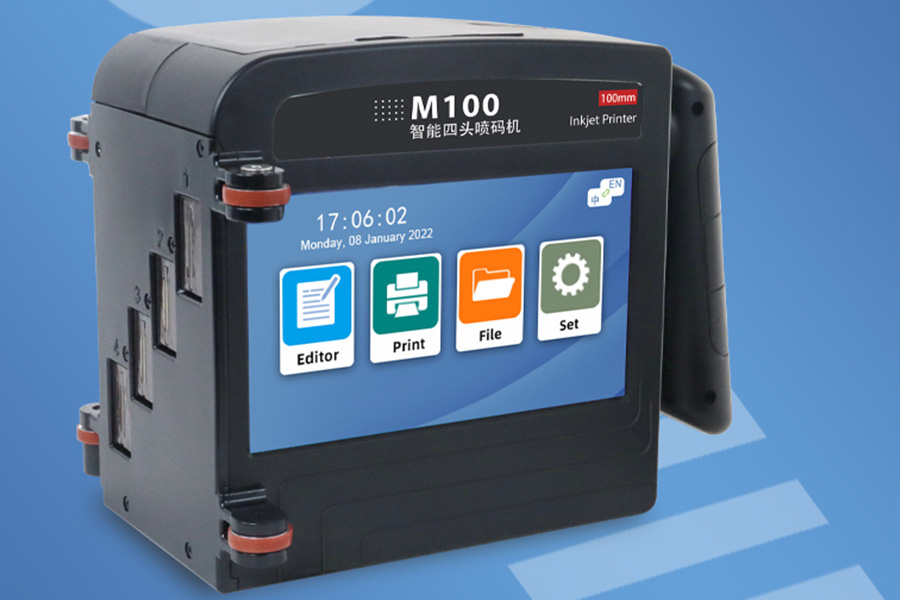
Not sure which printer fits your application?
Consulting experts' advice
Not sure which printer fits your application?
Consulting experts' adviceIndustry Spotlight: Where Coated Metal Coding Creates the Greatest Value
Rather than examining coating technology in isolation, it is useful to consider how different industries apply coding after surface finishing.
Electrical Equipment Manufacturing
Electrical cabinets, distribution boxes, and industrial control panels are commonly powder-coated before identification is added.
Typical printed information includes:
1. Product model numbers
2. Manufacturing dates
3. Internal traceability codes
4. Serial numbers
The priority is maintaining clear identification throughout assembly, shipping, and installation.
Agricultural Machinery
Agricultural equipment often operates outdoors in demanding environments.
Manufacturers typically print:
1. Component identification
2. Production tracking information
3. Assembly references
In these applications, coding should remain readable after transportation and routine equipment handling.
Warehouse and Material Handling Systems
Storage racks, conveyor structures, and logistics equipment frequently receive durable protective coatings.
Printed information helps support:
1. Installation sequencing
2. Inventory management
3. Maintenance records
4. Replacement part identification
Because these products are often produced in large quantities, consistency between batches becomes especially important.
Commercial Furniture and Equipment
Office furniture, retail fixtures, and industrial shelving are frequently manufactured using painted steel components.
Although the products differ from heavy industrial machinery, manufacturers still rely on coding for:
1. Internal production management
2. Quality inspection
3. Product traceability
4. Distribution control
The coating provides the finished appearance, while the printed code supports manufacturing operations behind the scenes.
Production Evaluation Is Different From Material Evaluation
A common mistake is evaluating coated products only from a material perspective.
Successful manufacturers instead evaluate the complete production system.
This includes questions such as:
1. At which stage is coding applied?
2. Has the coating reached its final cured condition?
3. Will additional assembly steps affect the printed area?
4. How will the finished product be inspected?
5. Will customers need to scan or visually read the identification?
By expanding the evaluation beyond the coating itself, engineering teams reduce unexpected issues after production begins.
Related Considerations for Other Metal Products
Coated metal products represent only one category within industrial metal coding.
Manufacturers working with untreated aluminum components often face a different set of production considerations related to machining marks, anodizing, or extrusion processes. These topics are explored in How Surface Finish Affects Inkjet Printing on Aluminum Parts, where surface finishing rather than protective coating becomes the primary engineering focus.
Implementation Roadmap: From Sample Testing to Stable Production
Introducing industrial coding on coated metal products should be treated as a controlled manufacturing project rather than a single equipment installation.
Instead of focusing only on print quality during the first production trial, manufacturers achieve better long-term results by validating each stage of implementation.
The roadmap below provides a practical framework for integrating handheld inkjet printing into existing production processes.
Phase 1 — Understand the Finished Product
Before selecting printing parameters, engineering teams should document the characteristics of the finished component.
Typical considerations include:
1. Product dimensions
2. Coating type
3. Surface texture
4. Product color options
5. Identification requirements
6. Production volume
The objective is to define what will actually enter production, rather than relying on engineering drawings alone.
Phase 2 — Conduct Production Sample Validation
Sample validation should represent real manufacturing conditions.
Whenever possible, testing should use:
1. Finished production parts
2. Final coating process
3. Actual production operators
4. Factory lighting
5. Existing inspection procedures
This creates a realistic baseline before large-scale implementation.
Phase 3 — Standardize the Process
Once production samples have been approved, the process should be documented.
Typical documentation includes:
1. Approved print location
2. Product orientation
3. Inspection method
4. Production sequence
5. Quality acceptance criteria
The goal is consistency rather than repeated adjustment.
Phase 4 — Monitor Continuous Improvement
Even a stable production process benefits from periodic review.
Engineering teams should reassess printing performance whenever:
1. New product variants are introduced
2. Coating suppliers change
3. Production lines are expanded
4. Customer identification requirements evolve
Treating coding as a continuously managed process helps maintain long-term production stability.
Buyer Evaluation: Questions Worth Asking Before Choosing a Coding Solution
Manufacturers often compare handheld inkjet printers based on print height, speed, or cartridge specifications.
While these specifications are useful, coated metal applications require broader evaluation.
Decision-makers should also consider:
Can the supplier evaluate our actual coated products?
Generic demonstrations rarely reflect real production conditions.
Suppliers that can test your own coated components provide more meaningful technical recommendations.
Is technical support available during process validation?
Introducing a coding system is not only about installing equipment.
Engineering guidance during validation can reduce implementation time and avoid unnecessary production interruptions.
Can the solution adapt to future coating changes?
Manufacturing processes evolve.
A practical coding solution should be flexible enough to support future product designs, new finishes, and expanded production capacity.
Project Takeaways
Powder-coated and painted metal products introduce a unique printing environment because the printer interacts with an engineered coating rather than the underlying metal.
Manufacturers that achieve consistent coding performance usually succeed because they evaluate the entire production process, including coating characteristics, inspection methods, production flow, and long-term operational requirements.
Instead of asking whether a handheld inkjet printer can print on coated metal, a more valuable question is:
Can the complete production process deliver consistent identification across every coated product that leaves the factory?
When this question guides implementation, printing becomes a stable part of manufacturing quality rather than a recurring production issue.
Continue Exploring Metal Printing Applications
Different metal products create different coding challenges.
If your production also includes aluminum components, our guide How Surface Finish Affects Inkjet Printing on Aluminum Parts explains how machining, anodizing, brushing, and extrusion influence print consistency.
For manufacturers working with packaging operations after metal fabrication, Printing Durable Codes on Corrugated Shipping Cartons explores how to maintain clear identification on secondary packaging used throughout logistics and distribution.
These resources complement this article by addressing related stages of industrial production while keeping the focus on application-specific printing requirements.
Ready to Evaluate Your Coated Metal Products?
Every coating system is different, and the best coding solution should be based on your actual production environment—not assumptions.
Our engineering team can help you evaluate:
1. Powder-coated components
2. Painted industrial equipment
3. Electrical enclosures
4. Steel fabrications
5. OEM metal products
We can provide:
1. Sample printing on your coated parts
2. Production process evaluation
3. Coding position recommendations
4. Barcode and QR code verification
5. Customized handheld inkjet printer solutions
Ready to Improve Your Printing Efficiency?
Get expert advice and the best solution tailored to your business.
Get Your Free Quote Within 24 Hours✔ Fast response ✔ Custom solution ✔ No obligation
+MoreRelated recommendations
-
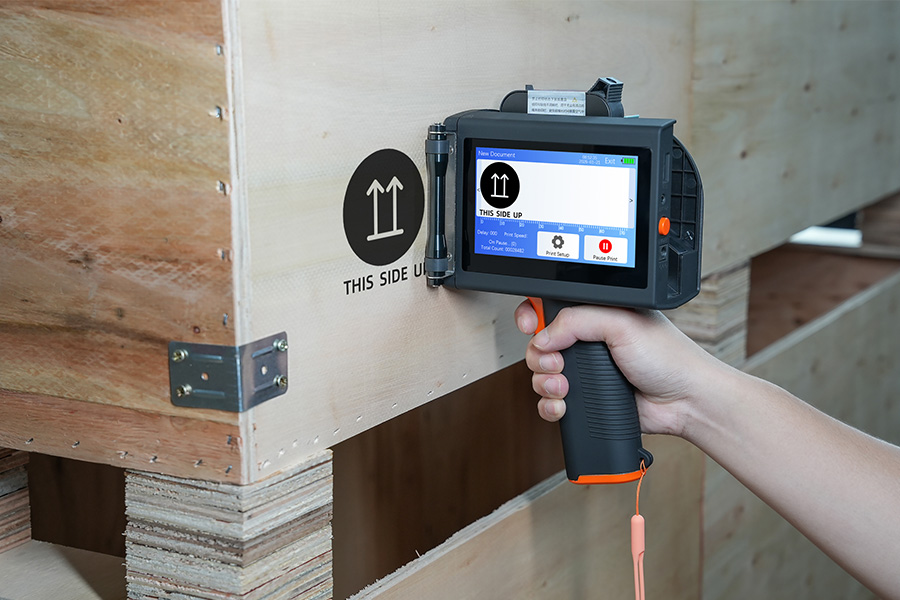
Handheld Inkjet Printer Warranty Questions Buyers Should Ask Before Ordering
Ask these handheld inkjet printer warranty questions to clar...
-
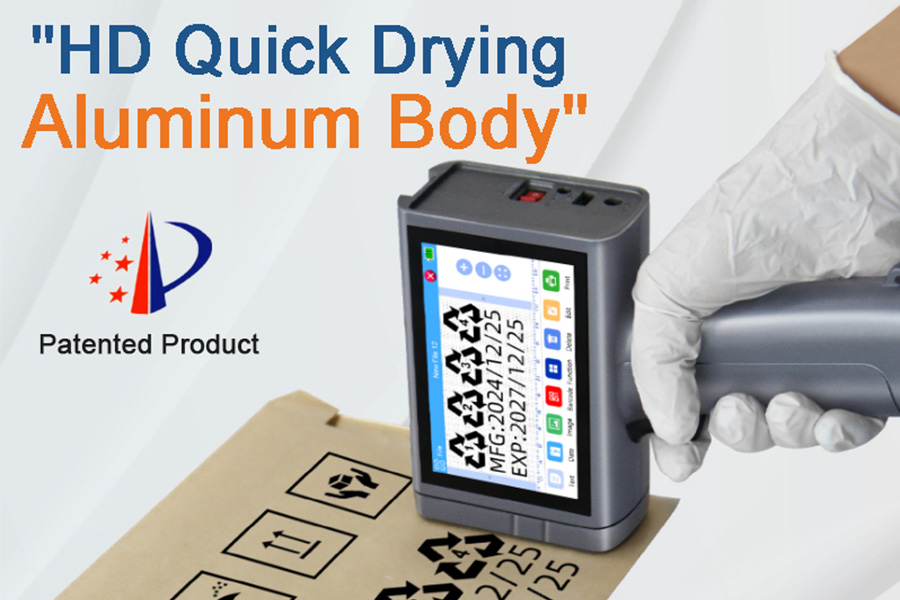
Handheld Inkjet Printer Order Checklist: Printer, Ink, Accessories, and Spare Parts
Use this purchase checklist to confirm the printer, ink, acc...
-
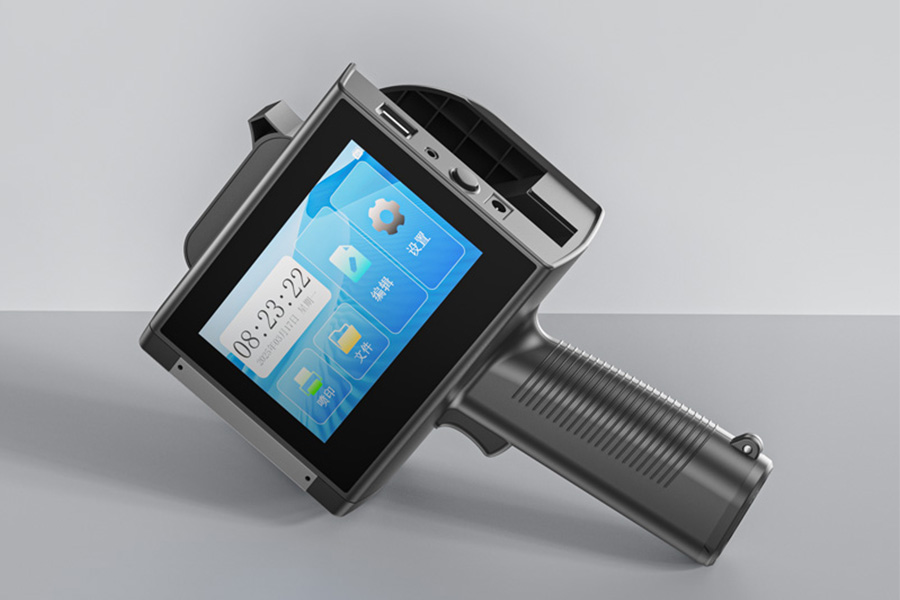
What Information Should You Send for an Accurate Handheld Inkjet Printer Quote?
Use this RFQ worksheet to send the material, message, print ...
-
How to Print Scannable Barcodes and QR Codes on Plastic Packaging
Learn how to print scannable barcodes and QR codes on plasti...
Contact Us

Service phone number+8618759952301
—— Add WeChat communication


